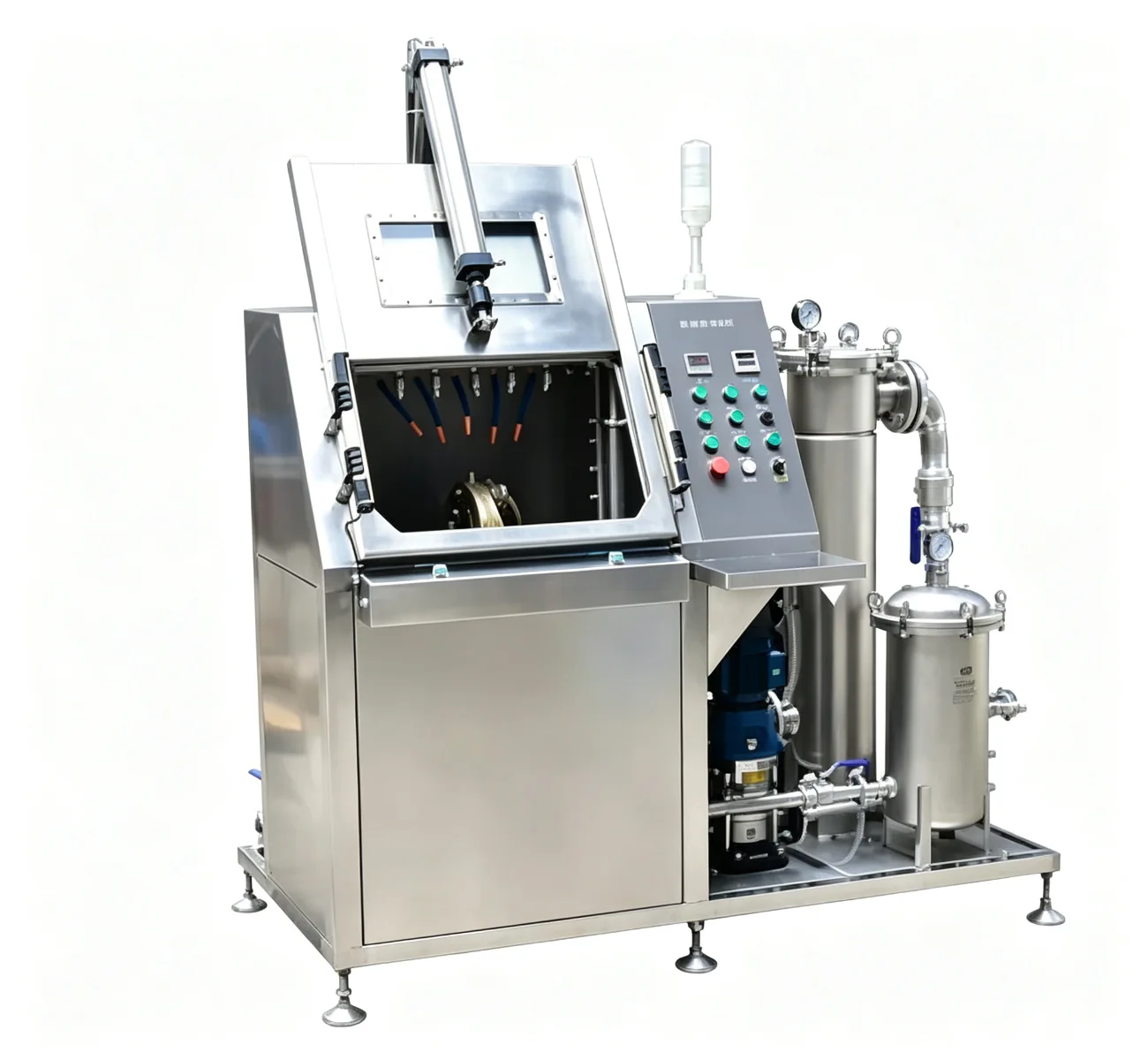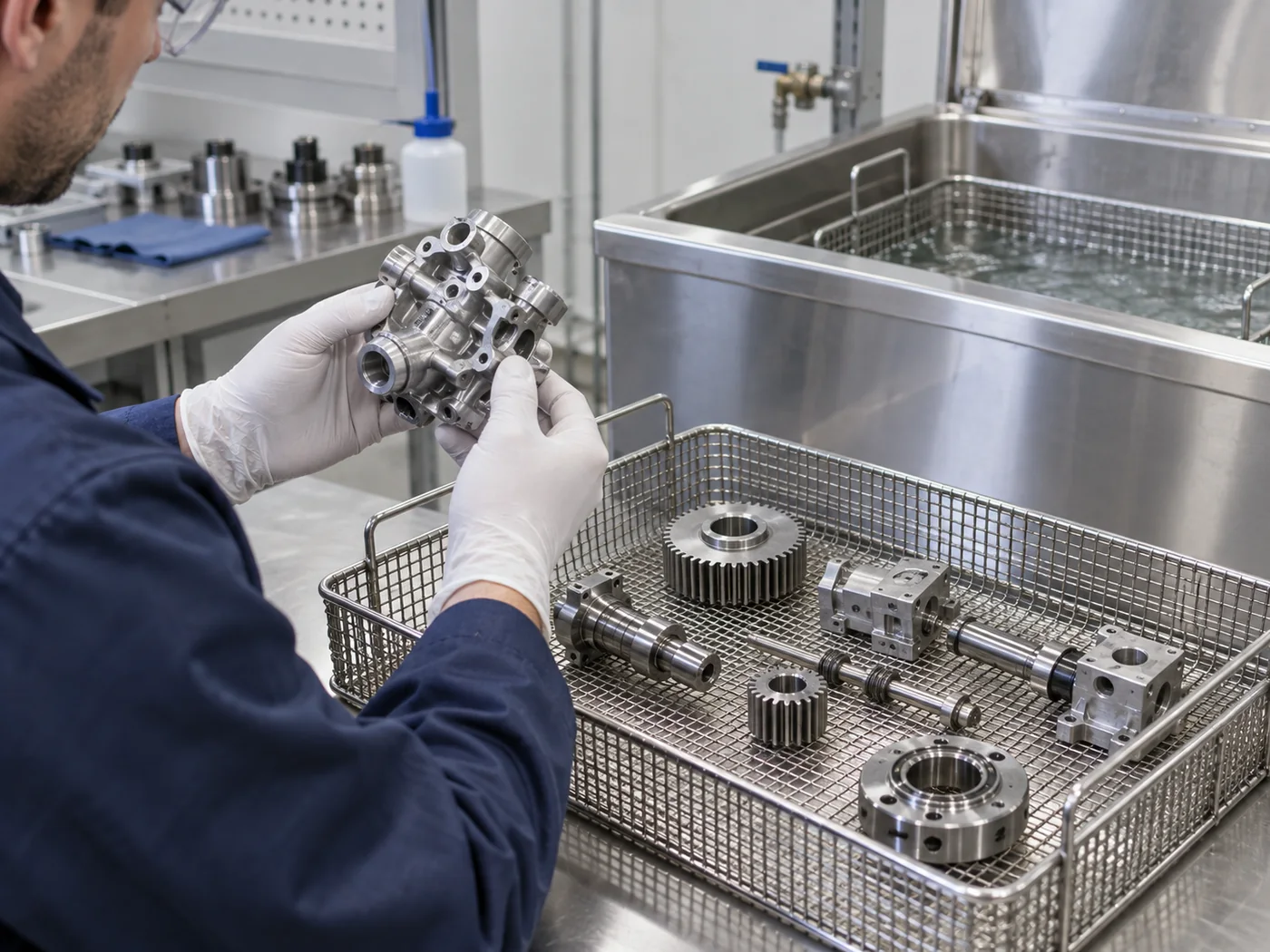
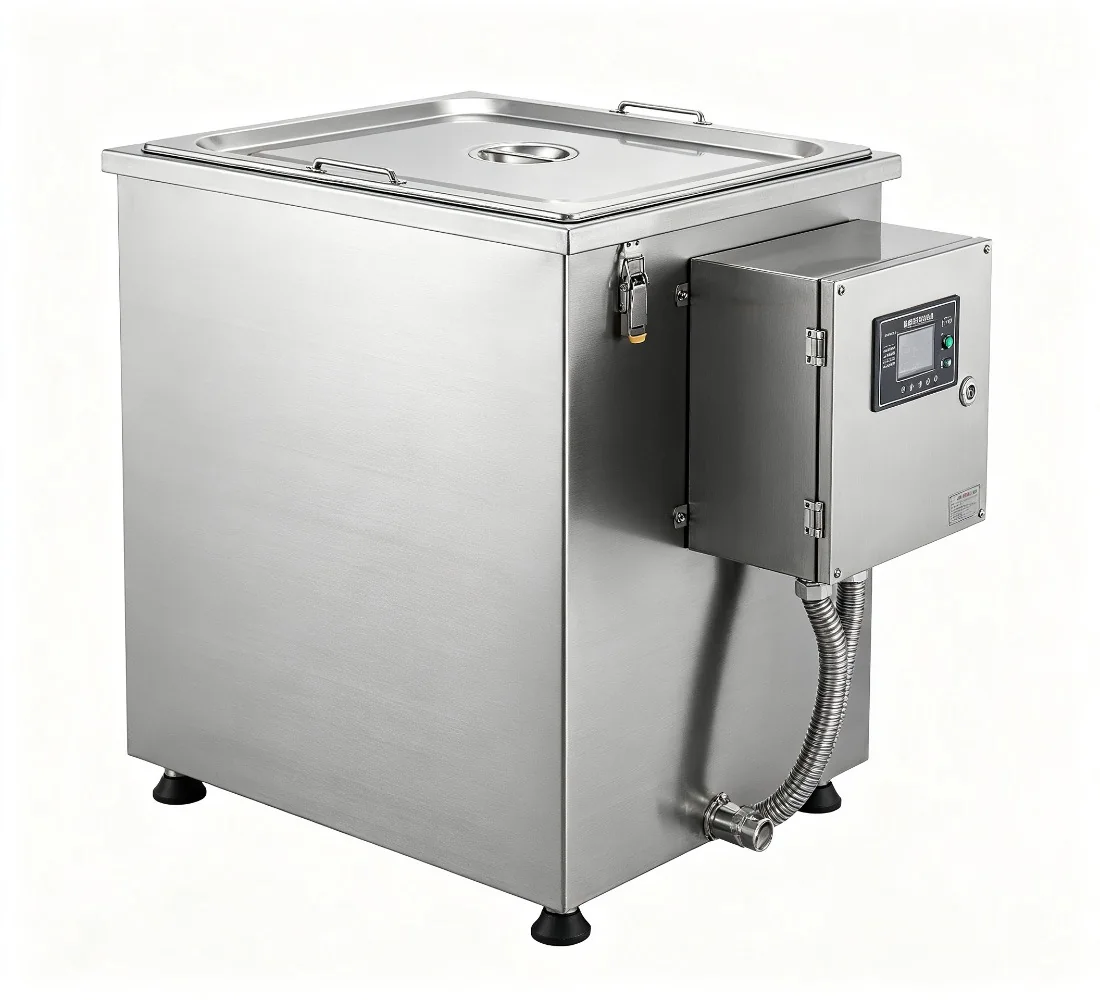
Steam is good for surface oil and sanitizing, but ultrasonic reaches sub-surface cavities and particles in a controlled bath.
Surface vs cavities
Steam acts on surfaces and heat-soluble soil, while ultrasonic cavitation reaches cavities, blind holes and particles wherever the liquid reaches.
Complex precision parts favour immersion.
- Steam: surface and heat
- Ultrasonic: cavities and particles
Contamination types
Steam can loosen grease and surface oil, but hard carbon and particles in recesses are better addressed by cavitation or a staged process.
Some industrial cleaning uses steam before immersion.
Drying and handling
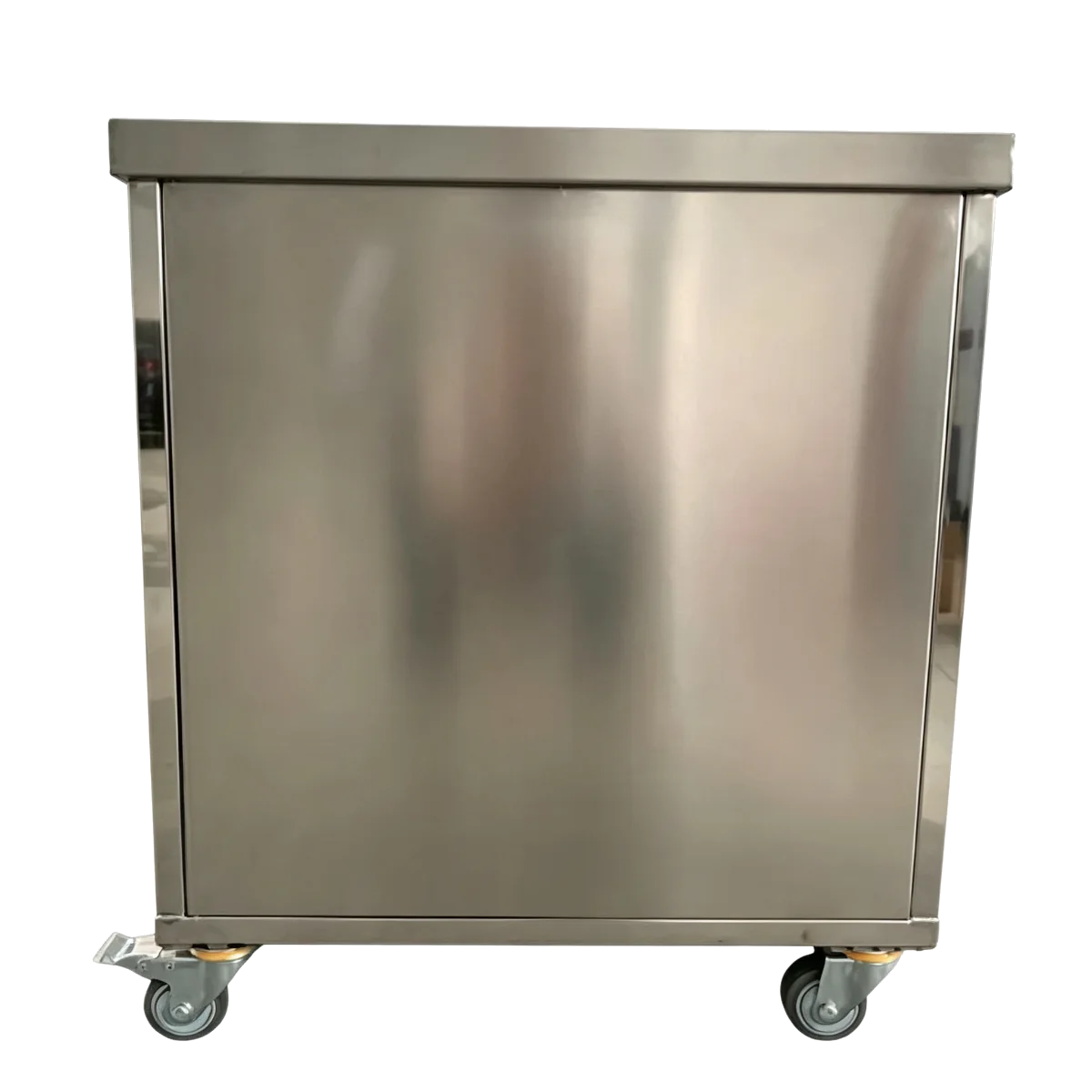
Steam leaves surfaces wet and hot, while an immersion line can include controlled rinsing and drying for a defined finish.
The choice depends on the next operation.
Validating the choice
Compare steam and ultrasonic on the same part and acceptance method, with the real loading.
Document the time, chemistry and result.
Quick Answers
Frequently asked questions
Steam is effective for surface oil and heat-soluble soil, but it does not reach cavities and particles like cavitation.
Yes. It can loosen grease before an ultrasonic wash for some processes.
An immersion line with rinse and drying gives a more defined finish than a wet steam stage.