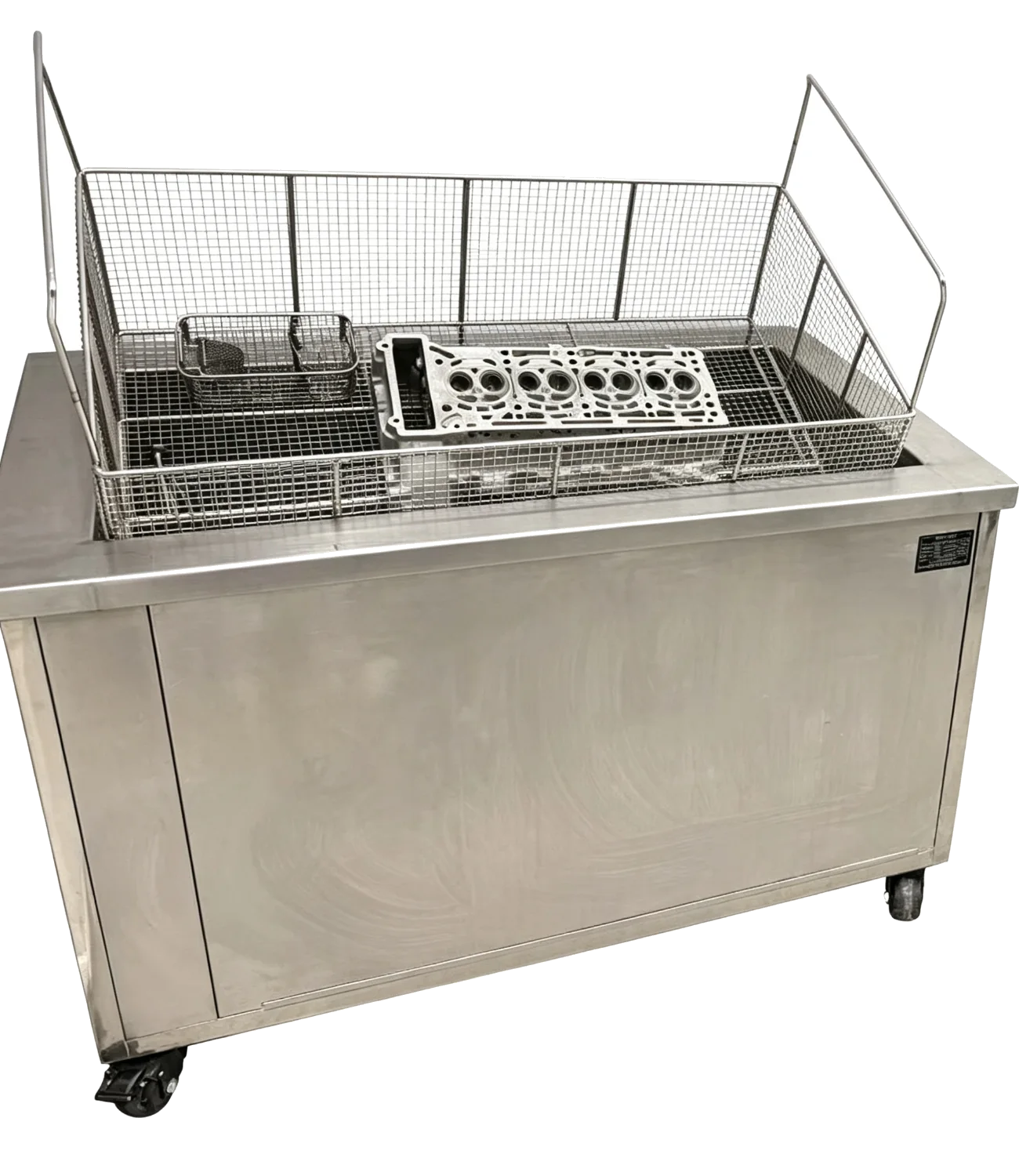
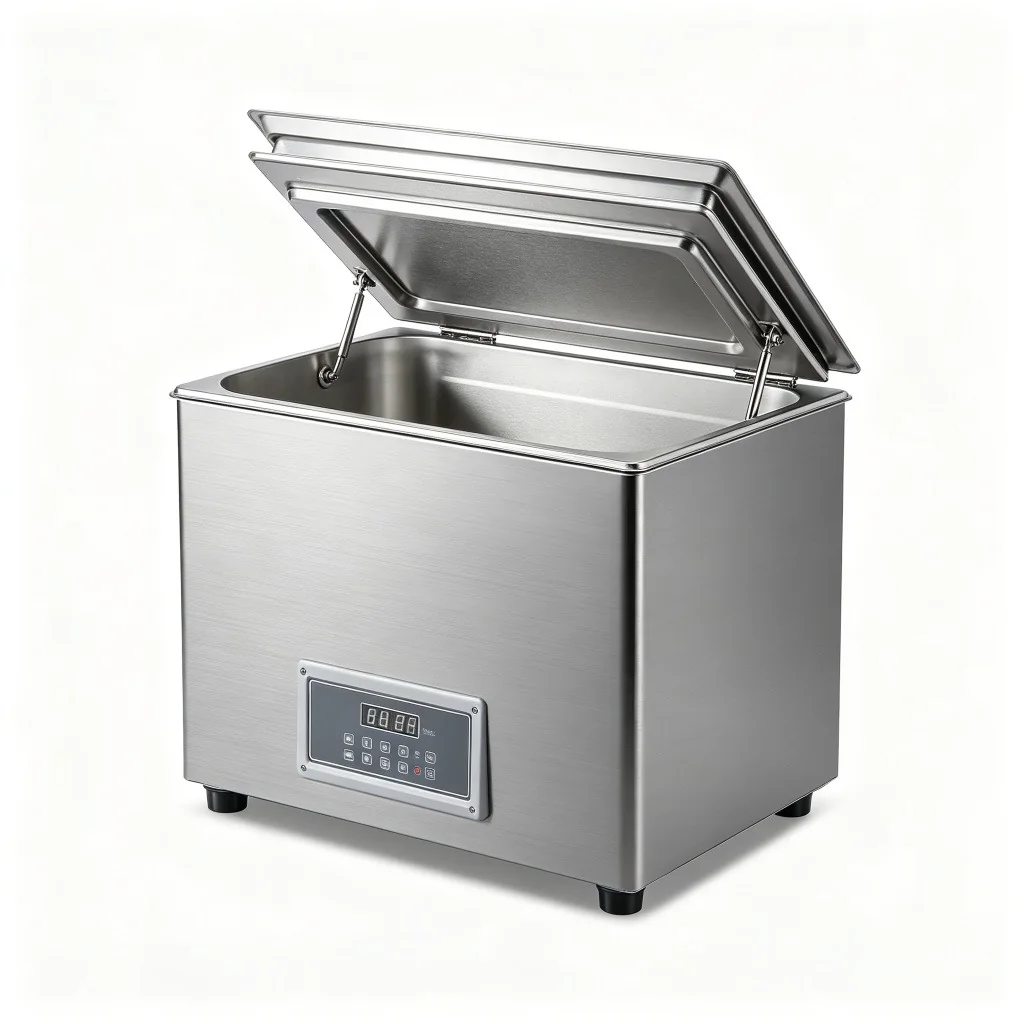
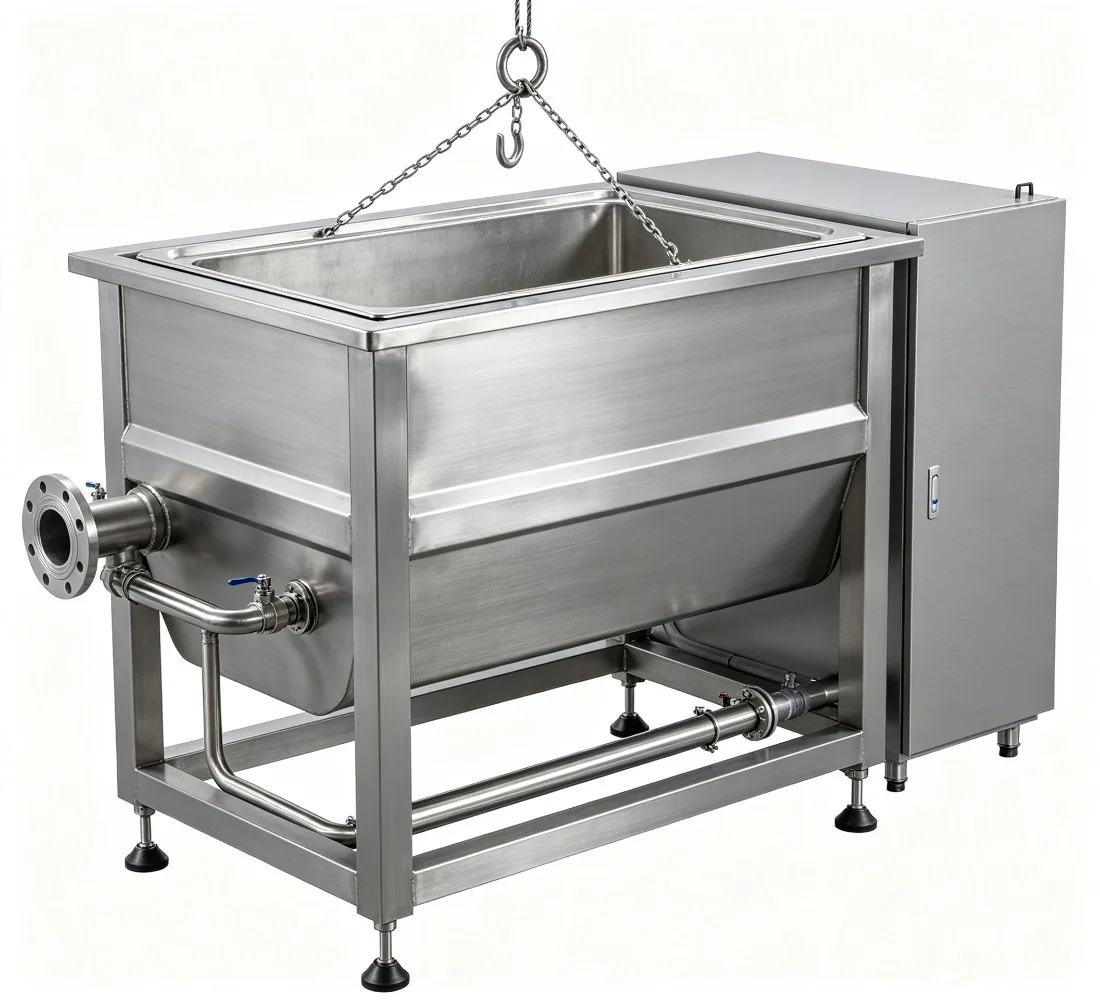
Heated batch tanks and special-process machines for focused industrial cleaning tasks.
Move the pointer over the main image to inspect details.
Industrial Single-Tank & Special Cleaners
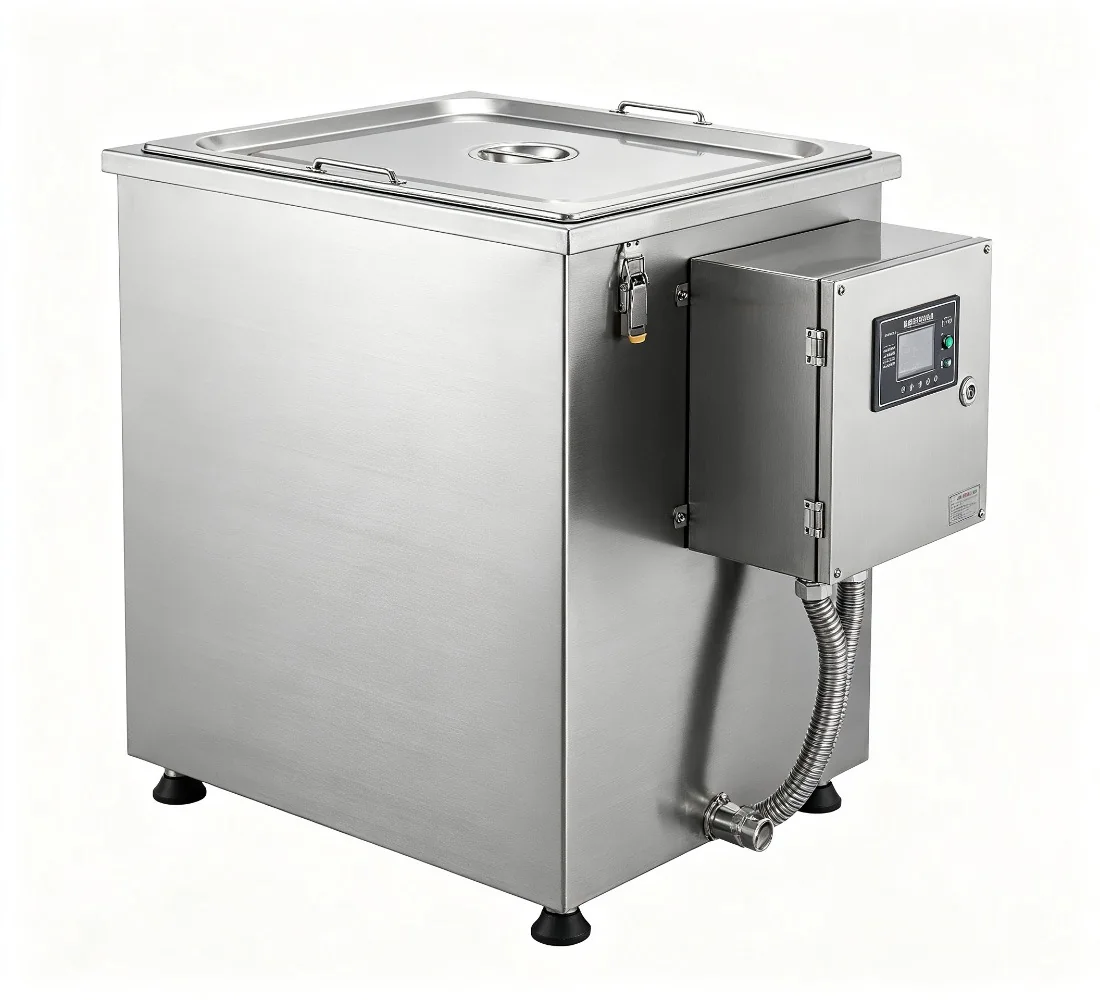
LJ-EX Series Explosion-Proof Ultrasonic Cleaner for Solvent & Hydrocarbon Cleaning
Solvent cleaning designed around vapour, temperature and static safety
The LJ-EX series is designed for flammable cleaning media that cannot be used safely in an ordinary water-based cleaner. The protection concept, electrical components, sealing, temperature limits, grounding and solvent-management options are selected from the actual solvent and hazardous-area requirement.
Parts that require hydrocarbon or compatible solvent cleaning for paste, wax, resin, flux or heavy oil removal without water spots or flash rust.
Review the construction, controls and process options available for this equipment.
01
LJ-EX Series
Explosion-Proof Safety and Design Features
01
Explosion-rated electrical design
Components are selected for the required Ex concept and zone, with the cabinet isolated from the vapour area.
02
Sealed process tank
A gasketed, clamp-locked lid contains vapour; a cooling coil can condense vapour back into the bath.
03
Independent temperature safety
Dual control includes an over-temperature cut-out fixed below the solvent flash point.
04
Level interlocks
Heating and ultrasound remain disabled until the liquid safely covers the active components.
05
Static dissipation
Conductive construction and grounding points control charge on the tank, parts and baskets.
06
Pneumatic actuation
Air-driven lifts and lids can replace electric actuation in risk areas.
07
Optional inerting and vapour control
Nitrogen inerting, extraction and carbon recovery are configured when required.
08
Chemical compatibility
Stainless construction, seals and hoses are selected for the specified solvent.
Model
Ultrasonic Power
Inner Tank (mm)
Volume
Frequency
LJ-EX1200
1200 W
600 x 400 x 300
72 L
28 / 40 KHz
LJ-EX2400
2400 W
900 x 500 x 400
180 L
28 / 40 KHz
LJ-EX3600
3600 W
1000 x 600 x 450
270 L
28 KHz
LJ-EX5400
5400 W
1200 x 700 x 500
420 L
28 KHz
Every LJ-EX machine is engineered around the solvent, flash point, compatibility, hazardous-area classification and applicable local requirements. Certification and protection method are confirmed during quotation; no blanket certification is implied.
Applications
Typical applications
Review common workpieces, contamination types and process uses for this equipment.
01
Typical Applications
For solvent-compatible precision cleaning where water-based processing is unsuitable.
01
Bearings and hydraulic or pneumatic precision parts where water is unacceptable
02
Powder-metallurgy and assembled components that cannot be wetted
03
Polished and plated parts requiring spot-free paste or wax removal
04
Electronic and optical assemblies using IPA or compatible solvent
05
Medical and fine-mechanical parts with complex geometry
Configuration Options
Configure the system for your process
Tank dimensions, utilities, automation and process settings are finalized around the application requirements.
Solvent name, flash point and compatibility
Hazardous-area classification and local standard
Flameproof, intrinsically safe or pneumatic protection concept
Cooling, nitrogen inerting or extraction
Particle filtration and solvent recovery
Vacuum or warm-air drying
Model range
LJ-EX1200 / 2400 / 3600 / 5400
Ultrasonic frequency
28 / 40 KHz by configuration
Capacity or line basis
72 / 180 / 270 / 420 L
Ultrasonic power
1200-5400 W
Construction
Sealed stainless steel with solvent-compatible seals
Product Questions
Before selecting this equipment
Yes. Tank dimensions, basket loading, ultrasonic frequency, power, heating, filtration, handling and controls are reviewed for the part and process. Parts that require hydrocarbon or compatible solvent cleaning for paste, wax, resin, flux or heavy oil removal without water spots or flash rust.
Send part drawings or dimensions, material, maximum weight, contamination, required cleanliness, parts per load, daily output and available utilities.
Yes. Representative parts can be used to evaluate chemistry, cycle conditions, loading and inspection criteria before the final configuration is confirmed.
Related Equipment
Compare the same product family
Review adjacent configurations before fixing the cleaning process and handling method.