
Industrial Single-Tank & Special Cleaners
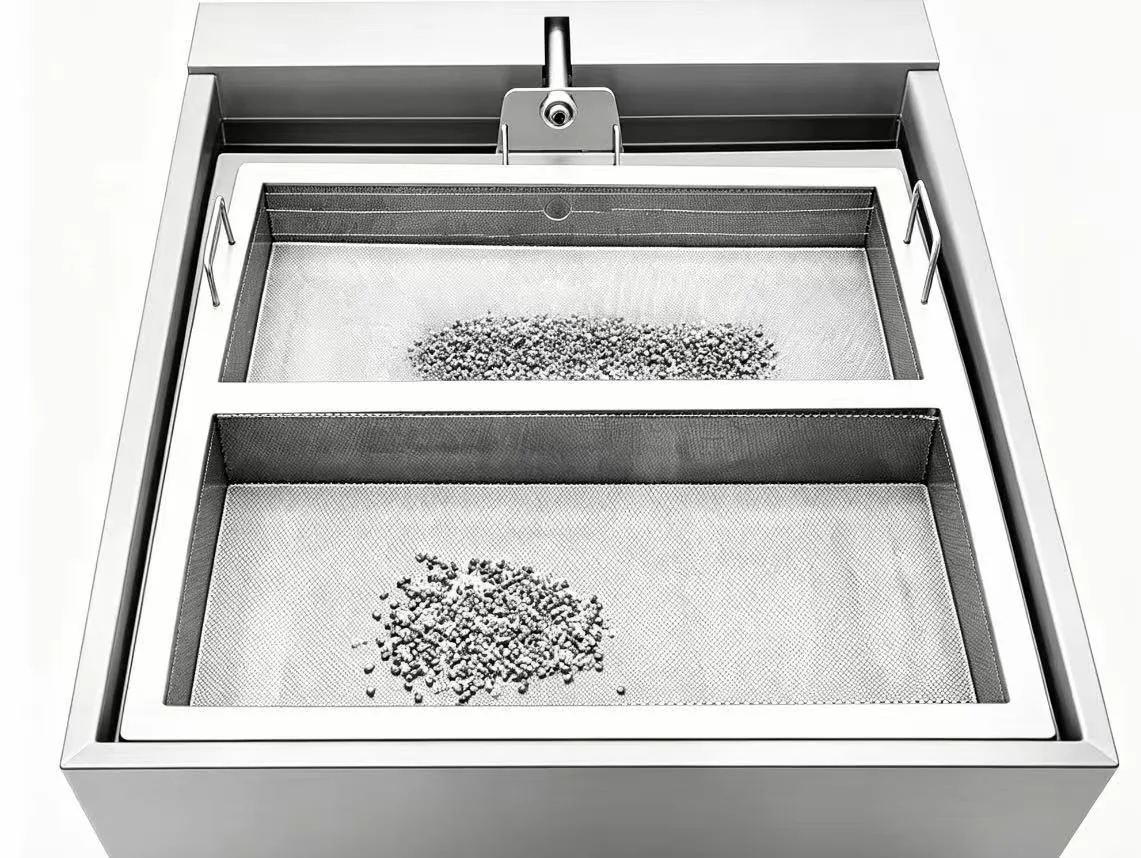
Ultrasonic Cleaner with Filtration & Oil Skimmer
Single-tank ultrasonic cleaning with circulating filtration and oil-water separation
View configuration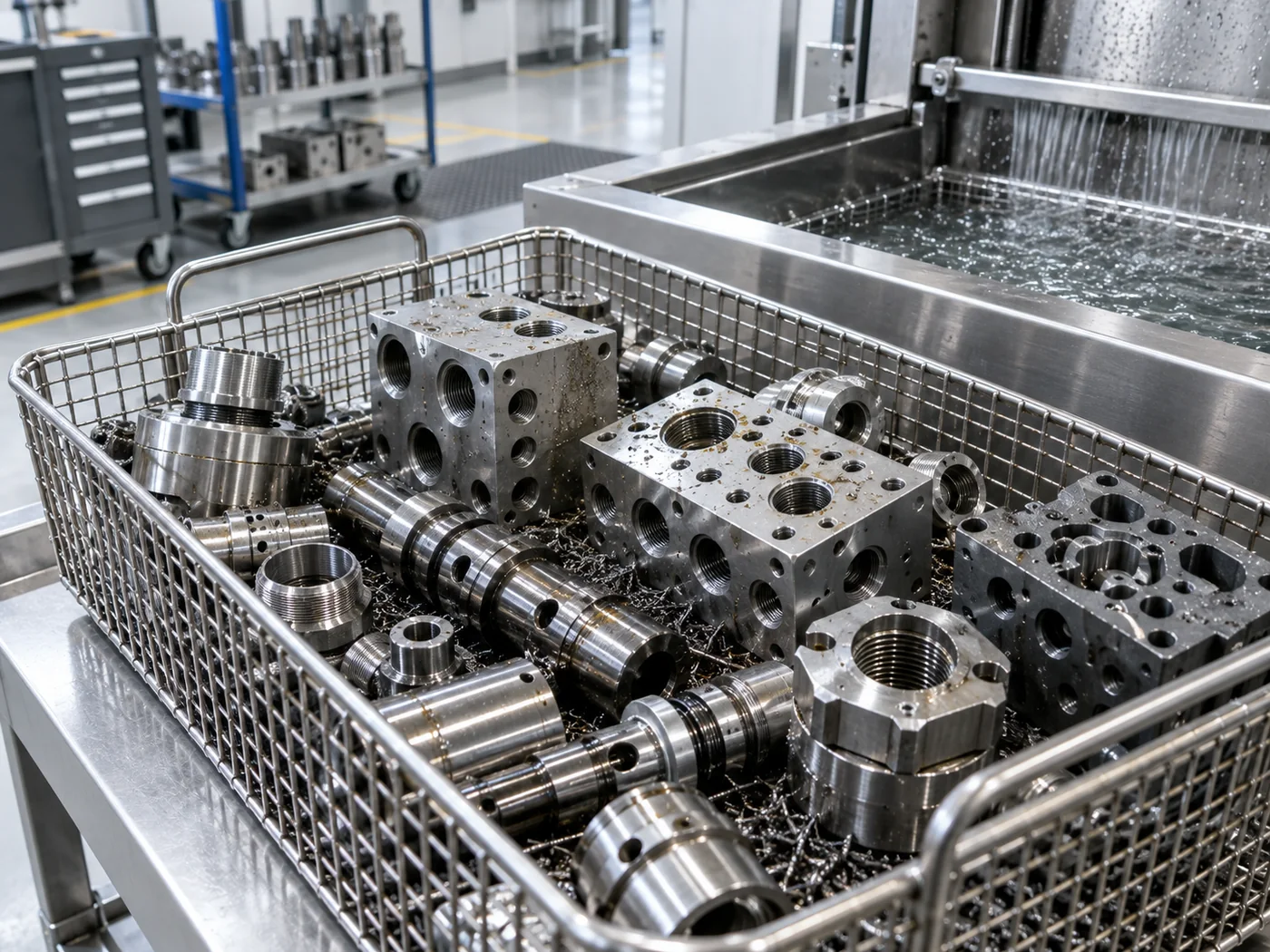
LENJEX Industrial Cleaning
Removes die-release agent, machining oil, casting residues and particles from aluminum, zinc and other castings.
Why Ultrasonic
Die-cast and cast parts carry release agent, casting oils, machining fluids, chips and particles in complex cast geometries. Ultrasonic cleaning reaches recesses, fins and internal features to remove these residues consistently, with chemistry controlled to protect aluminum and zinc alloys.
The process supports degreasing and is a common pre-treatment before machining, coating or assembly. A cleaner with filtration, lifting-platform cleaner or gantry cleaning line is used depending on batch or volume.
Material compatibility, especially for aluminum, is validated because temperature and alkaline chemistry must be controlled.
Typical Workpieces
Contamination
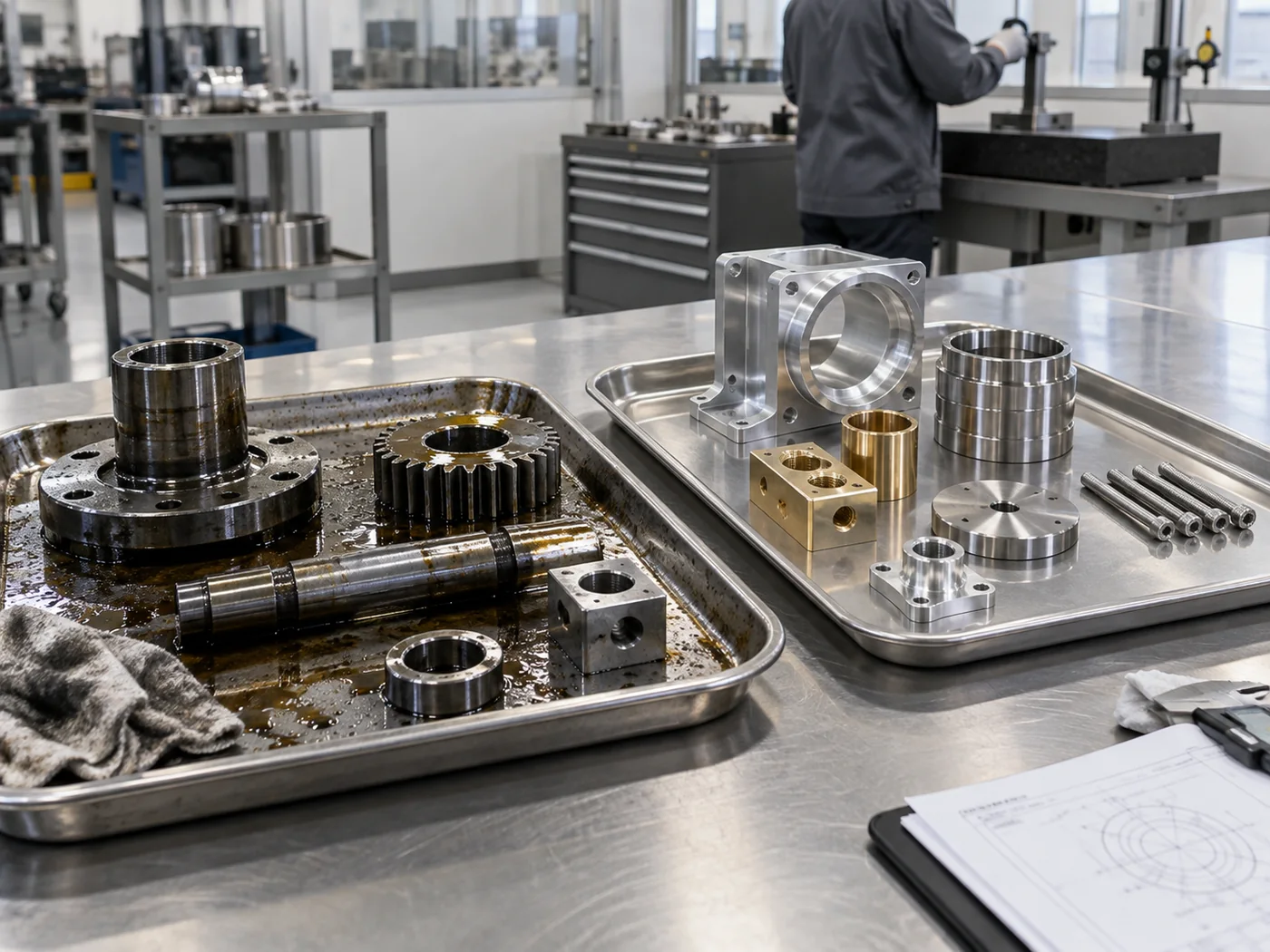
Cleanliness Target
Acceptance is based on surface cleanliness, residue checks and condition of the alloy before coating or assembly.
Aluminum parts require validated temperature and chemistry to avoid staining.
Recommended Sequence
The final sequence depends on soil loading, material, rinse quality and drying behavior.
Recommended Equipment
The final specification follows process testing and production analysis.
Industrial Single-Tank & Special Cleaners
Single-tank ultrasonic cleaning with circulating filtration and oil-water separation
View configuration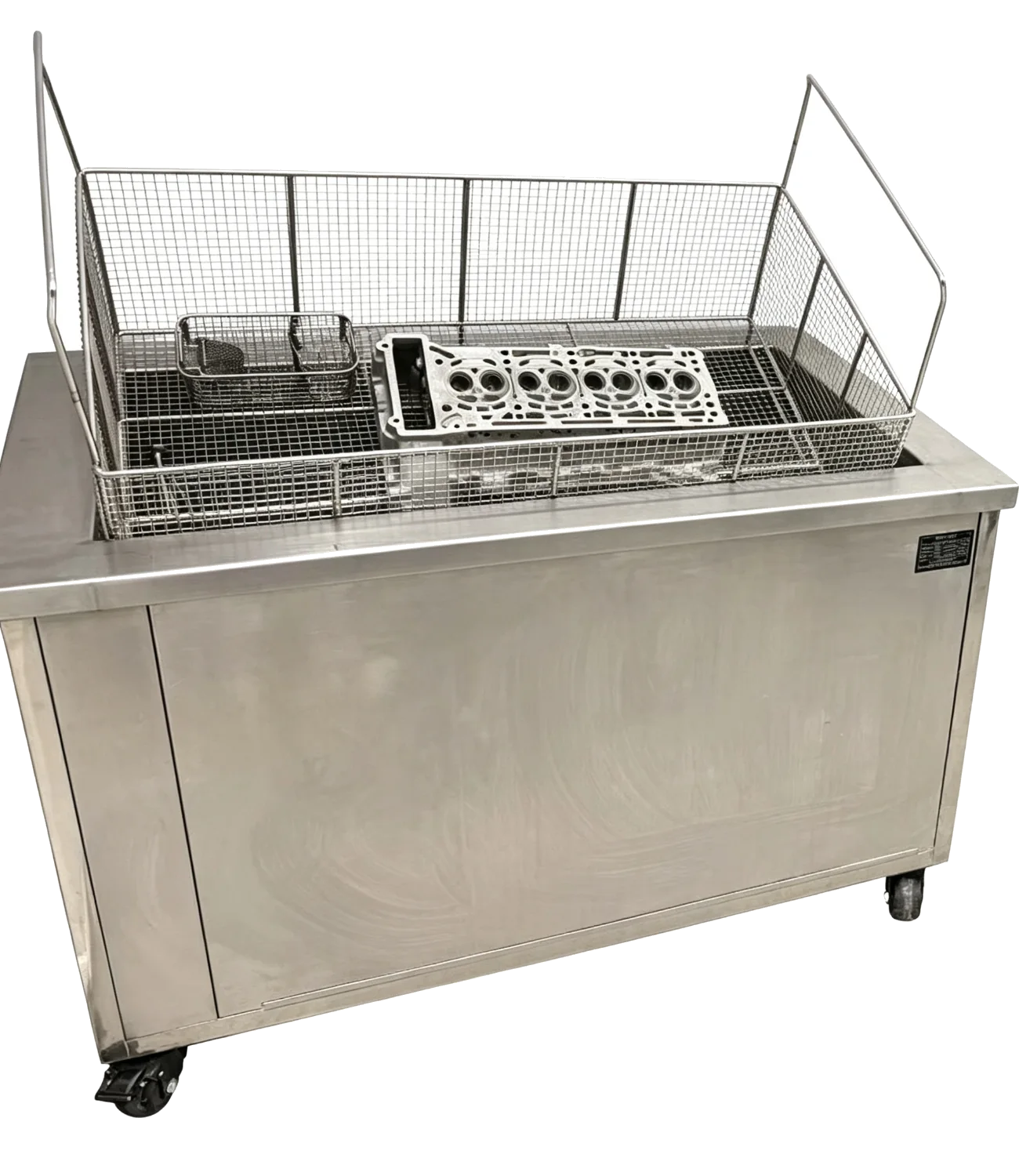
Industrial Single-Tank & Special Cleaners
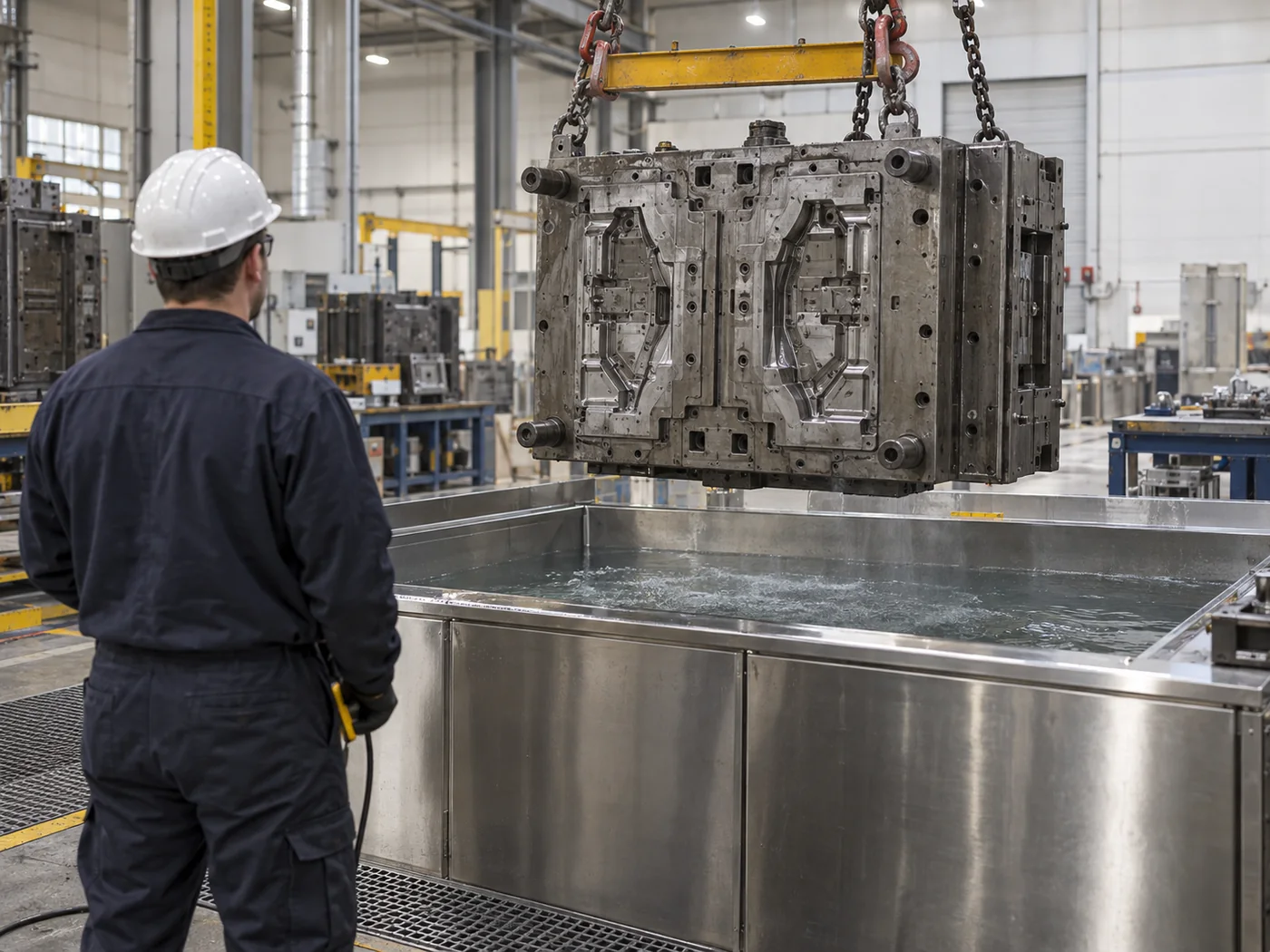
Hydraulic lifting platform with vertical agitation for heavy baskets
View configuration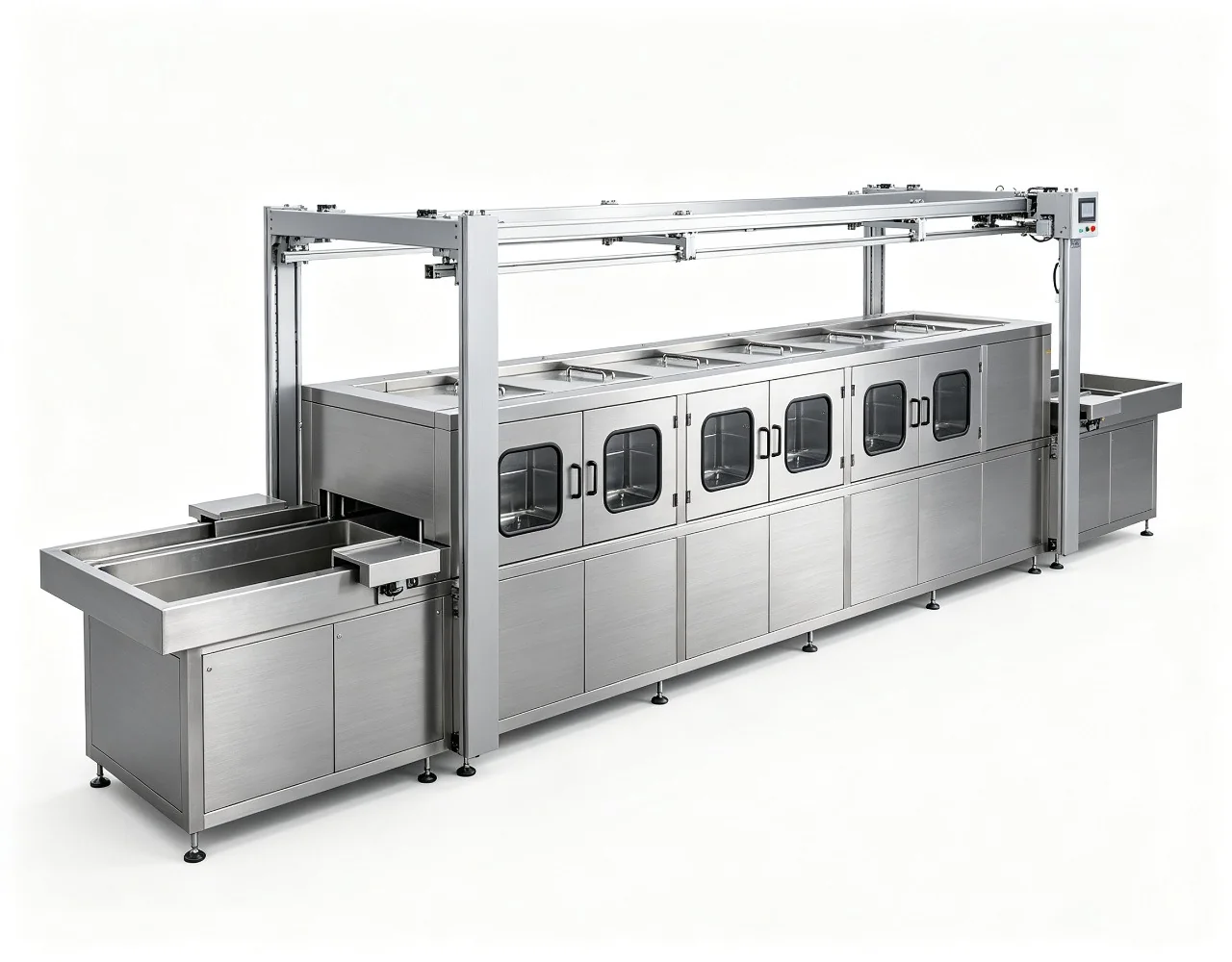
Automatic Cleaning Lines
A PLC-controlled gantry line that automatically lifts, transfers, oscillates and optionally rotates baskets through 3-12 process stations.
View configurationProcess Controls
Confirm the part, soil, loading and final handling before fixing equipment settings.
Control 01
Record surfaces, cavities and features that can trap air or liquid.
Control 02
Test the heaviest representative contamination, not an ideal sample.
Control 03
Keep acoustic access and part spacing consistent with production.
Control 04
Match downstream handling to residue and corrosion risks.
System Selection
Stage count and automation follow the validated process and required output.
Batch
Compare for focused washing where rinsing and drying are managed separately.
Multi-stage
Add controlled stages when carryover and final condition matter.
Automatic
Evaluate automation when output, handling or recipe control requires it.
Acceptance
Use the same practical inspection method for trial samples and production parts.
Representative Trial
Trial evidence should cover normal production and the most difficult expected condition.
Application Questions
Include normal production parts and the most difficult expected geometry or contamination so the process is not based on an easy sample.
Provide part dimensions, material, soil, cleanliness target, parts per load, required output and available utilities.
Yes, with controlled chemistry and temperature. Strongly alkaline or hot baths can stain aluminum, so the process is validated for the alloy before production.
Yes. Cavitation and suitable chemistry lift mold and die-release agents from recessed and finned cast surfaces.
Single tanks with lifting handle heavy batches, while high-volume casting plants move to gantry or automatic lines for continuous production.
Related Applications
Industrial Application
Removes drawing oil, stamping lubricant and fines from stamped and sheet-metal parts in high volume.
View cleaning approach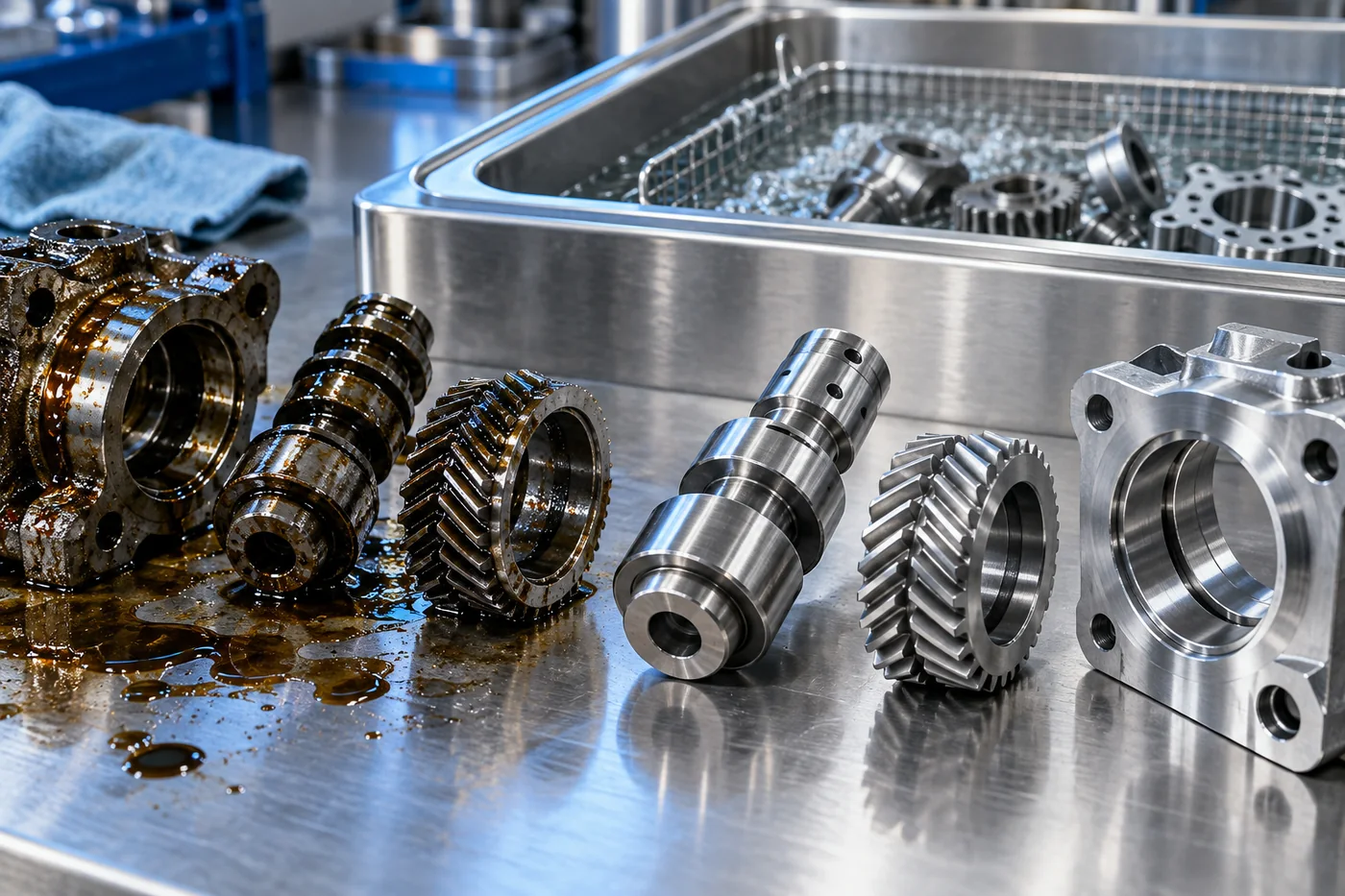
Industrial Application
Removes carbon, oil, casting and machining residues from turbocharger and turbine components.
View cleaning approach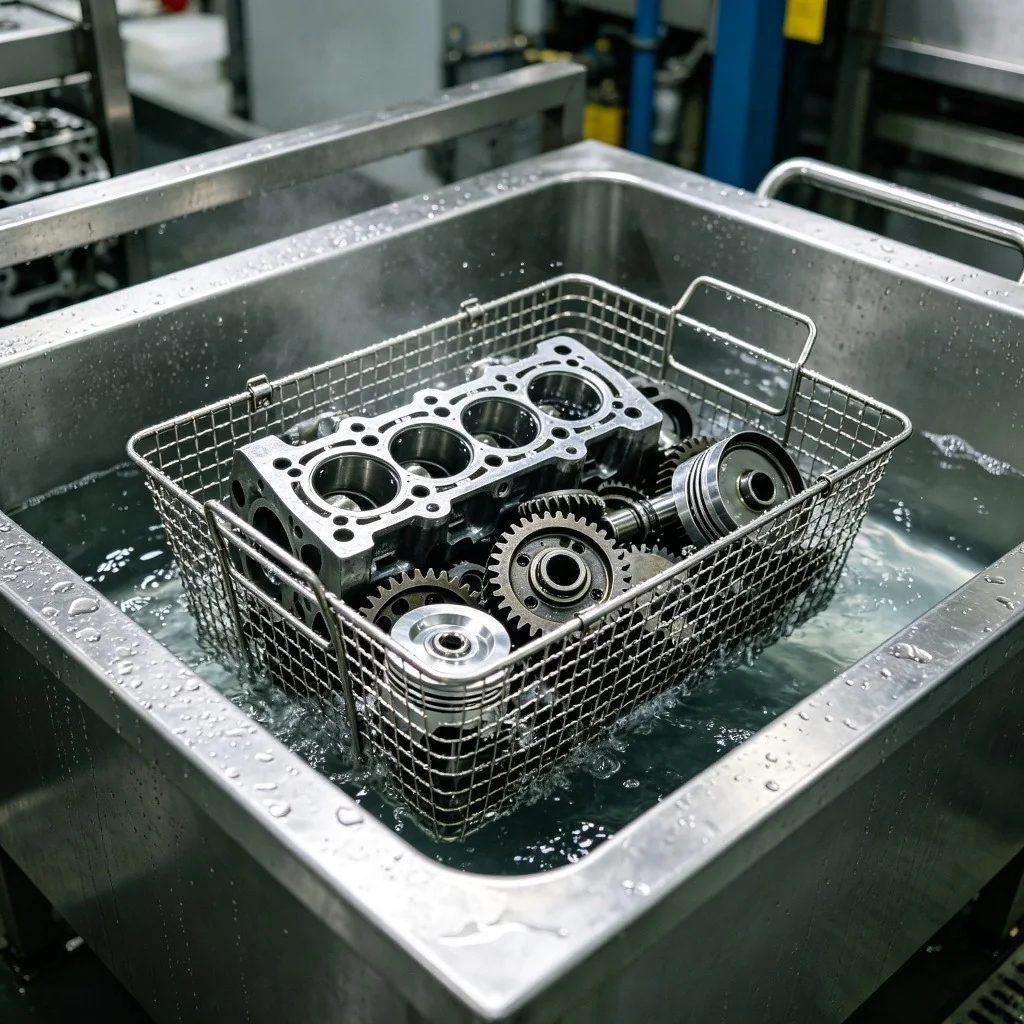
Industrial Application
Automotive component cleaning must remove mixed contamination from passages, holes and complex surfaces without slowing production flow.
View cleaning approach