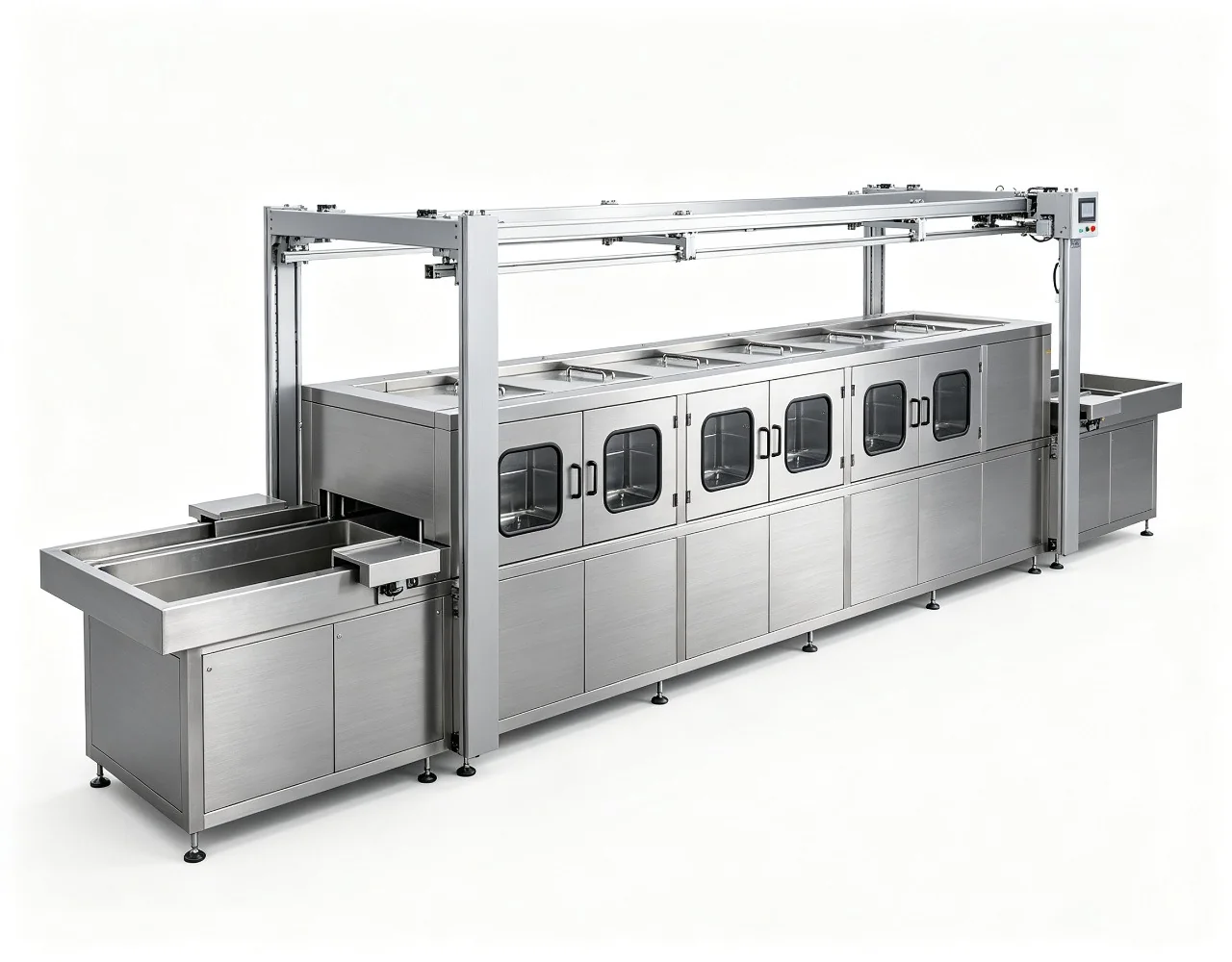
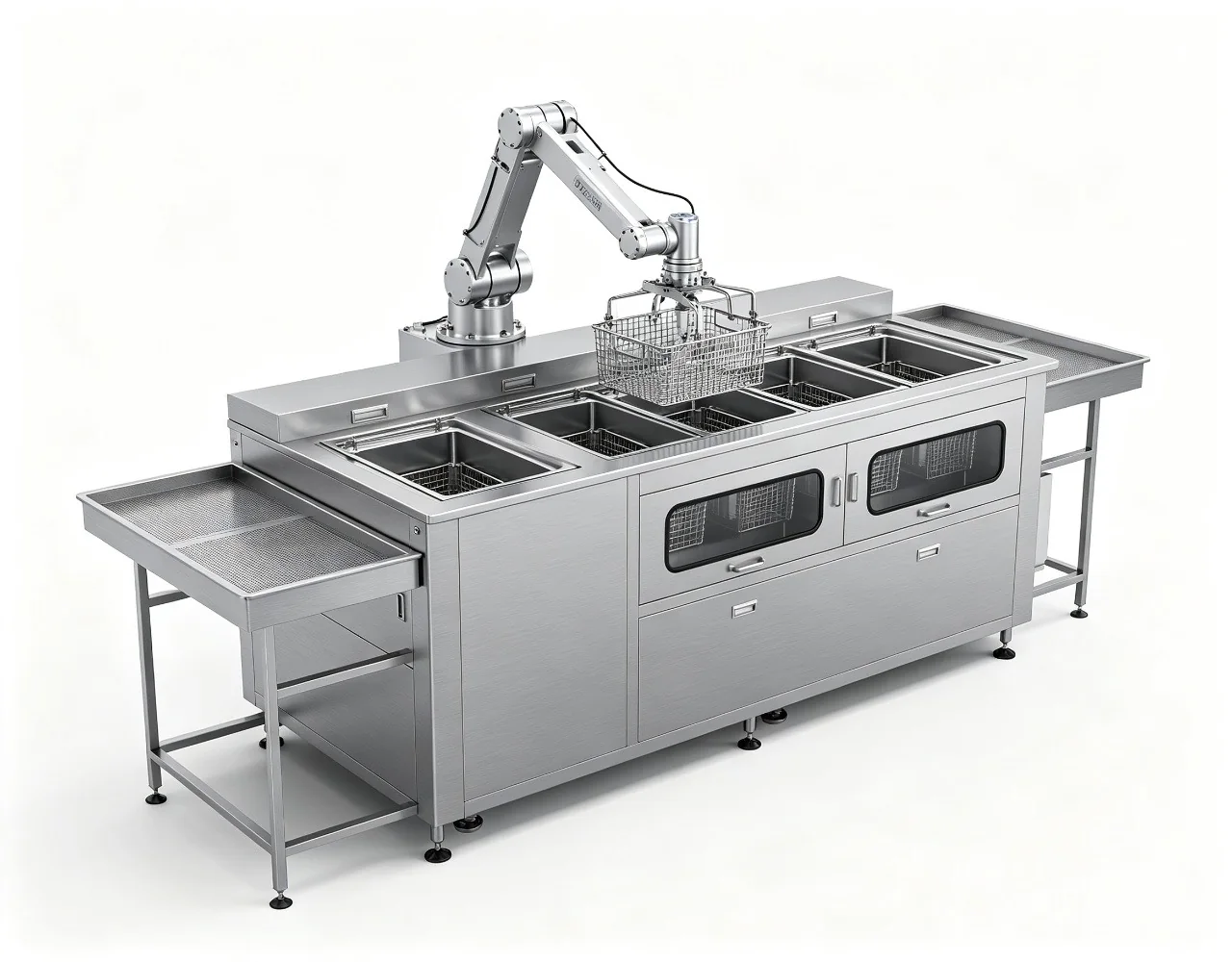
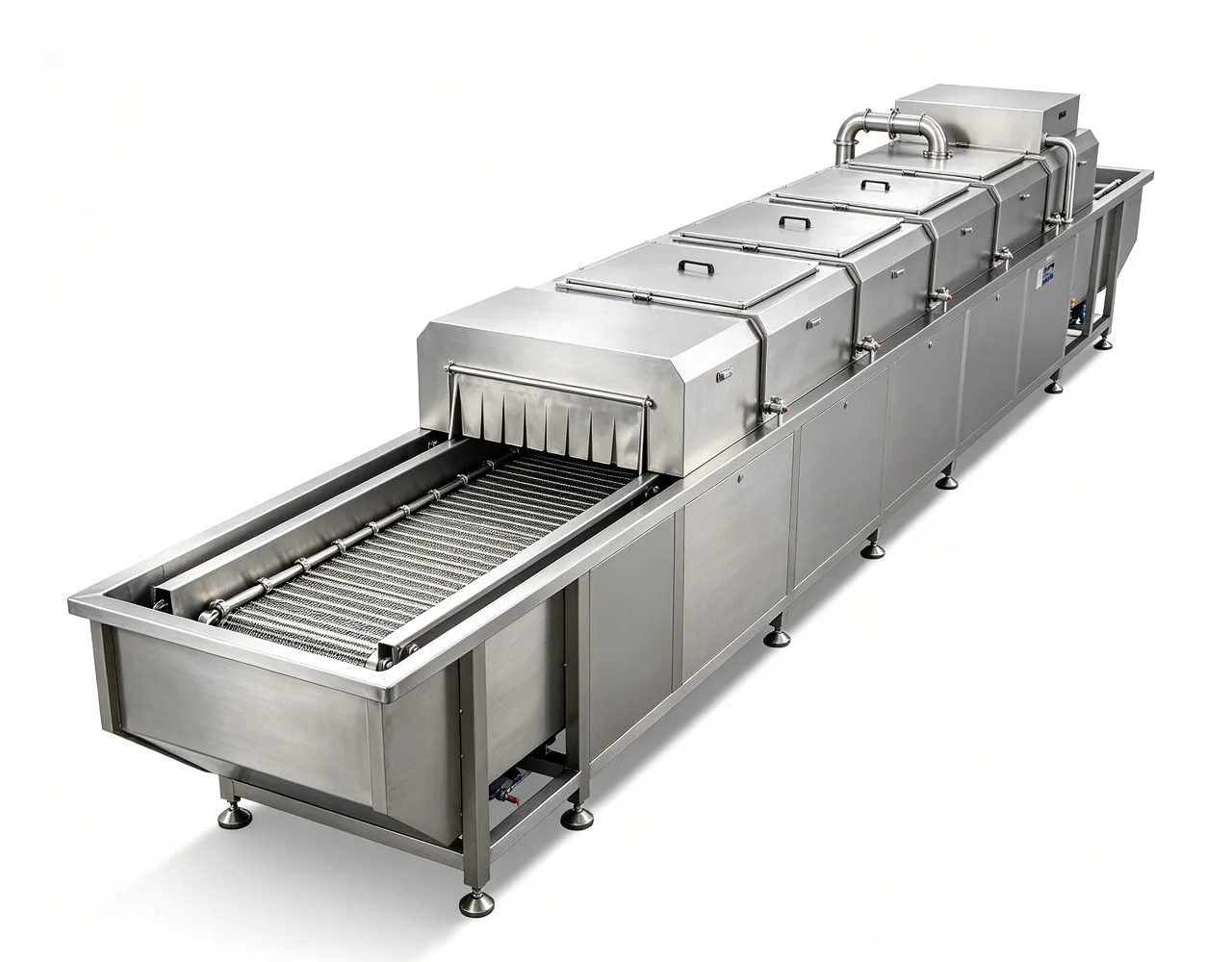
Multi-stage wash, rinse and drying lines with manual, gantry, robotic or continuous transfer.
Move the pointer over the main image to inspect details.
Multi-Tank & Automatic Cleaning Systems
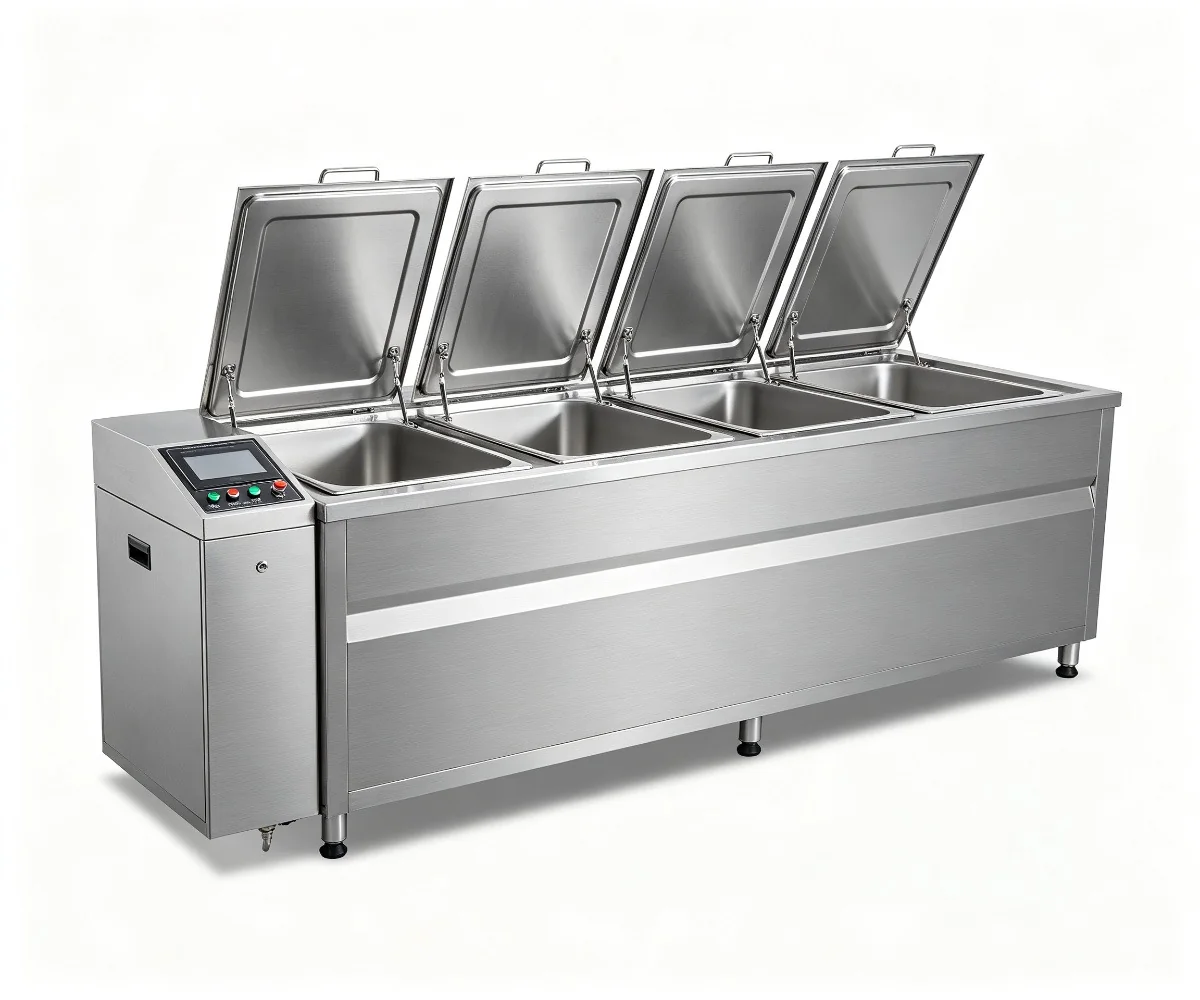
Multi-Tank Ultrasonic Cleaning Machine - Clean, Rinse and Dry in One Line
Each tank performs one controlled process stage
The multi-tank machine arranges independent process baths in sequence so parts can move through ultrasonic rough cleaning, fine cleaning, one or more rinses, optional passivation or anti-rust treatment and drying without leaving the line.
Precision parts, hydraulic components, bearings, gears and pre-treatment processes that need stable wash-rinse-dry results beyond a single bath.
Review the construction, controls and process options available for this equipment.
01
Multi-Stage System
Per-Tank Construction and Process Control
01
Independent ultrasonic arrays
Ultrasonic tanks can use 3-5 transducerized faces with auto tracking, sweep and adjustable power.
02
Insulation and heating
Insulated walls, stainless heaters and digital temperature control are configured per stage.
03
Low-level interlocks
Every heated tank is protected against insufficient liquid level.
04
Circulation filtration
Stainless pumps and bag filtration keep the wash liquid clean; 5 micron filtration is optional.
05
Surface oil removal
Wash stages can continuously remove floating oil using a skimmer or coalescer.
06
Independent stage settings
Each stage has its own time and temperature, while rinse stages can use cascading overflow.
07
Integrated drying
Filtered hot air and rotating or lifting fixtures can address blind-hole drying.
Line
Typical Sequence
Best For
2-tank
Ultrasonic wash -> rinse/dry
Light oil, small batch, simple specification
3-tank
Rough wash -> fine wash -> rinse/dry
General machined parts
4-tank
Rough -> fine -> rinse -> hot-air dry
Higher cleanliness, no water spots
5-tank
Rough -> fine -> rinse 1 -> rinse 2 -> dry
Precision and anti-rust parts
6-8 tank
Add passivation, DI rinse or vacuum dry
Hydraulic, bearing and higher-grade work
Tank sizes, station count, frequency, transfer method and wetted material are customized to the part drawing and required cleanliness.
Applications
Typical applications
Review common workpieces, contamination types and process uses for this equipment.
01
Typical Applications
For workpieces that require controlled washing, rinsing, treatment and drying.
01
Precision machined and stamped parts requiring wash-rinse-dry
02
Hydraulic valves, pump bodies and manifold blocks with internal passages
03
Bearings, gears and rotating parts with anti-rust requirements
04
Stainless steel and new-energy components before assembly or packaging
05
Plating and coating pre-treatment where cleanliness controls adhesion
Configuration Options
Configure the system for your process
Tank dimensions, utilities, automation and process settings are finalized around the application requirements.
Number and sequence of stages
Manual, hoist, pneumatic or semi-automatic transfer
Per-stage filtration and oil removal
Overflow or DI-water rinsing
Passivation or anti-rust treatment
Hot-air, air-knife, spin or vacuum drying
Model range
2-8 tanks or more, configured by process
Ultrasonic frequency
20 / 28 / 40 / 60 / 80 KHz by stage
Capacity or line basis
Tank dimensions configured to the load
Ultrasonic power
Independent ultrasonic power by wash stage
Construction
SUS304 standard; SUS316 for aggressive chemistry
Product Questions
Before selecting this equipment
Yes. Tank dimensions, basket loading, ultrasonic frequency, power, heating, filtration, handling and controls are reviewed for the part and process. Precision parts, hydraulic components, bearings, gears and pre-treatment processes that need stable wash-rinse-dry results beyond a single bath.
Send part drawings or dimensions, material, maximum weight, contamination, required cleanliness, parts per load, daily output and available utilities.
Yes. Representative parts can be used to evaluate chemistry, cycle conditions, loading and inspection criteria before the final configuration is confirmed.
Related Equipment
Compare the same product family
Review adjacent configurations before fixing the cleaning process and handling method.