
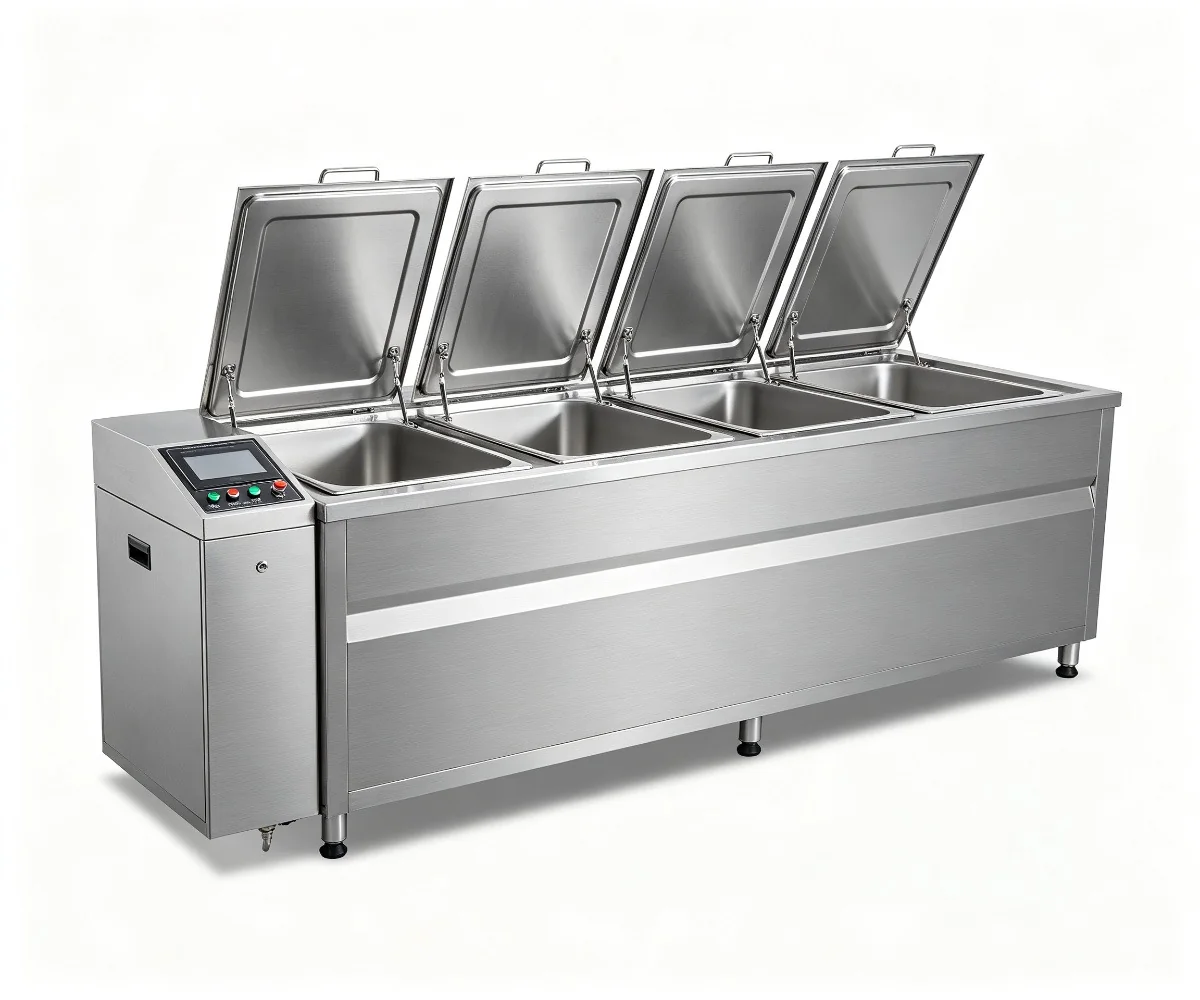
Multi-Stage Systems
Multi-Tank Ultrasonic Cleaning Machine - Clean, Rinse and Dry in One Line
A configurable 2-8+ stage system combining rough wash, fine wash, rinsing, treatment and drying around the required cleanliness target.
View configuration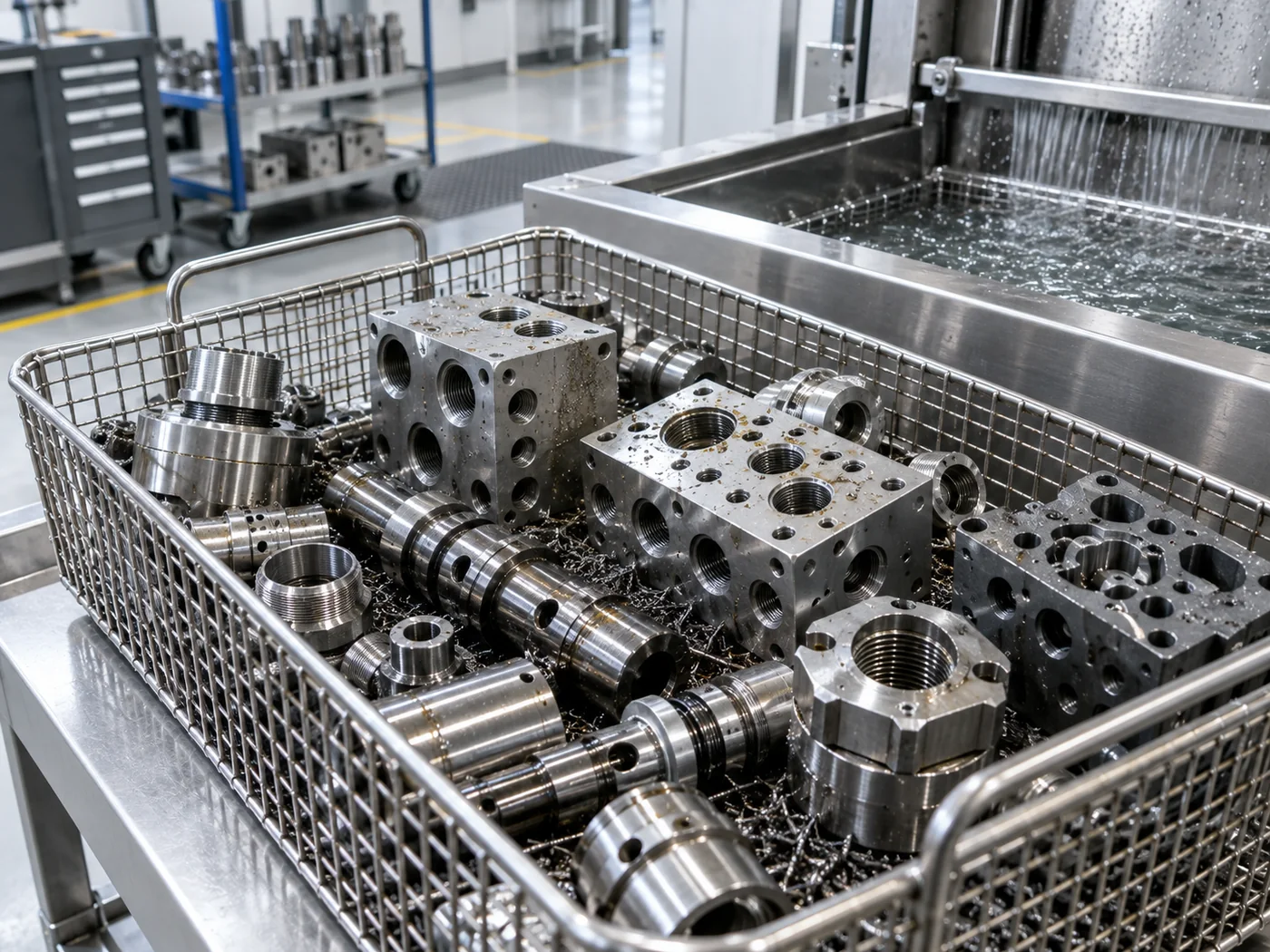
LENJEX Industrial Cleaning
Aerospace and defense components demand controlled, repeatable cleaning to particle and residue limits before assembly, inspection or surface treatment.
Why Ultrasonic
Aerospace and defense parts are machined from high-performance alloys and combine tight tolerances, internal passages and sensitive surfaces. Ultrasonic cavitation reaches these geometries consistently, removing machining oil, chips, polishing compound and handling residues without aggressive manual work that could damage a finished part.
The process is commonly validated against defined particle limits for precision cleanliness control. Parts such as turbine and valve components, fuel-system pieces and structural fittings are reviewed with the multi-tank ultrasonic system or, for high-value work, a vacuum ultrasonic cleaner.
Frequency, chemistry, filtration, rinsing and drying are selected for the alloy and the required cleanliness, then confirmed during trial cleaning.
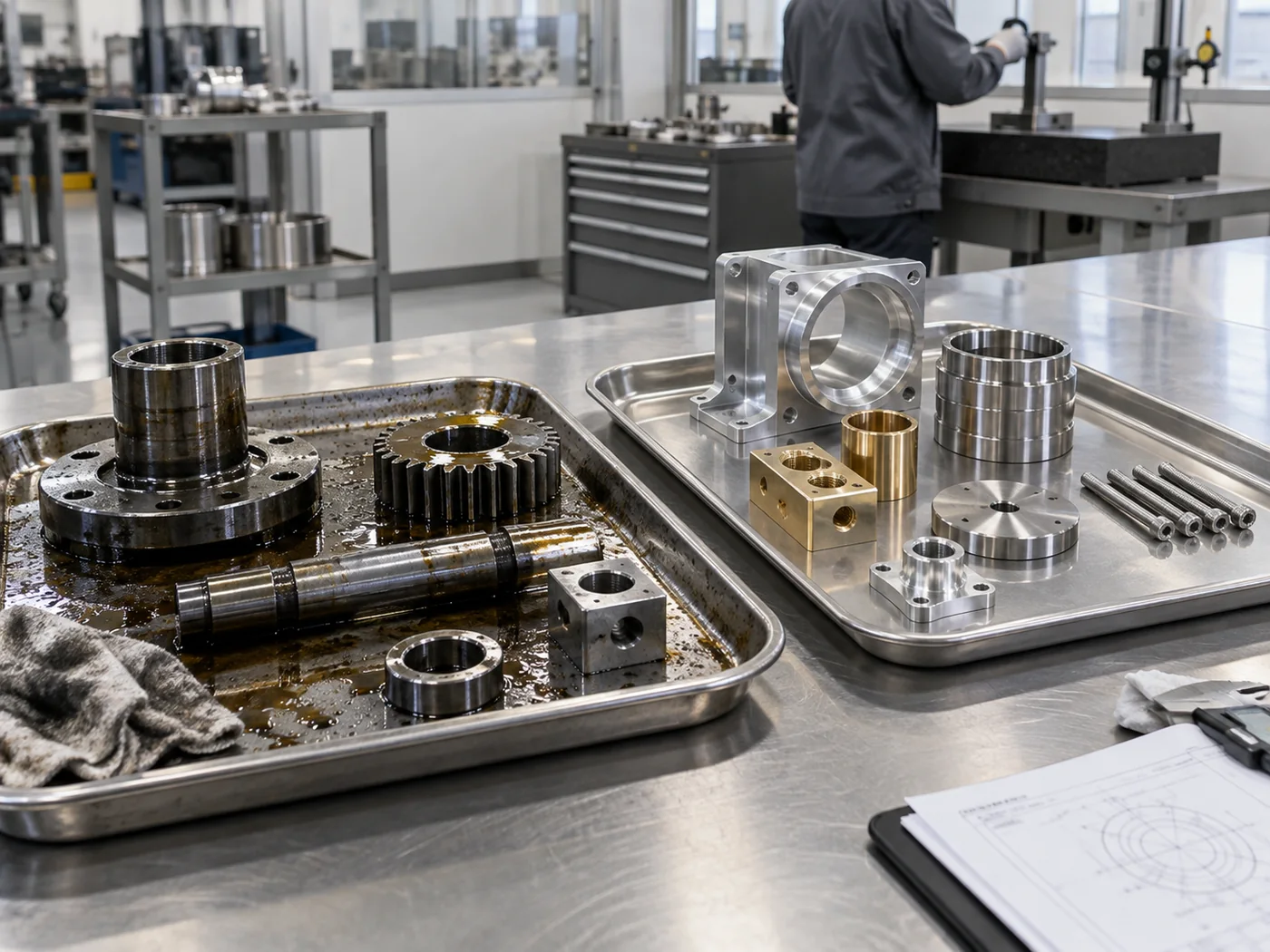
Typical Workpieces
Contamination
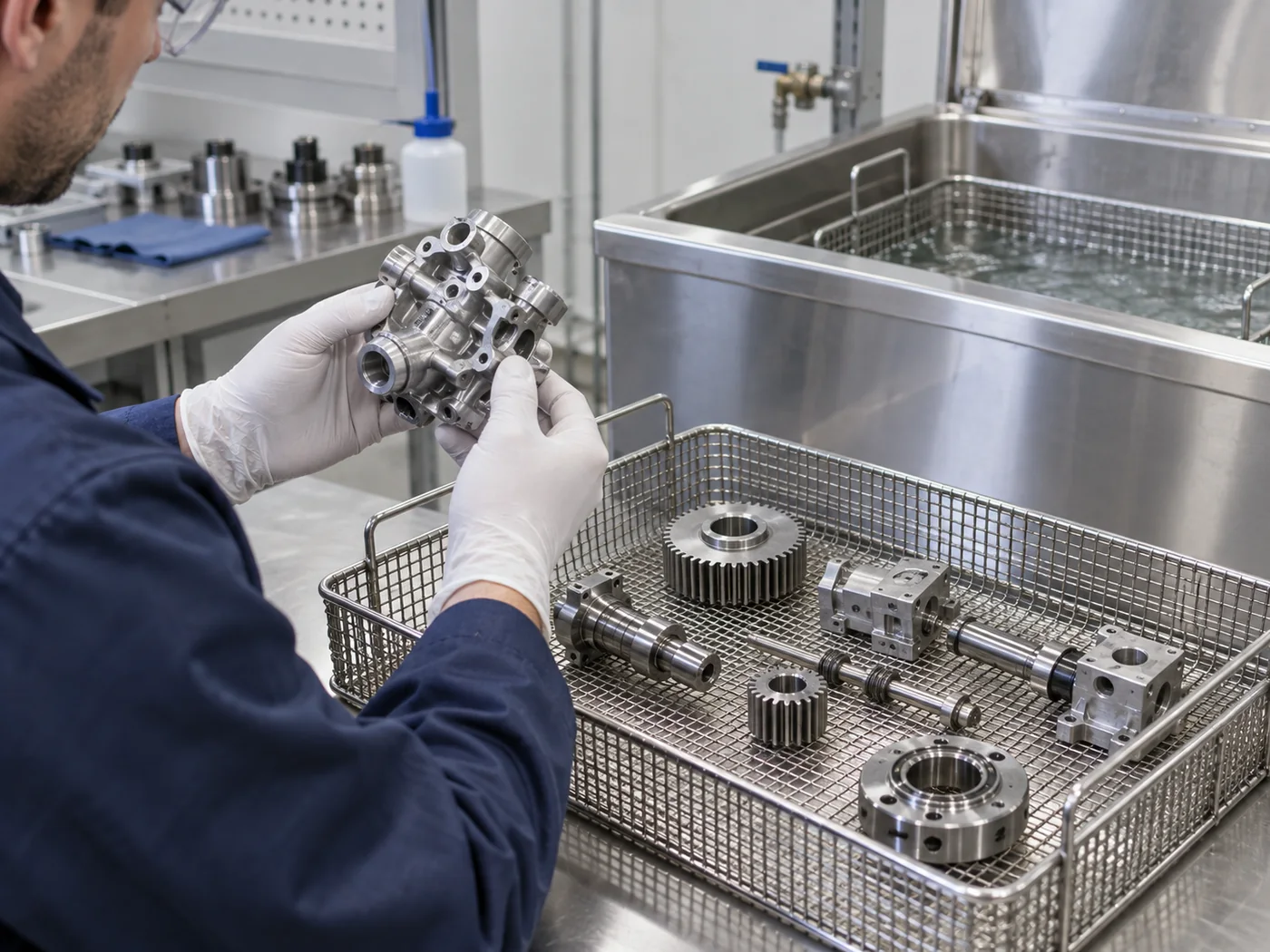
Cleanliness Target
Acceptance is often based on gravimetric or counted particle limits, residue checks or surface inspection tied to the next operation.
The same inspection method should be used for trial cleaning and production, with agreed sampling and handling.
Recommended Sequence
The final sequence depends on soil loading, material, rinse quality and drying behavior.
Recommended Equipment
The final specification follows process testing and production analysis.
Multi-Stage Systems
A configurable 2-8+ stage system combining rough wash, fine wash, rinsing, treatment and drying around the required cleanliness target.
View configuration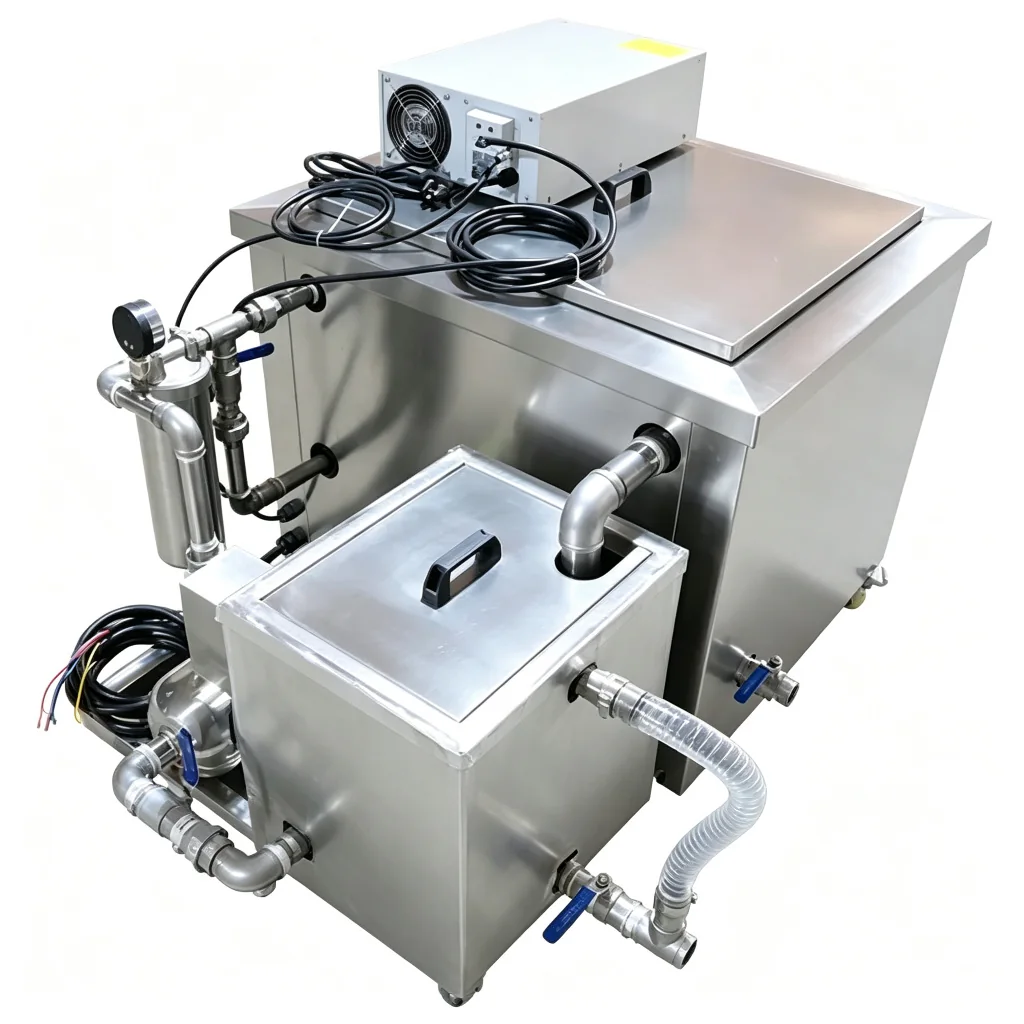
Industrial Single-Tank & Special Cleaners
Sealed vacuum ultrasonic cleaning and drying with hydrocarbon or modified-alcohol solvent
View configuration
Multi-Tank & Automatic Cleaning Systems
Compact multi-stage ultrasonic wash, rinse and drying system
View configurationProcess Controls
Confirm the part, soil, loading and final handling before fixing equipment settings.
Control 01
Record surfaces, cavities and features that can trap air or liquid.
Control 02
Test the heaviest representative contamination, not an ideal sample.
Control 03
Keep acoustic access and part spacing consistent with production.
Control 04
Match downstream handling to residue and corrosion risks.
System Selection
Stage count and automation follow the validated process and required output.
Batch
Compare for focused washing where rinsing and drying are managed separately.
Multi-stage
Add controlled stages when carryover and final condition matter.
Automatic
Evaluate automation when output, handling or recipe control requires it.
Acceptance
Use the same practical inspection method for trial samples and production parts.
Representative Trial
Trial evidence should cover normal production and the most difficult expected condition.
Application Questions
Include normal production parts and the most difficult expected geometry or contamination so the process is not based on an easy sample.
Provide part dimensions, material, soil, cleanliness target, parts per load, required output and available utilities.
Requirements vary by part and customer, but acceptance is commonly expressed as counted or gravimetric particle limits and residue checks. LENJEX confirms the inspection method before configuring the equipment.
Yes, provided chemistry, temperature and frequency are matched to the alloy. Soft or sensitive materials are validated during trial cleaning to avoid any surface change.
Process parameters and cycle settings are recorded and can be documented for quality records and inspection support.
Related Applications
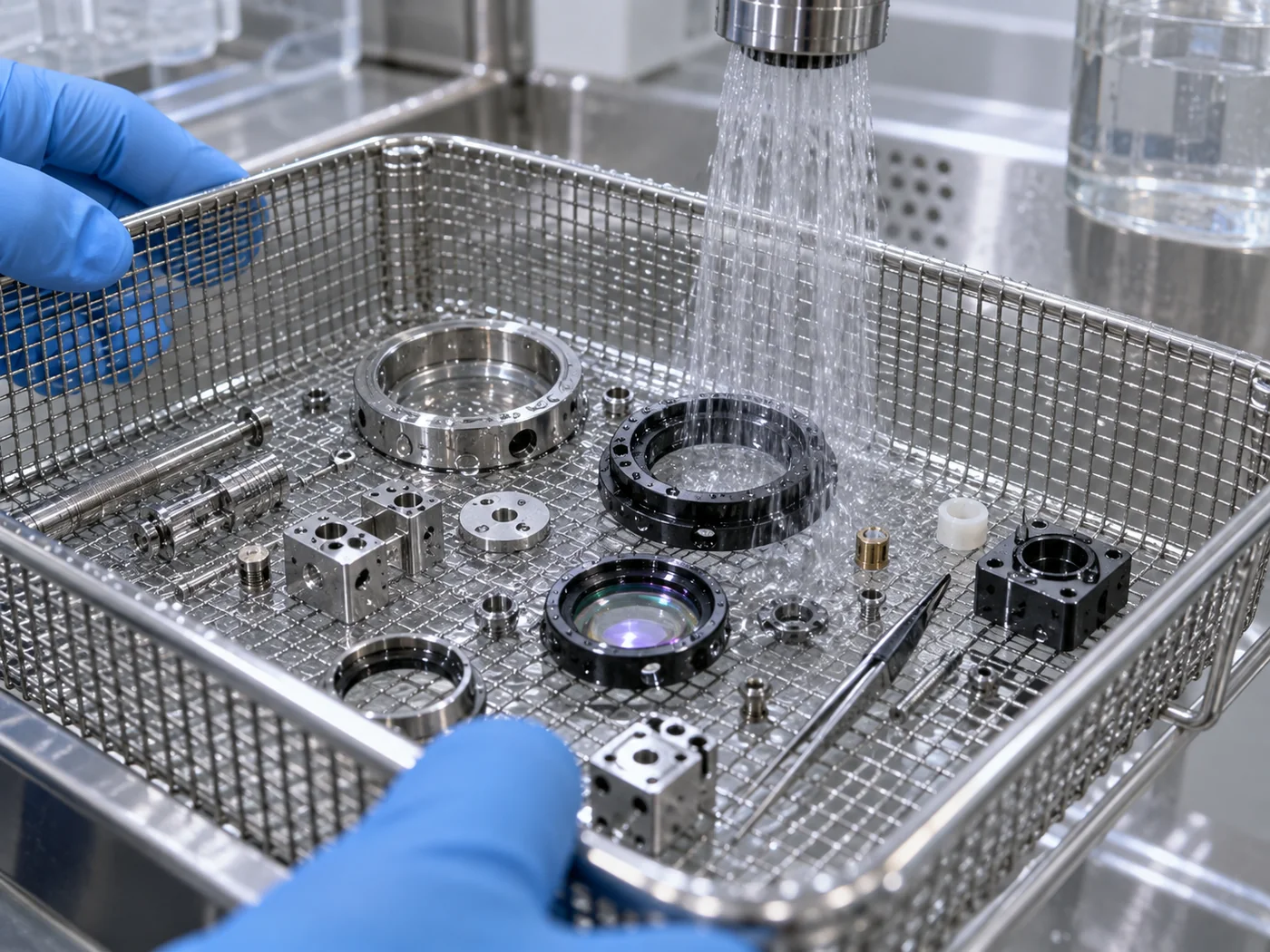
Industrial Application
Precision cleaning is controlled by particle size, surface sensitivity, rinse quality, bath condition and handling after the wash.
View cleaning approach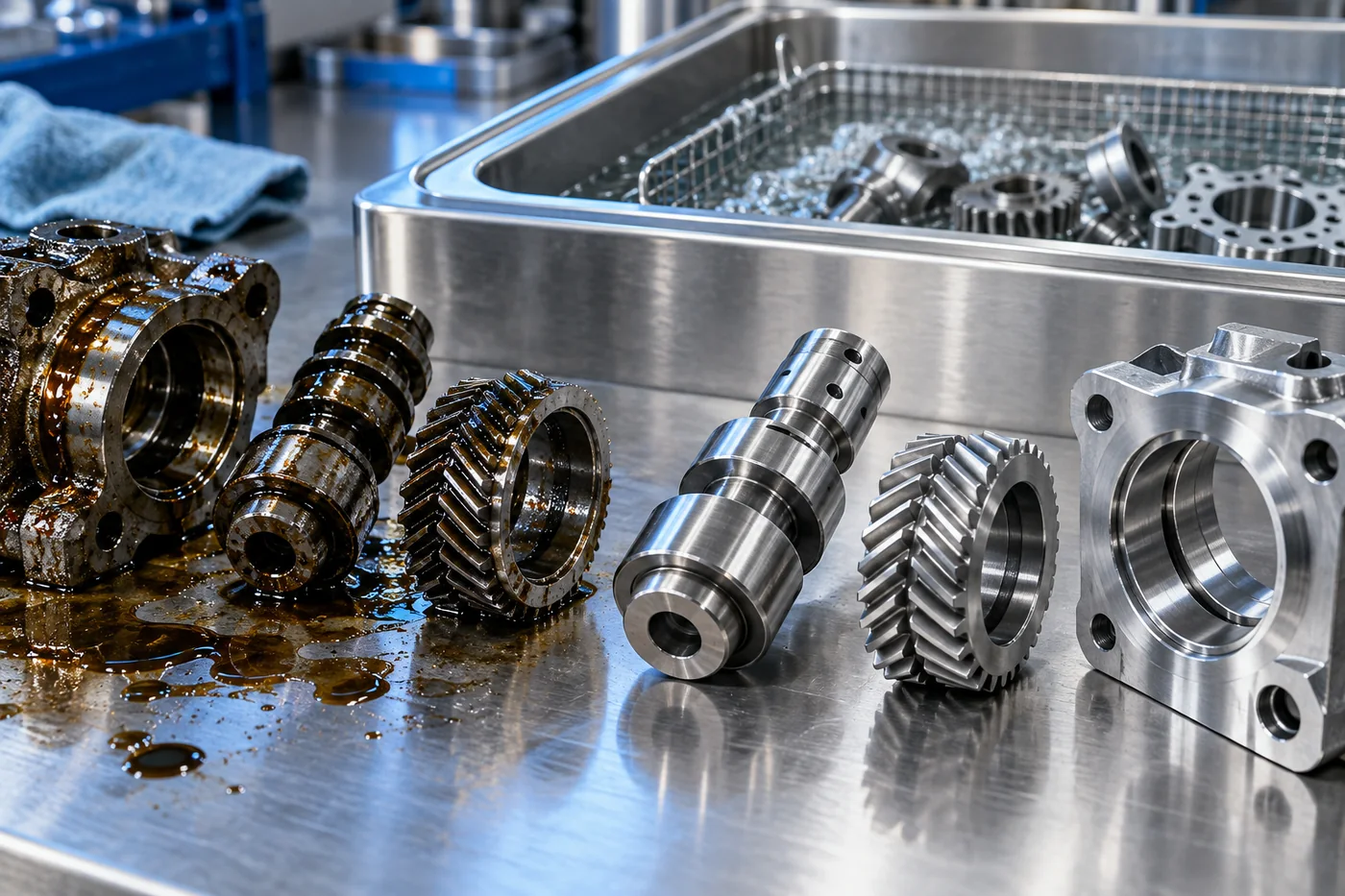
Industrial Application
Removes carbon, oil, casting and machining residues from turbocharger and turbine components.
View cleaning approach
Industrial Application
Removes machining oil, chips and lapping compound from bearings, races and gears, including internal features and teeth.
View cleaning approach