
Industrial Single-Tank & Special Cleaners
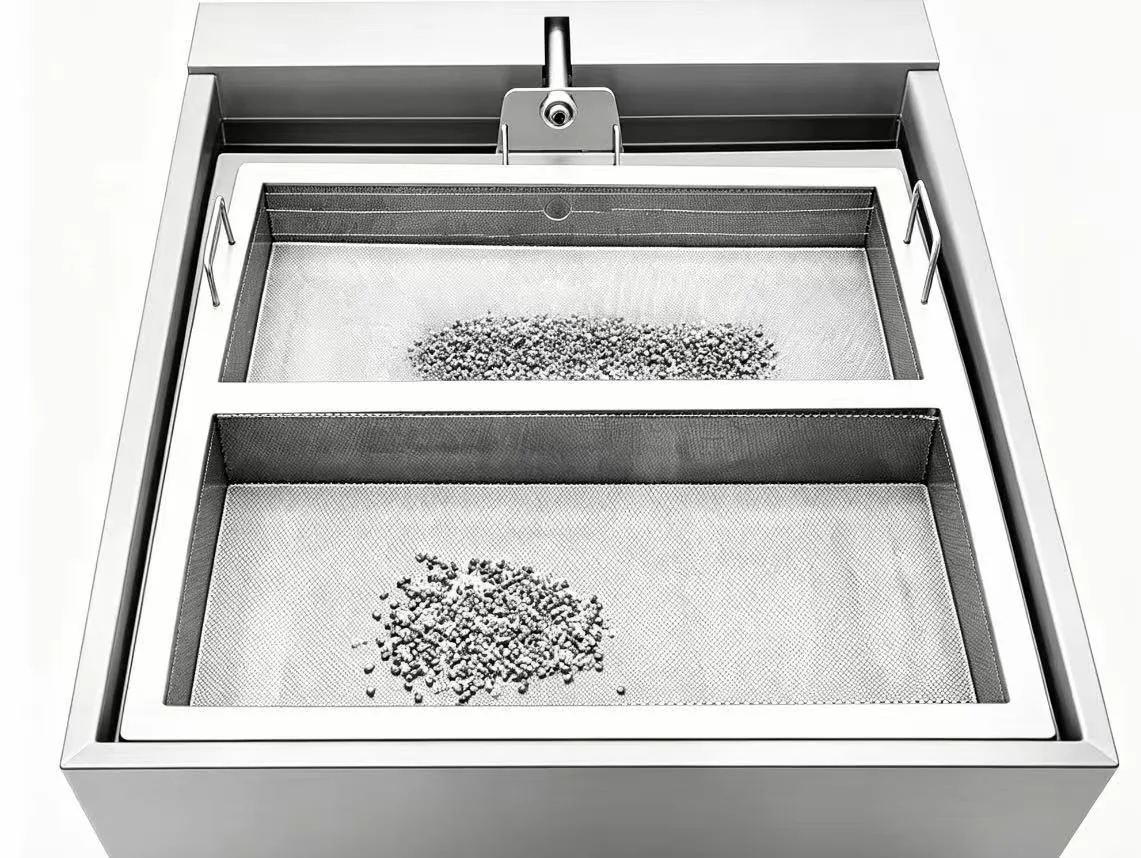
Ultrasonic Cleaner with Filtration & Oil Skimmer
Single-tank ultrasonic cleaning with circulating filtration and oil-water separation
View configuration
LENJEX Solution Center
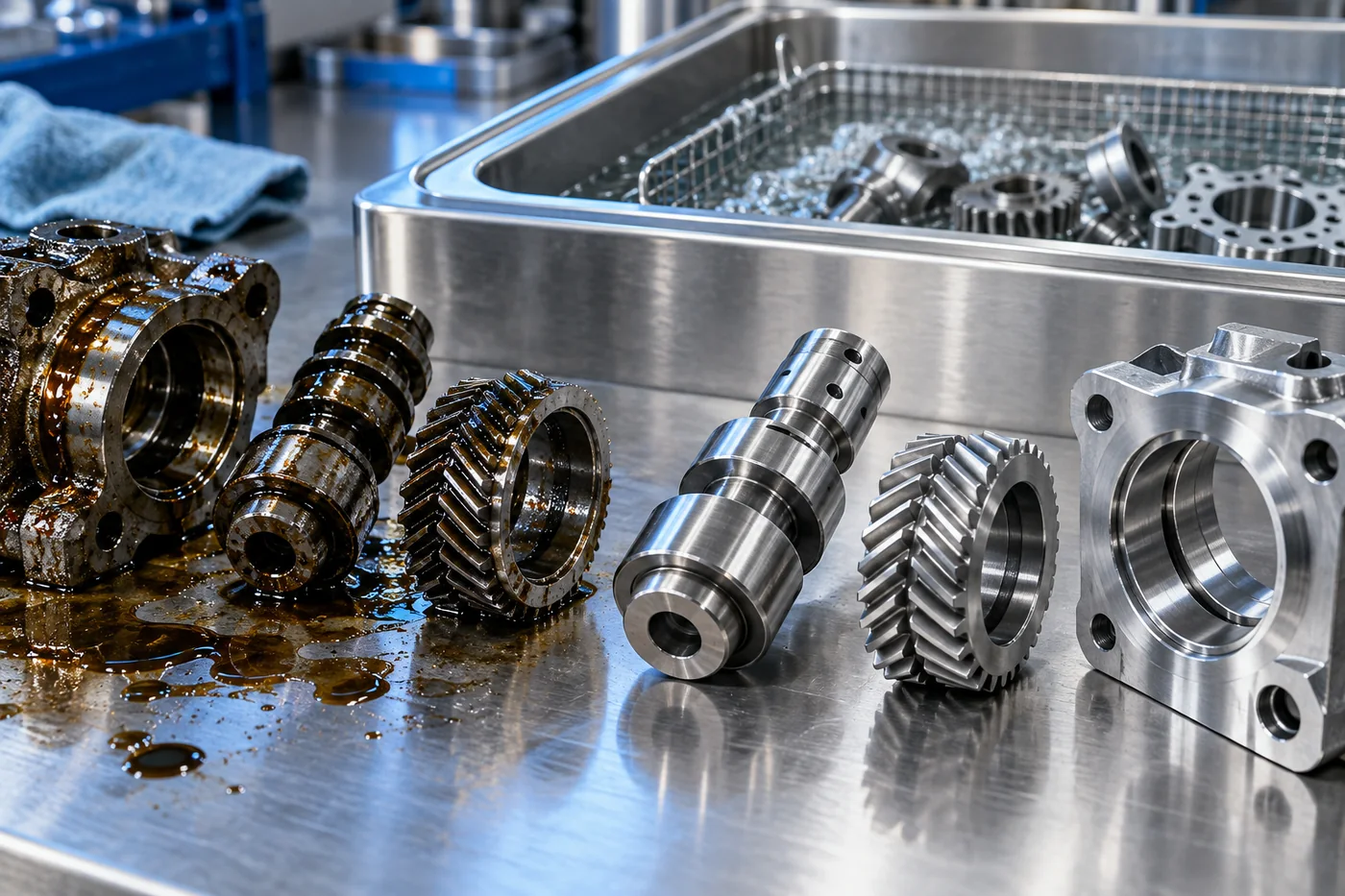
Ultrasonic degreasing removes cutting, forming, quenching and preservative oils from metal parts using cavitation and controlled chemistry.
Overview
Oil removal is the most common industrial cleaning task.
Degreasing is required after machining, forming, heat treatment and maintenance, and before assembly, plating, coating or inspection. Ultrasonic cavitation supplies the mechanical action that peels oil from the surface, while a water-based detergent or compatible solvent lowers the bond between oil and metal.
The choice of cleaning solution, temperature, frequency and filtration sets the result. Heavy oil loading benefits from oil skimming, as on the ultrasonic cleaner with filtration.
Process Considerations
The configuration follows the oil and the part.
Light cutting oils, heavy forming and drawing oils, quench oils and greases behave differently.
Heavier and more viscous oils need higher temperature and stronger cavitation.
28 KHz gives stronger cavitation for robust parts and heavy oil; 40 KHz is a balanced default for mixed production.
Warm, detergent-based baths dissolve oil more effectively; temperature and chemistry are validated against the material.
Oil skimming and filtration keep the bath from becoming saturated and redepositing oil.
Recommended Route
Confirmed with trial cleaning.
Related Systems
Selected around batch or continuous volume.
Industrial Single-Tank & Special Cleaners
Single-tank ultrasonic cleaning with circulating filtration and oil-water separation
View configuration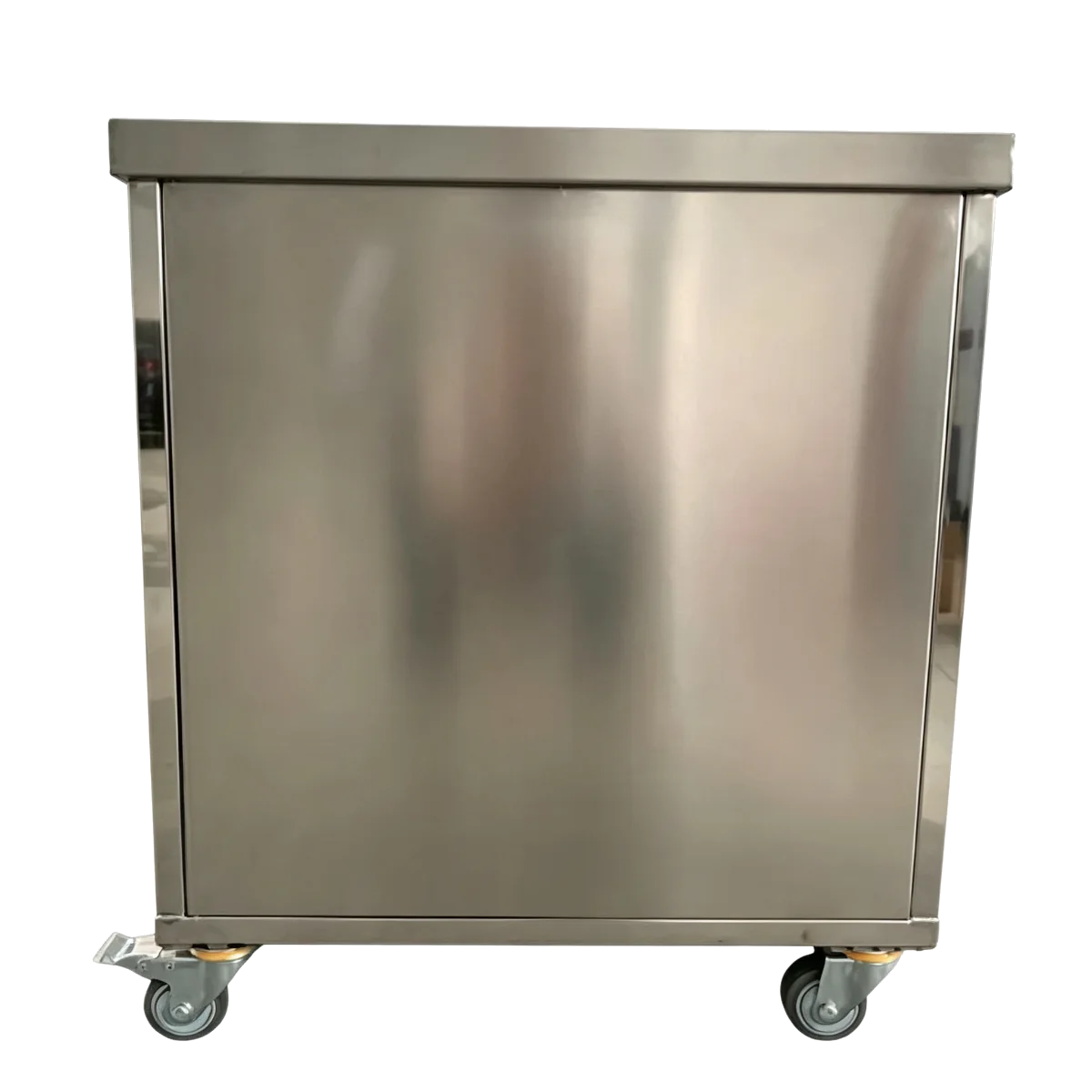
Industrial Single-Tank & Special Cleaners
Versatile heated single-tank ultrasonic parts cleaner for general industry
View configuration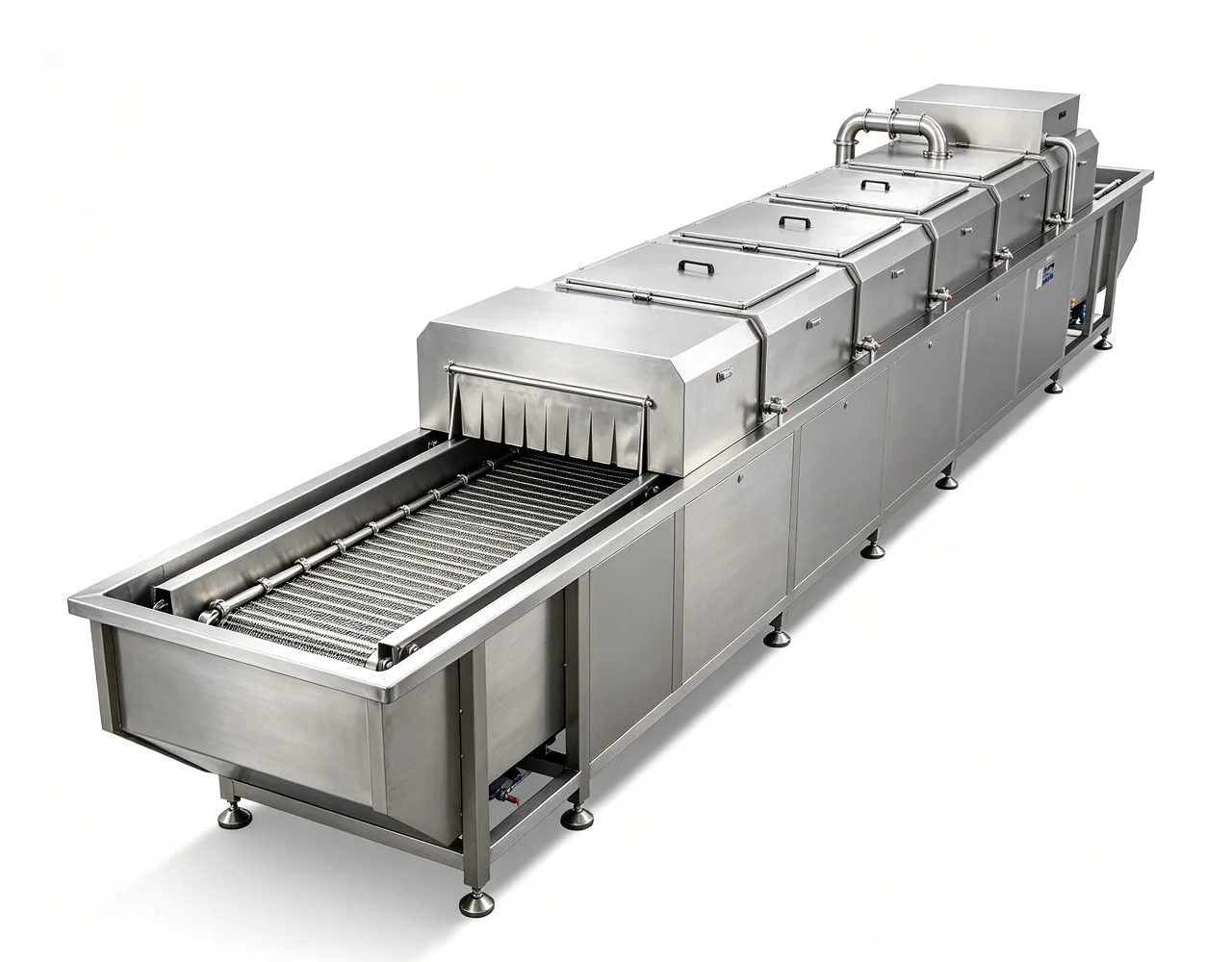
Multi-Tank & Automatic Cleaning Systems
Automatic rotating-basket multi-stage cleaning and drying line
View configurationSolution Questions
Ultrasonic cleaning with a matched detergent is widely effective for oil removal, especially from complex parts; the exact chemistry and frequency are validated for the part.
Many oil-removal tasks run around 50-60 degrees C; heavier oils may use higher temperatures, capped by material compatibility.
Yes, oil skimming and oil-water separation carry removed oil away from the bath and extend its usable life.
Related Solutions
Cleaning Solution
Oil can hide in blind holes, threads and textured surfaces. A strong wash without bath management may simply move contamination between parts.
View solution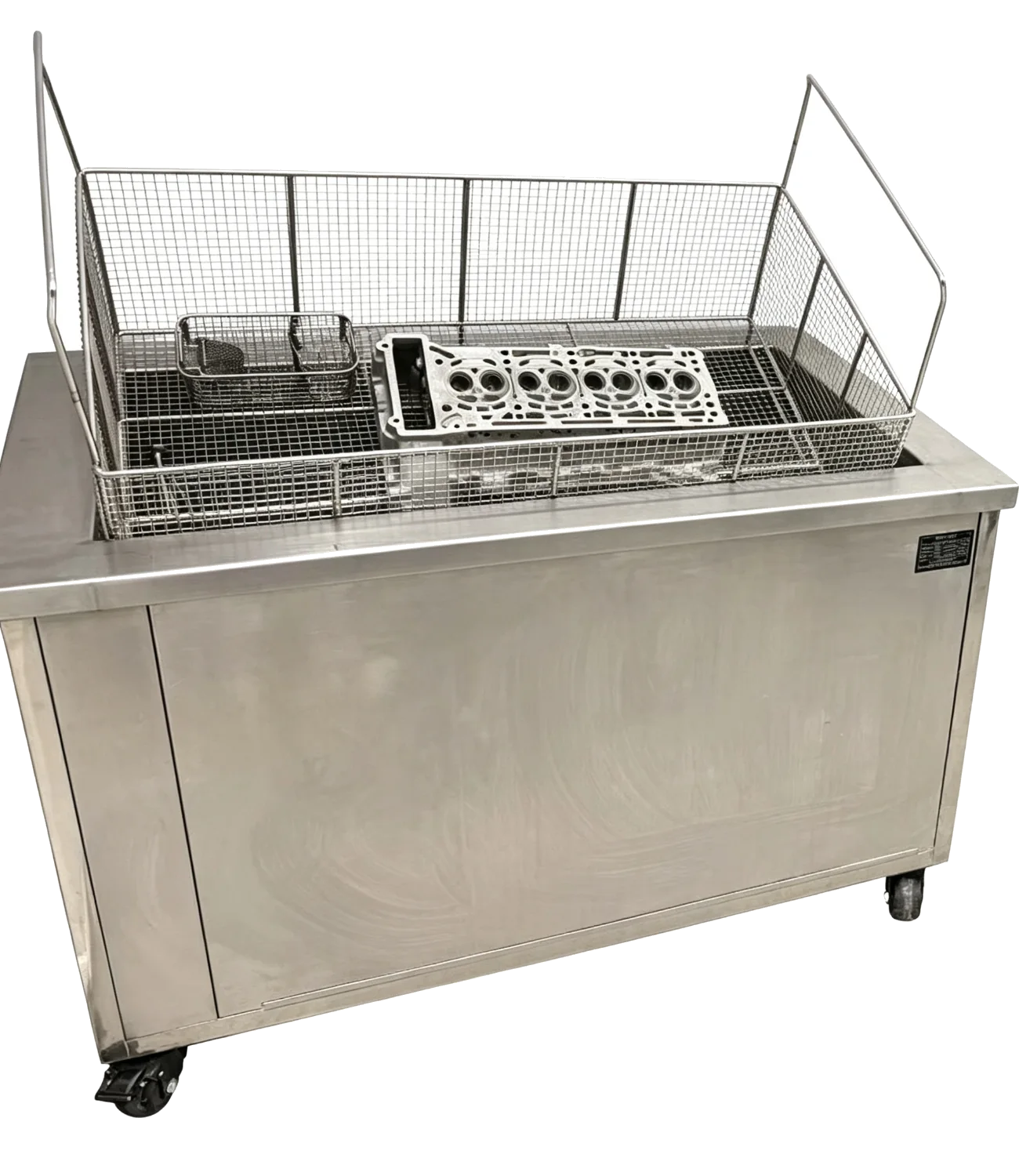
Cleaning Solution
Water-based ultrasonic cleaning uses alkaline, neutral or acidic detergents to remove oil, particles and oxides with controlled chemistry.
View solution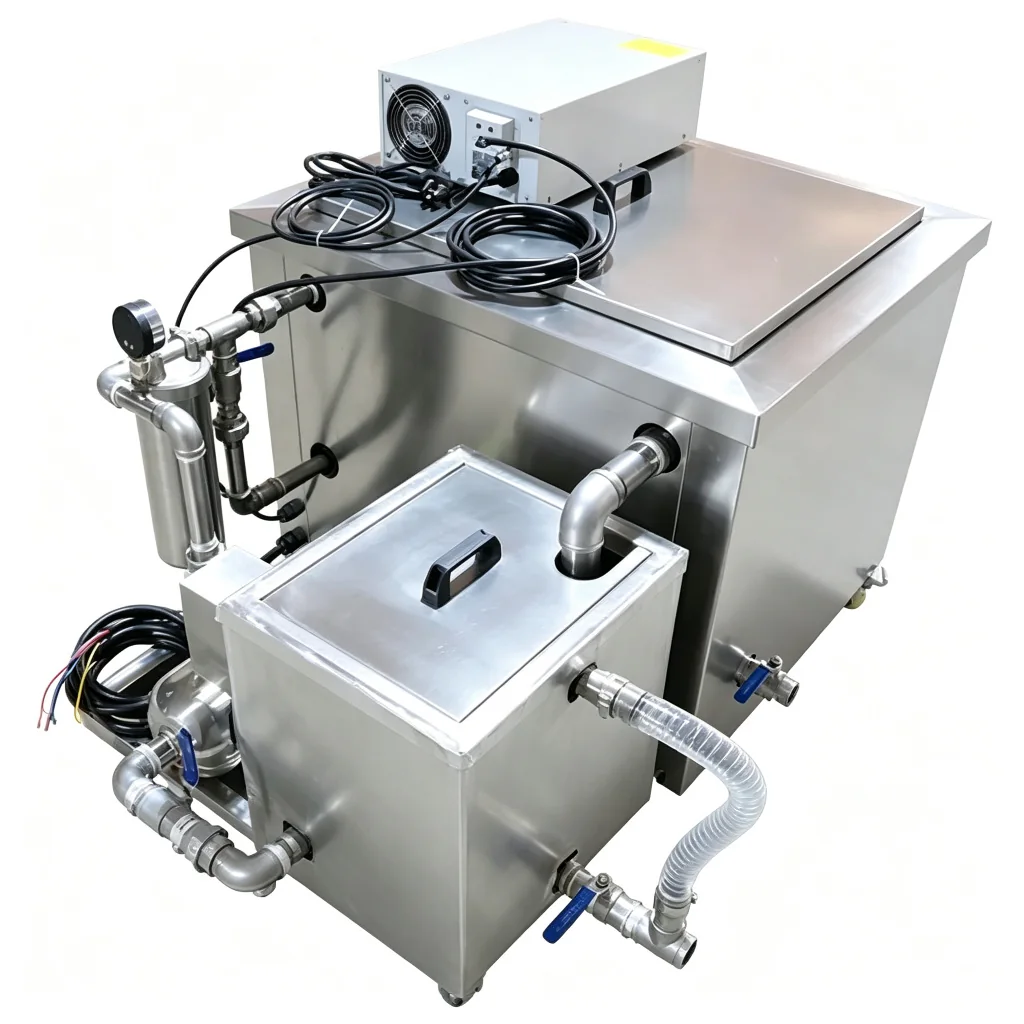
Cleaning Solution
Solvent and hydrocarbon cleaning provides strong degreasing and vacuum drying for blind holes, with sealed and explosion-proof safety.
View solution