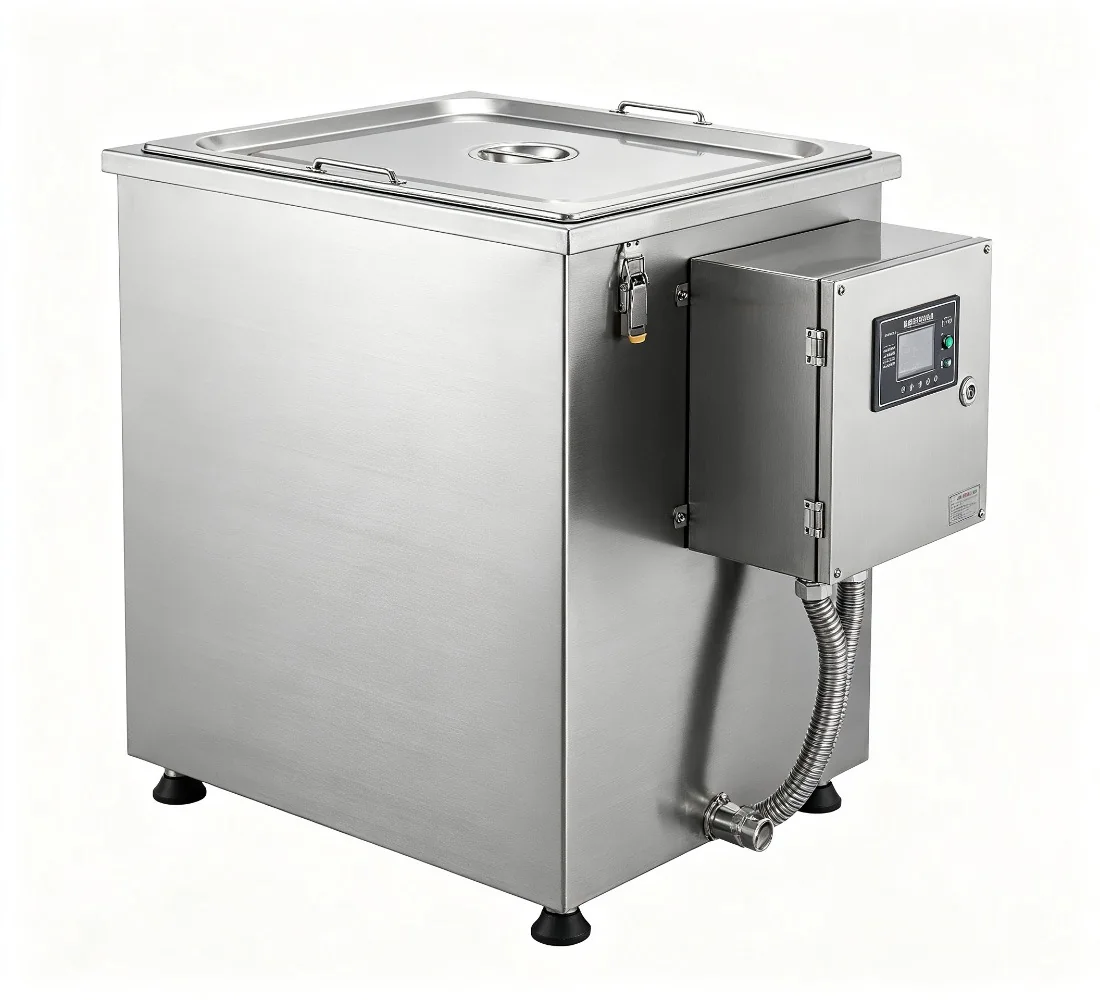
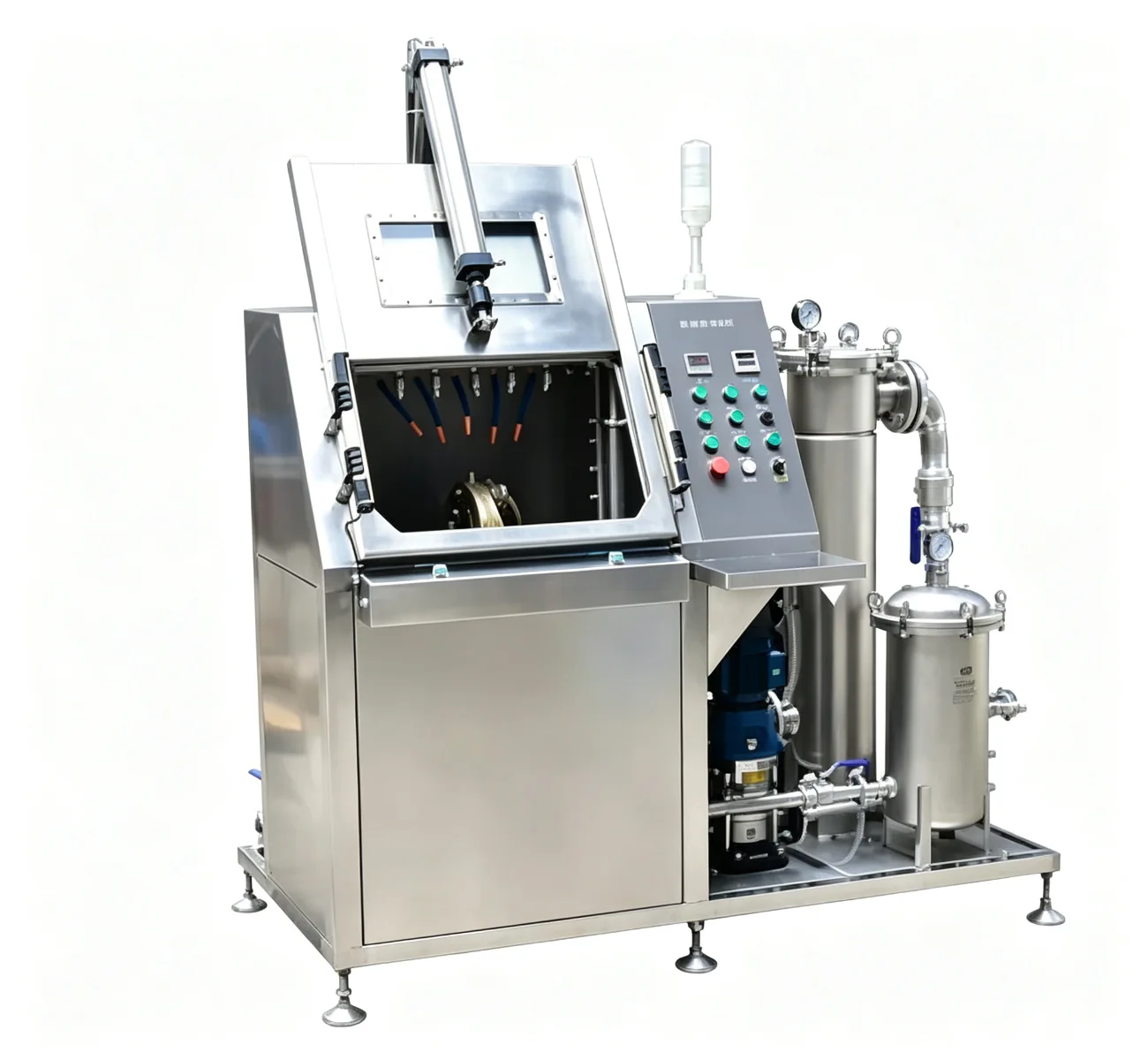
Spray washing is line-of-sight and effective for simple soils; ultrasonic reaches cavities and blind holes.
Reach and geometry
Spray washing depends on jets reaching a surface directly, so recesses and blind holes can be missed. Ultrasonic works wherever the liquid reaches.
Complex parts generally favour cavitation.
- Spray: line-of-sight
- Ultrasonic: cavities and blind holes
Soil and throughput
Spray can be effective for loose, easy soil on open parts and is simple to run. Heavy oil, carbon and recessed residues are better addressed by ultrasound or a combined process.
Some production lines use a spray pre-clean followed by ultrasonic.
Chemistry and footprint

Spray and ultrasonic use different baths, pumps and arrangements, with the choice depending on the part and the facility.
Combining them covers open and recessed contamination in one flow.
How to choose
Open, simple parts may be cleaned by spray; complex parts with cavities need ultrasonic. Trial both on the same acceptance method when unsure.
The total cost includes chemistry and handling.
Quick Answers
Frequently asked questions
It can be simpler for open parts and easy soil, but complex parts may need immersion or a combined line, changing the total cost.
Yes. A spray pre-clean can remove loose soil before an ultrasonic stage handles recesses and cavities.
Ultrasonic, because spray is line-of-sight and cannot reach the inside of a hole consistently.