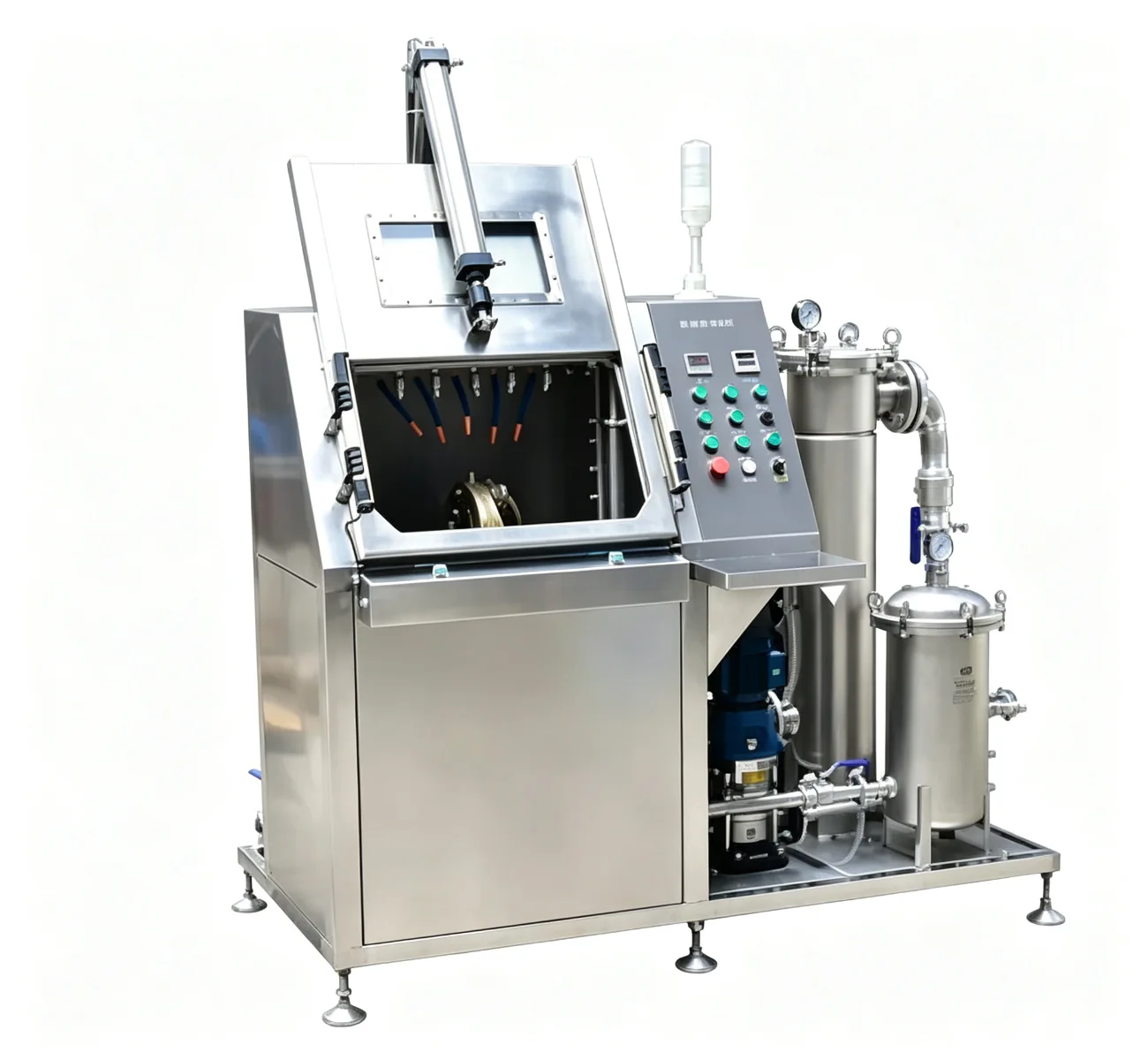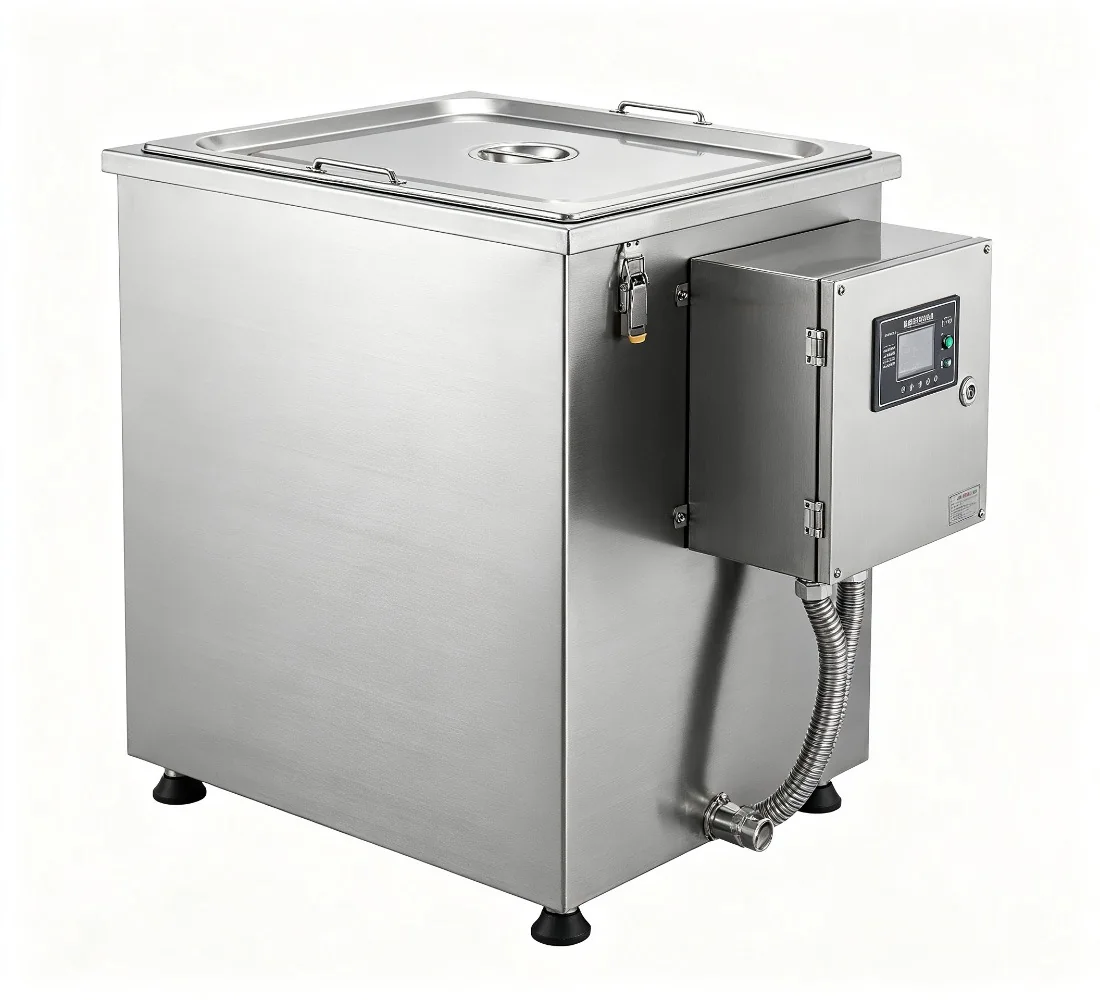
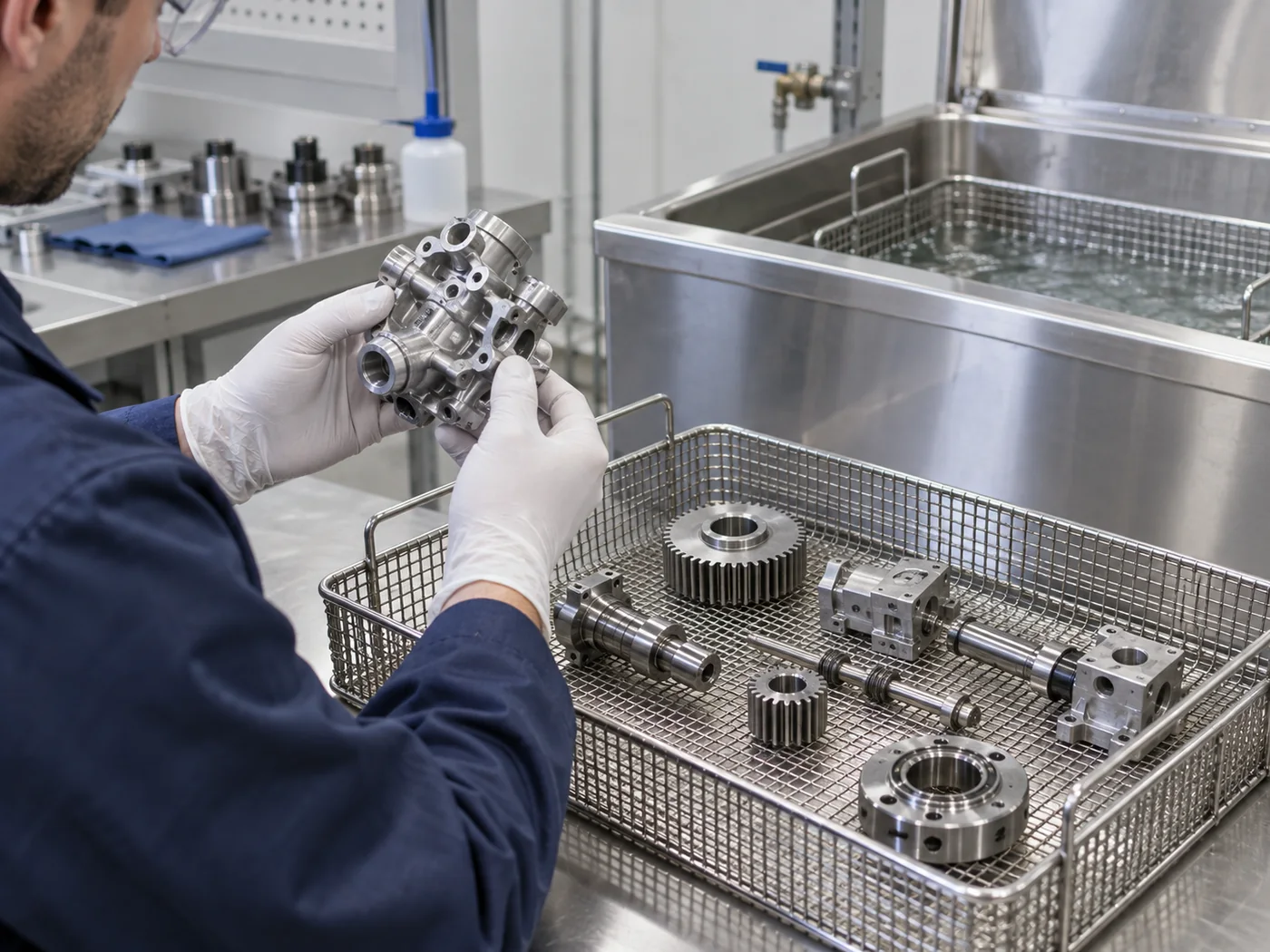
Manual cleaning is slow and inconsistent on complex parts; ultrasonic is repeatable and reduces labour and exposure.
Consistency and labour
Manual cleaning varies between people and parts, while ultrasonic runs the same cycle in a controlled bath. The labour saved is often the main reason to switch.
Recesses are cleaned without relying on skill.
- Manual: variable and slow
- Ultrasonic: repeatable cycle
Safety and exposure
Manual handling of sharp parts, solvents and grease exposes staff, while cavitation removes much of this contact.
Baskets and lids support safer handling.
Complex geometry
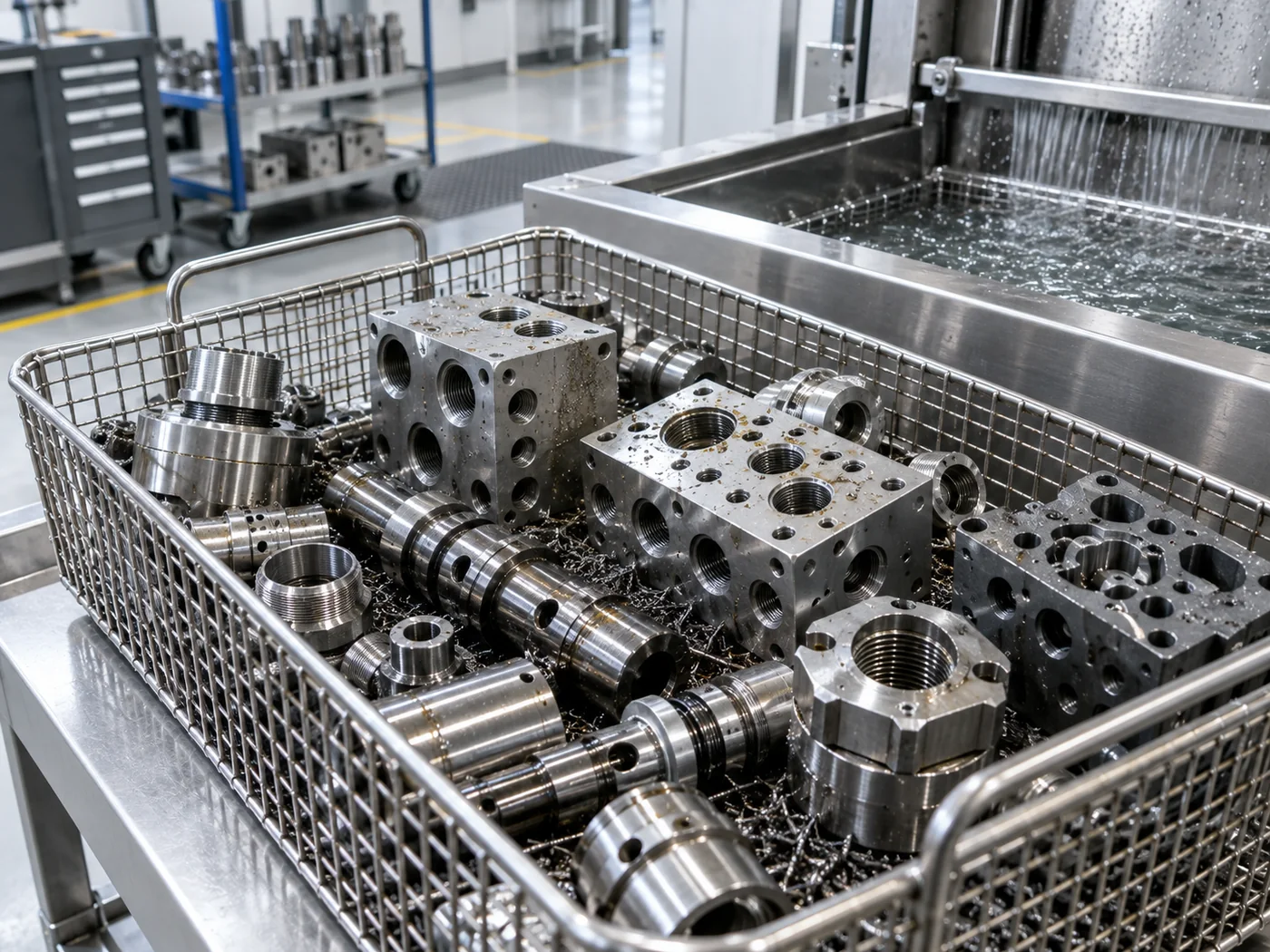
Hinges, cavities, threads and stacked parts are hard to clean by hand, while cavitation reaches them wherever the liquid reaches.
Manual touch-up may still be needed for exceptional cases.
Counting the cost
Compare labour, cycle time, rework and chemistry, not just the machine price. A simple trial shows the difference in handling.
The result is reviewed on the same acceptance method.
Quick Answers
Frequently asked questions
Generally yes for complex parts and batches, because it removes repeated brushing and handles the whole load at once.
It removes most manual cleaning, while operators still load, inspect and handle parts.
It reduces contact with sharp parts, grease and solvents and uses baskets and lids to manage the parts.