Sweep and degas make cavitation more even and more powerful by avoiding standing waves and removing dissolved gas.
What degas does
Fresh liquid contains dissolved gas that cushions bubbles and weakens cavitation. A degas cycle drives this gas out, usually by running the ultrasound in a controlled way before the main clean.
After degas, cavitation is more active and consistent, which is why laboratory and scientific baths commonly include it.
What sweep frequency does
A fixed frequency can create standing waves and dead zones in the tank. Sweep gently varies the frequency so the energy moves across the bath and is distributed more evenly.
It reduces the chance of some areas being overworked while others are barely cleaned.
- Degas removes dissolved gas
- Sweep moves energy across the tank
- Both improve consistency
When each function matters
Degas is most useful after fresh liquid is added, while sweep matters throughout the cleaning cycle for even coverage.
Precision, laboratory, optical and medical-related work benefit most from both, because repeatability matters.
Reading the controls
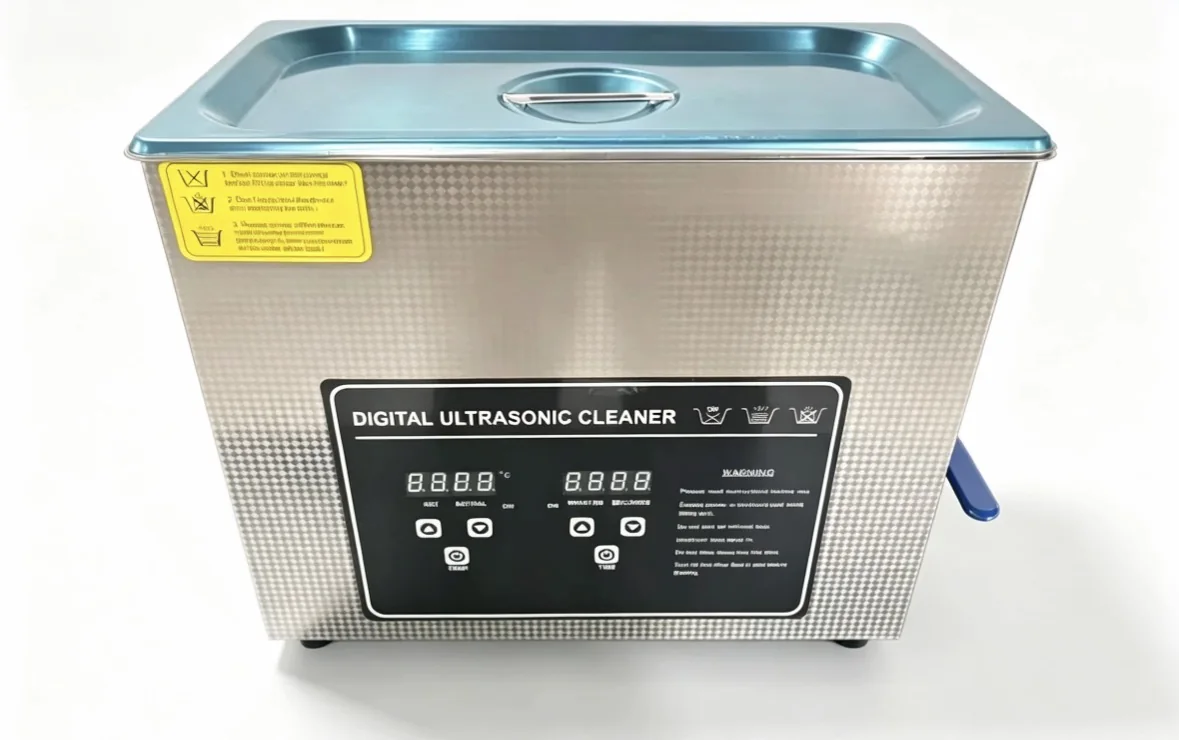
Machines with these functions expose them as a mode or button and allow the degas step before the timed cycle. The digital readout makes the process repeatable.
If the bath is changed, the degas step is normally run again for the fresh liquid.
Quick Answers
Frequently asked questions
Degas is run after fresh liquid is added or changed to remove dissolved gas. It is not needed again if the same bath is simply reused.
Sweep redistributes energy rather than changing the total power, reducing dead zones and hot spots for a more even result.
They are most common in laboratory and precision baths, but general machines can benefit from even coverage and fresh-bath degassing.