Sizing an ultrasonic cleaner tank starts with the largest part and a realistic loaded basket, not with a nominal litre rating that leaves no clearance.
Measure the largest part and basket
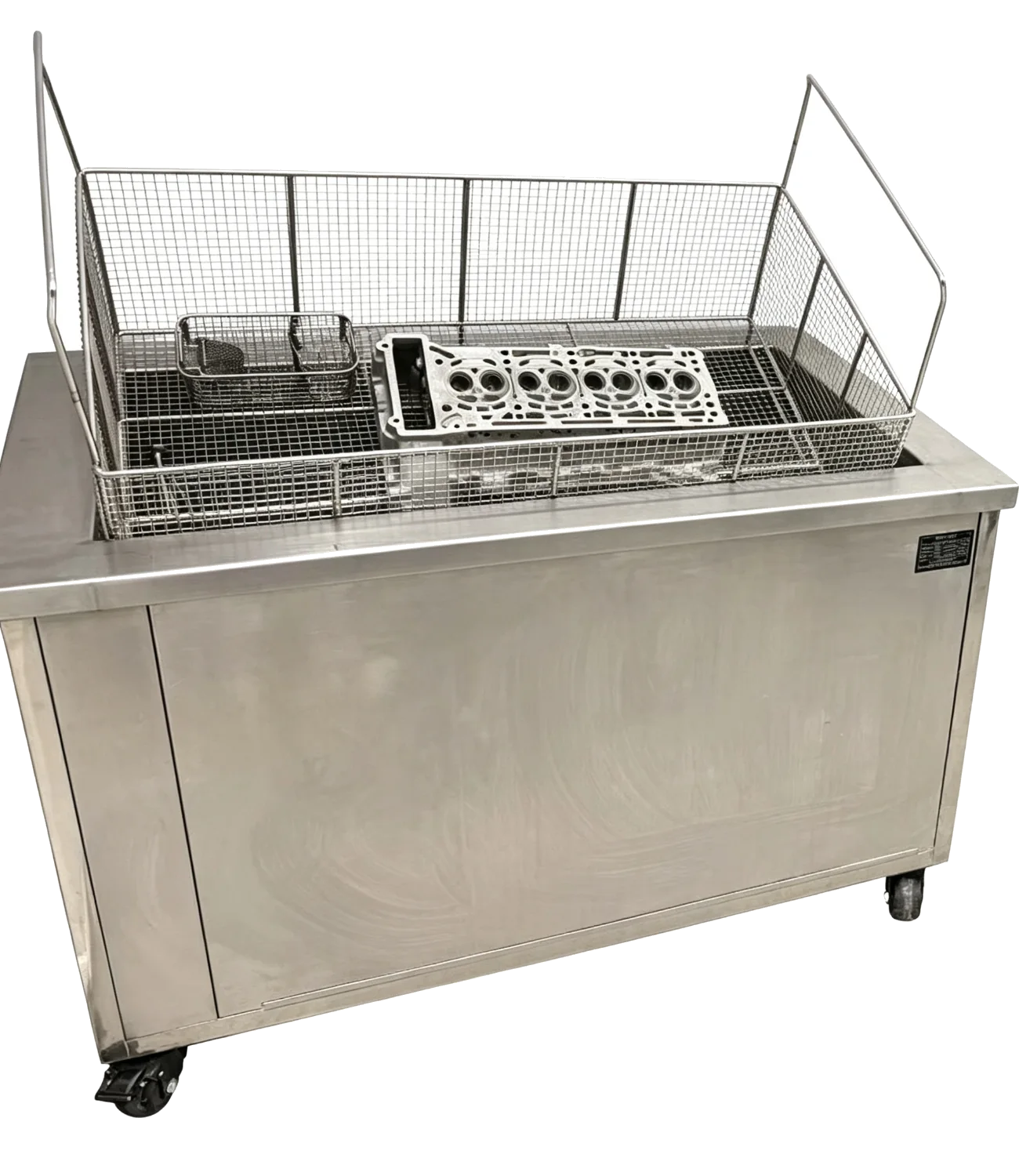
The tank interior must hold the largest part or basket with clearance on every side and below the parts so liquid can move. Parts resting on the floor or packed against the walls shield surfaces from cavitation.
A practical rule is to size the basket around the largest part, then choose a tank that holds the basket with a few centimetres of clearance rather than working from the advertised litre number alone.
- Largest part dimensions
- Basket outside dimensions
- Clearance on all sides
- Maximum loaded weight
Estimate liquid capacity and fill
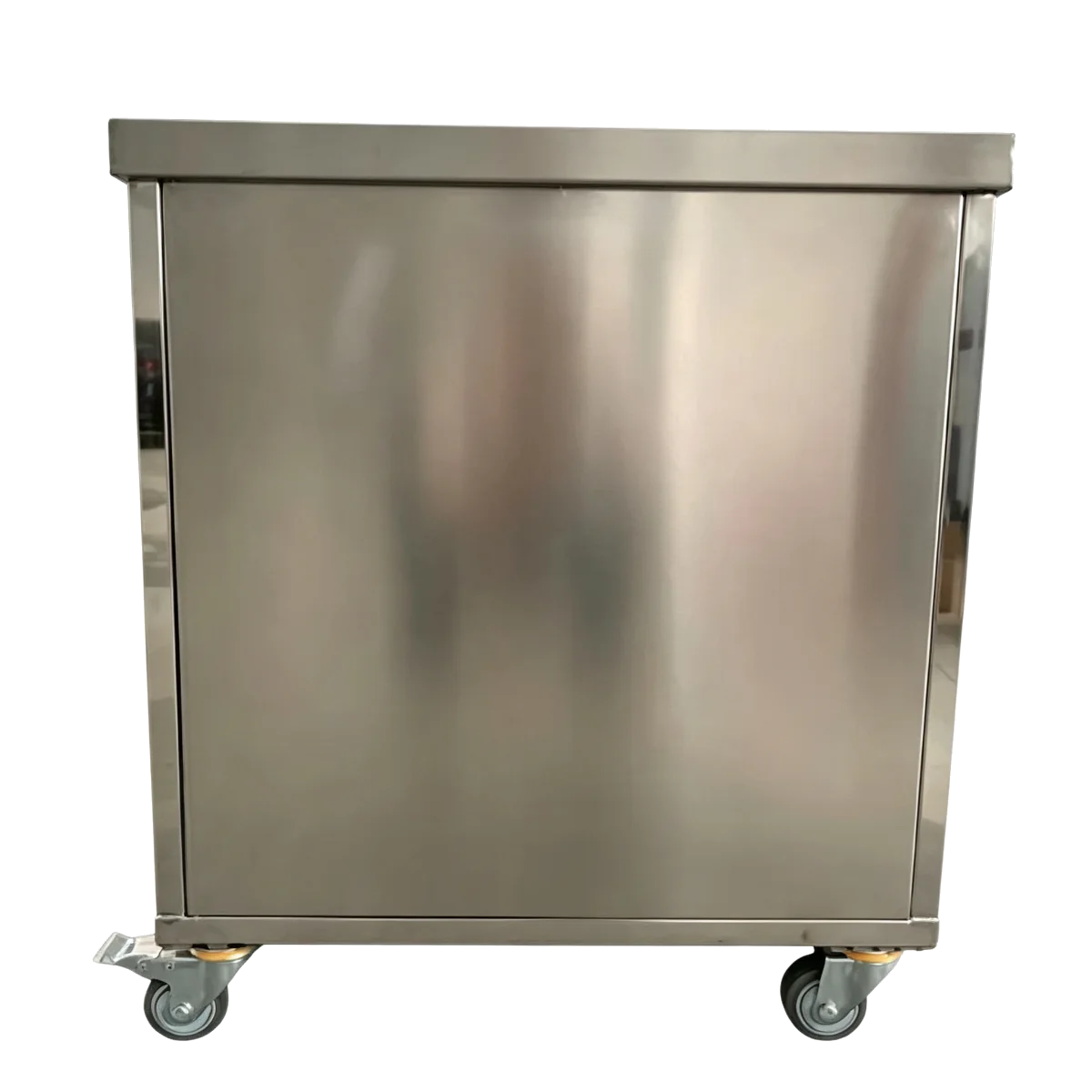
Capacity is the inner volume, but the working fill is lower because parts and basket displace liquid. A tank rated at a given nominal volume will not run full when a basket is loaded.
For a quick estimate, treat the loaded basket as occupying part of the volume and confirm the working fill with the basket in place.
Match power to the liquid volume
Power density is the ultrasonic power relative to the liquid volume. A larger tank needs proportionally more transducers and power, or cleaning becomes weak.
See the power-density guide for the watt-per-litre range suited to light versus heavy contamination.
- Larger tanks need more power
- Power density in W per litre
- Heavy soil needs more energy
Plan for baskets and handling
Heavy loads may need a lifting platform, while dense baskets may need agitation. The handling arrangement should be confirmed at the same time as the tank size.
If parts are added in the future, a slightly larger tank is usually safer than a machine that is filled to the limit.
Quick Answers
Frequently asked questions
Size it around the largest loaded basket with clearance on all sides, then match the ultrasonic power to that liquid volume. A representative basket is the fastest way to confirm.
A modest margin helps, but an oversized tank wastes energy and chemistry if it is never filled. The goal is the largest part with sensible clearance, not excess capacity.
It depends on the parts and basket, so the working fill should be confirmed physically rather than assumed from the nominal litre rating.