
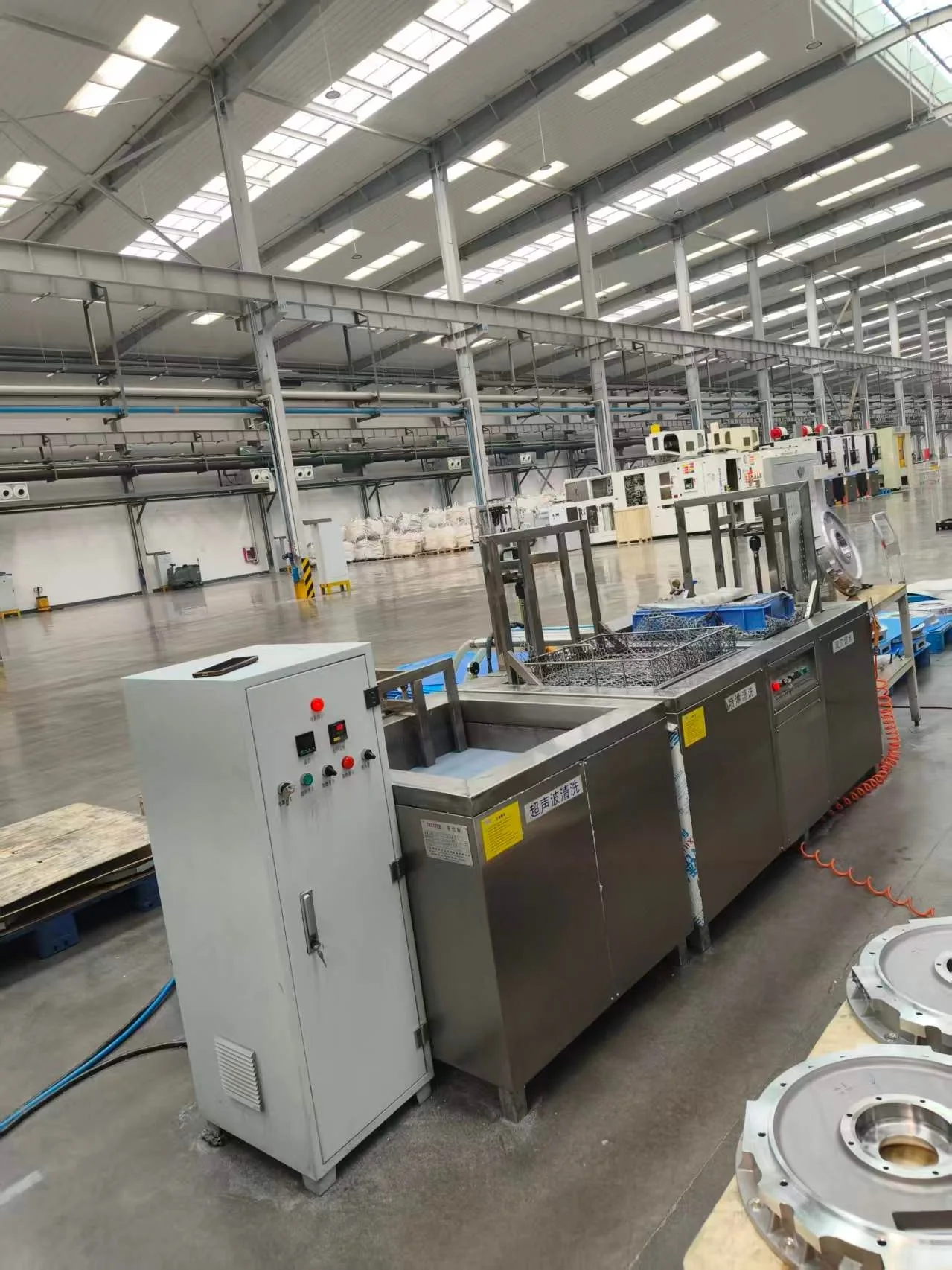
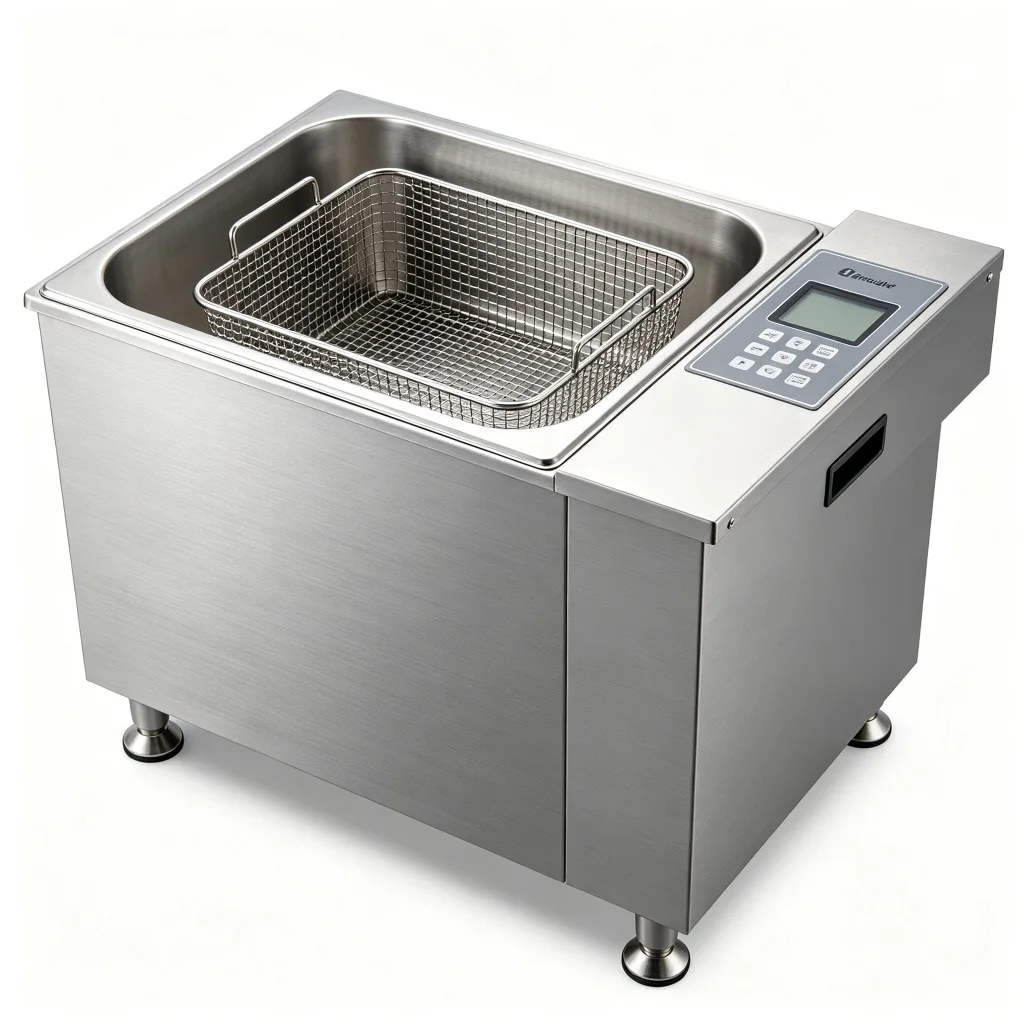
Selecting an industrial ultrasonic cleaner affects quality, operating cost and throughput. The useful comparison begins with the workpiece, contamination and acceptance target before moving to tank size, frequency, stages and automation.
Workpiece size, shape and material
The cleaning tank needs enough clearance around the largest part and basket for liquid movement and acoustic coverage. Complex cavities may require bottom and side transducers, while material compatibility influences chemistry and temperature.
Contamination and power density
Dust, light oil and flux residue may need less energy than heavy grease, carbon, casting sand or burnt-on deposits. Soil loading and cleanliness requirements determine power density, cycle time, filtration and whether more than one stage is needed.
Ultrasonic frequency
20-28 KHz produces more energetic cavitation for robust parts and heavy soil. 40 KHz suits many general industrial applications, while 60-80 KHz and higher can serve finer particles and more sensitive surfaces. Dual-frequency systems support mixed tasks.
Production volume and throughput
Single-tank equipment offers flexibility for lower or mixed volumes. Stable high-volume production may justify multi-stage washing, rinsing and drying with gantry, robotic or conveyor transfer.
Options, construction and supplier capability
Heating, filtration, oil skimming, lifts, drying and safety devices should follow the process. Tank material, wall thickness, fabrication quality, testing, documentation and service support all influence equipment life and project risk.