Temperature dramatically affects cleaning; most oil and grease removal runs warm, but the best setting depends on the soil and the material.
Why warm liquid cleans better
Heat lowers the viscosity of oil and grease, dissolves more contamination and helps the detergent work. A cold bath can remove light soil but is slow on grease and carbon.
Most general oil-removal tasks run in a warm range, while light and very delicate work may use lower temperatures.
Where the upper limit is
Cavitation is not improved indefinitely by heat. As the liquid becomes hotter and vapour pressure rises, the bubbles can collapse less forcefully, and very hot chemistry may affect sensitive materials.
The setting is capped by both the chemistry and the material, with aluminum and other alloys needing particular care.
- General oil: warm range
- Light work: lower temperature
- Sensitive alloys: capped temperature
Temperature by contamination
Light dust and fine particles often need little heat, while heavy oils and carbon benefit from warmer baths and sometimes a pre-soak. Flux and some electronics work use moderate, controlled temperatures.
Rust and oxide chemistry is run at the temperature the chemical specifies, rather than at the hottest setting.
Heating and safety
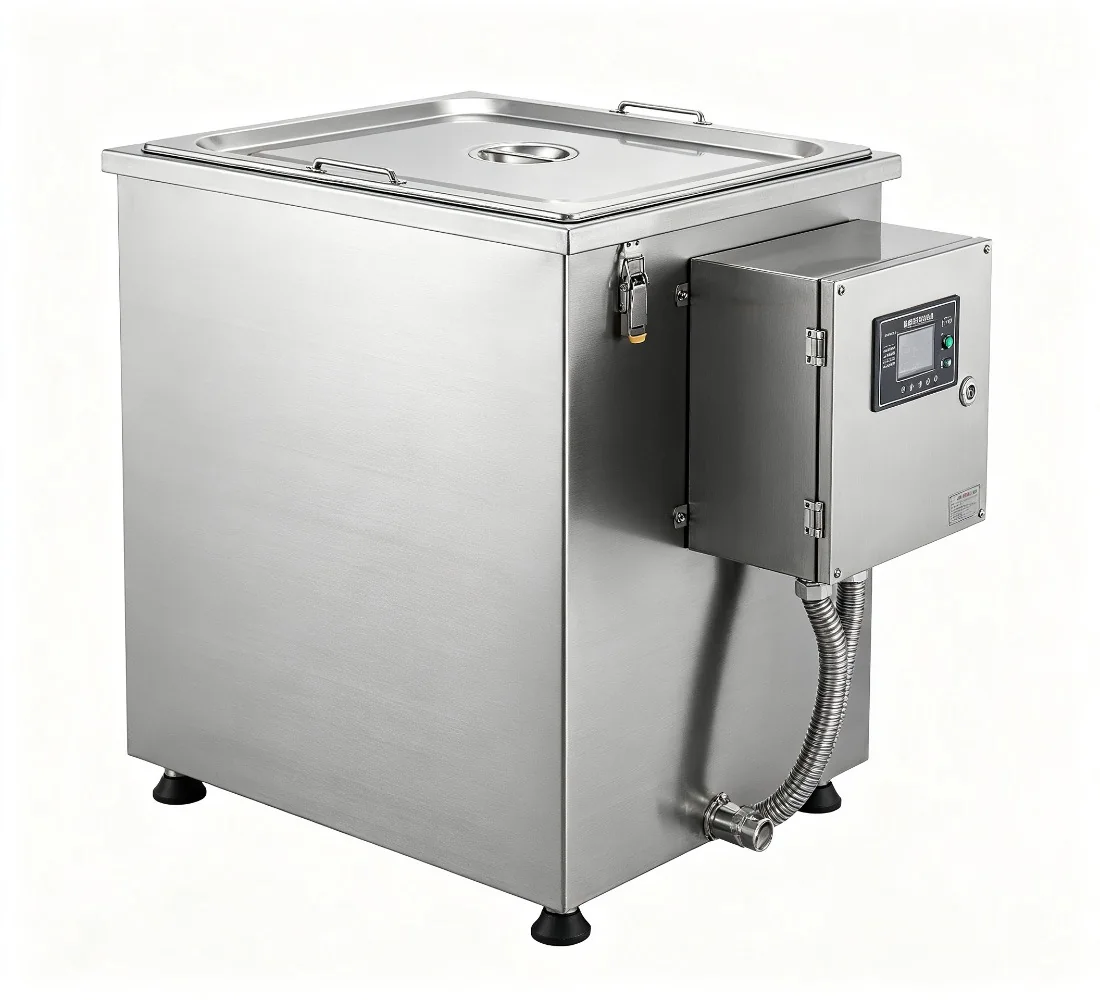
Industrial machines include low-level protection so heating cannot run dry, and insulated lids and tanks reduce heat loss and contact risk.
A digital temperature readout makes the process repeatable between batches rather than relying on judgement.
Quick Answers
Frequently asked questions
There is no single number; general oil removal commonly runs warm, while light and sensitive work runs cooler. The chemistry and material set the limit.
Yes. Very high temperatures can reduce cavitation strength and may affect sensitive alloys or chemistry, so the setting is controlled rather than maximized.
Light rinsing can run cold, but heating strongly helps oil and grease removal and is standard on industrial machines.