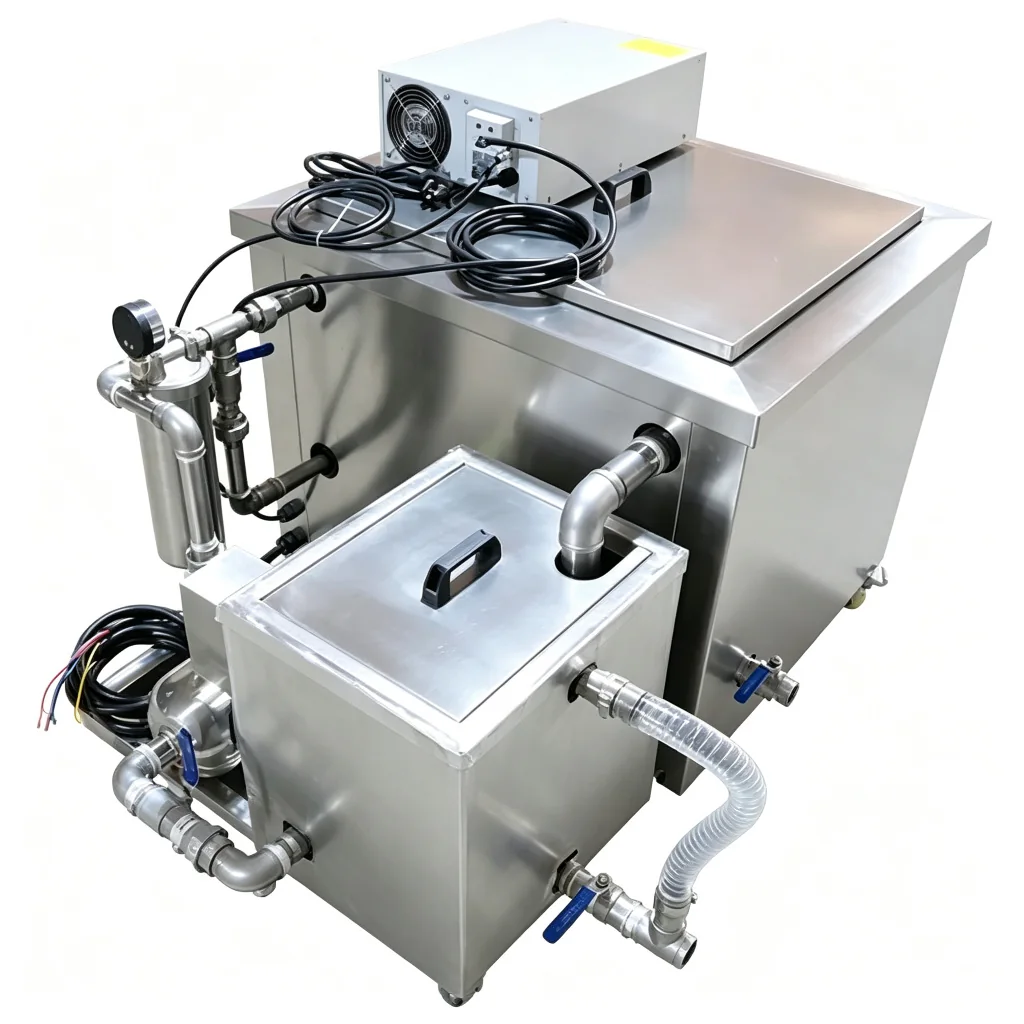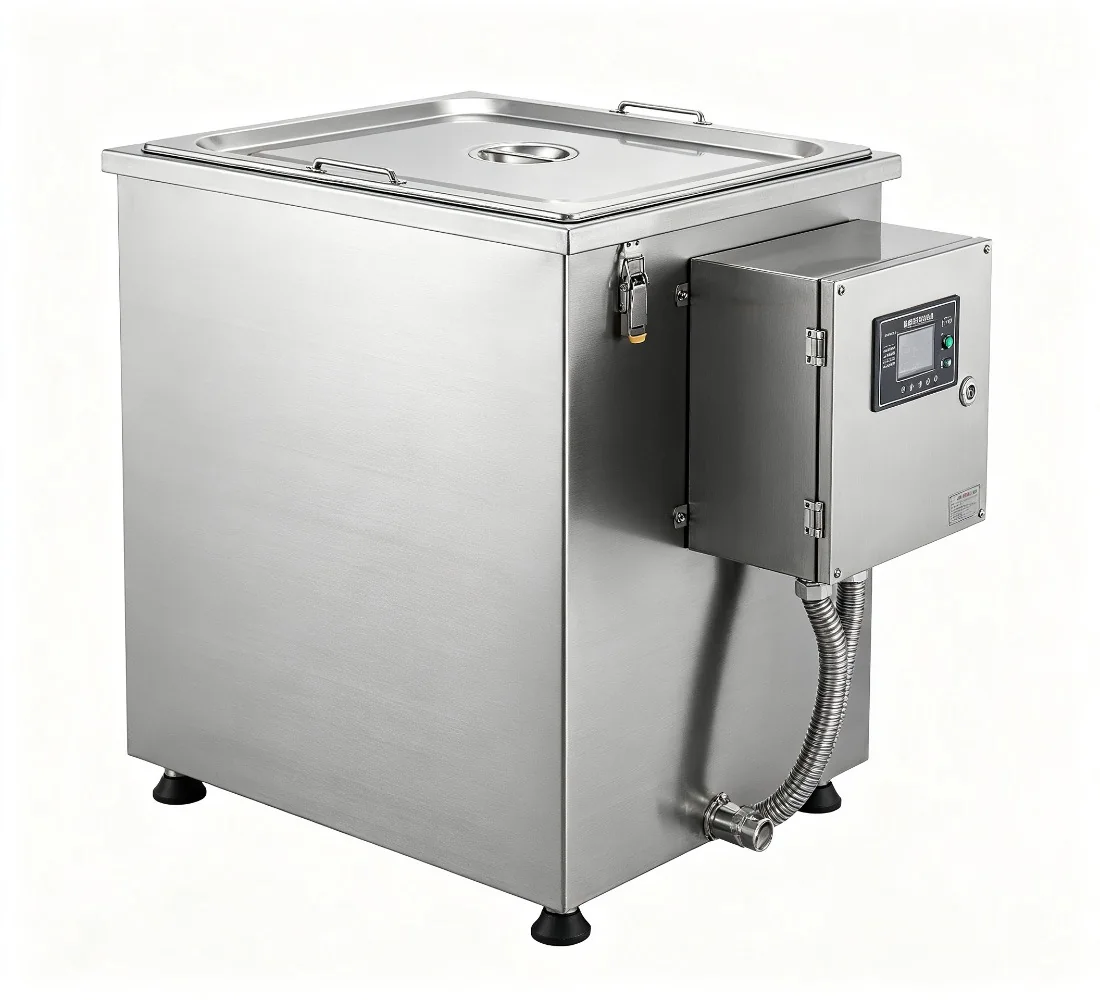
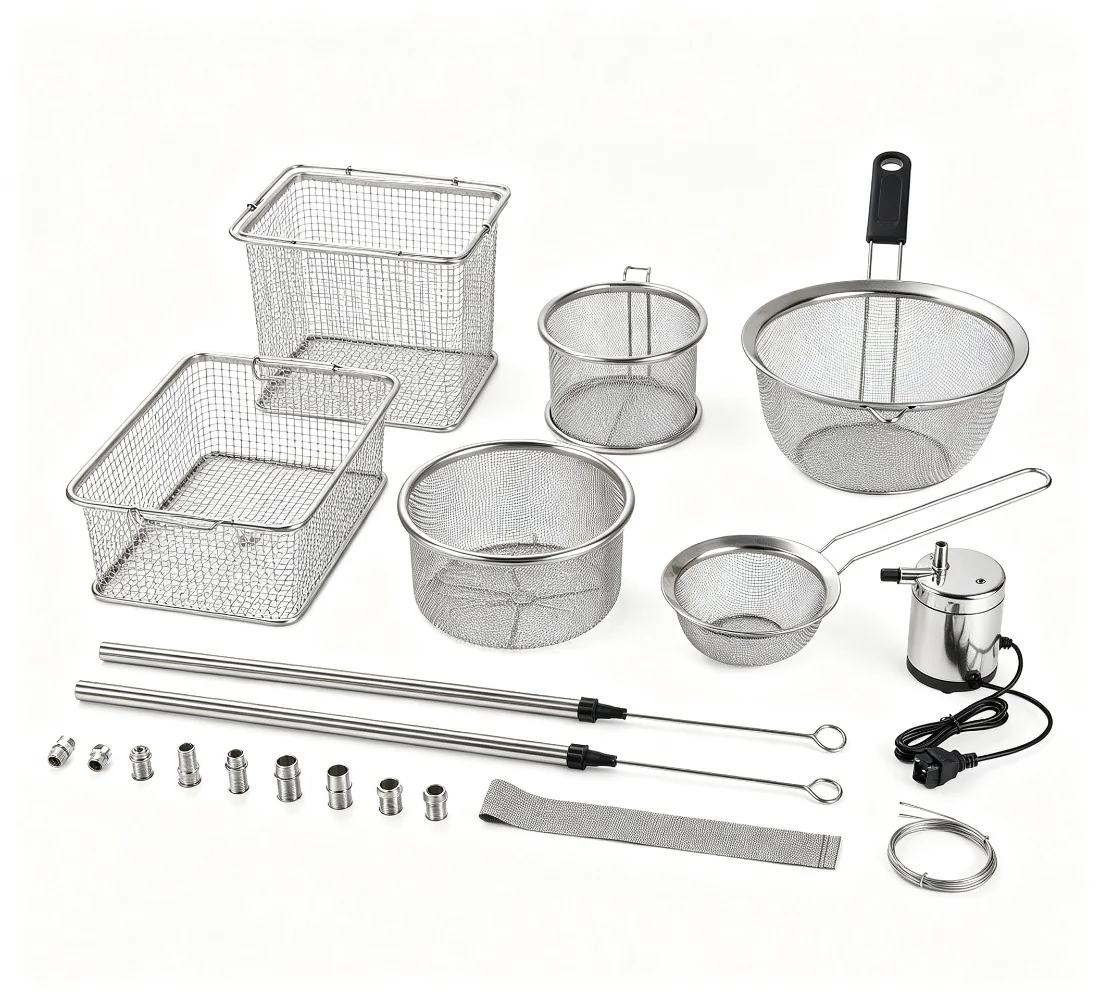
Most cleaning uses water plus a purpose-formulated detergent; flammable solvents need special equipment and care.
Water plus detergent
The standard industrial bath is water with a purpose-formulated alkaline, neutral or acidic detergent. The cavitation is the mechanical action and the detergent supplies the chemistry.
Plain water removes some loose particles but is weak against oil and grease.
- Alkaline for general oil
- Neutral for sensitive alloys
- Acidic for oxide
Solvents and alcohol
Solvents, hydrocarbon media and isopropyl alcohol can be used for specific tasks, but flammable liquids require sealed, explosion-proof or vacuum equipment and controlled handling.
They should never be run in a standard heated machine without the correct rating.
Match liquid to the contamination
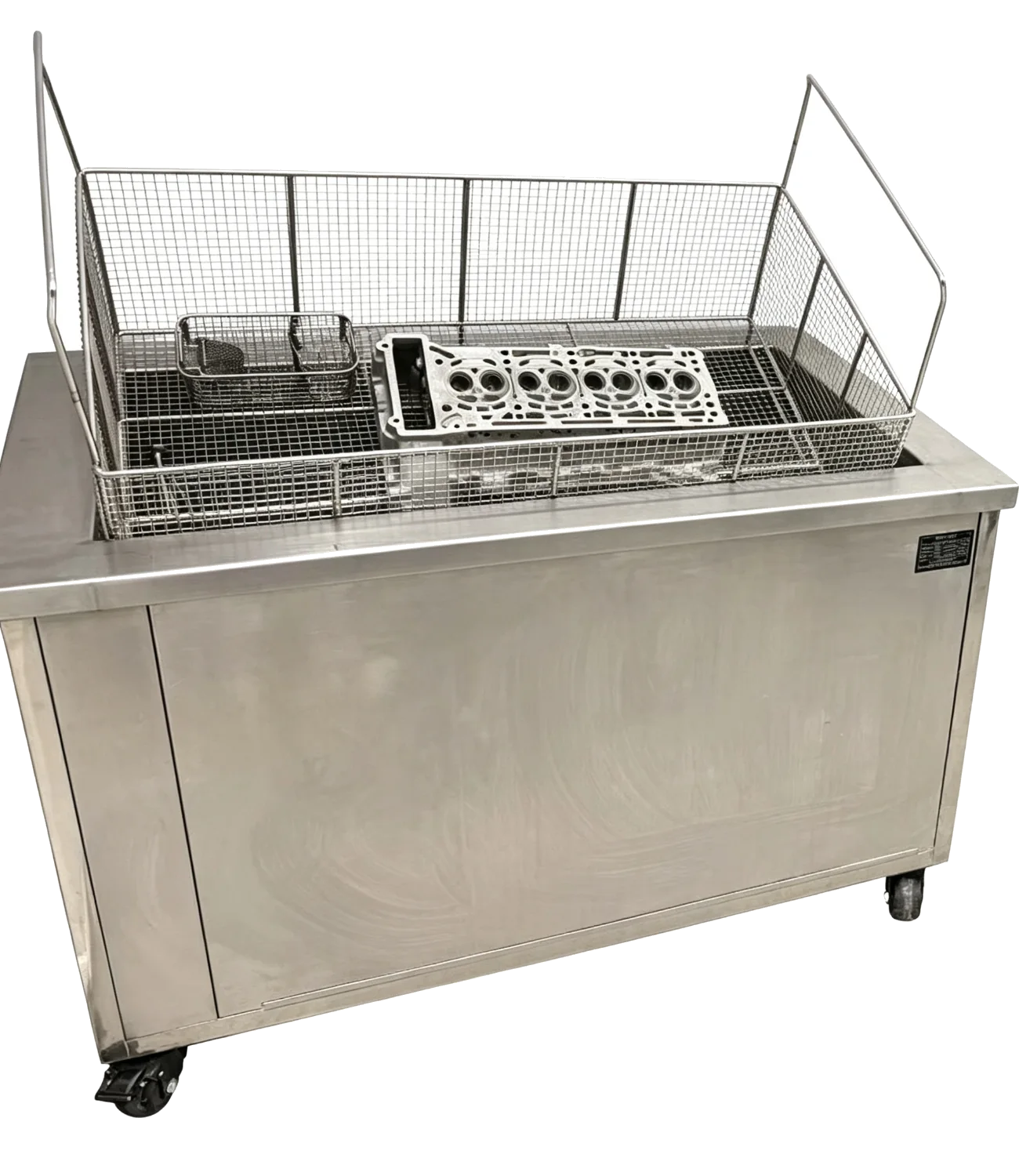
Oil and grease use degreasing chemistry, flux uses de-flux chemistry, rust and oxide use acidic treatment, and biological soil may use enzymatic formulations.
The concentration and temperature are set by the chemical and validated against the material.
Rinse and waste handling
Water-based chemistry is normally followed by rinsing, while spent liquid is handled through the correct local waste route.
Safety data for the detergent should be reviewed before use.
Quick Answers
Frequently asked questions
Plain water removes some loose particles, but oil and grease normally need a purpose-formulated detergent to clean effectively.
Only in equipment rated for flammable media, such as sealed, explosion-proof or vacuum systems, with controlled handling.
Alkaline water-based cleaners are the general-purpose choice for oil and grease; neutral and acidic formulations cover sensitive or oxidized work.