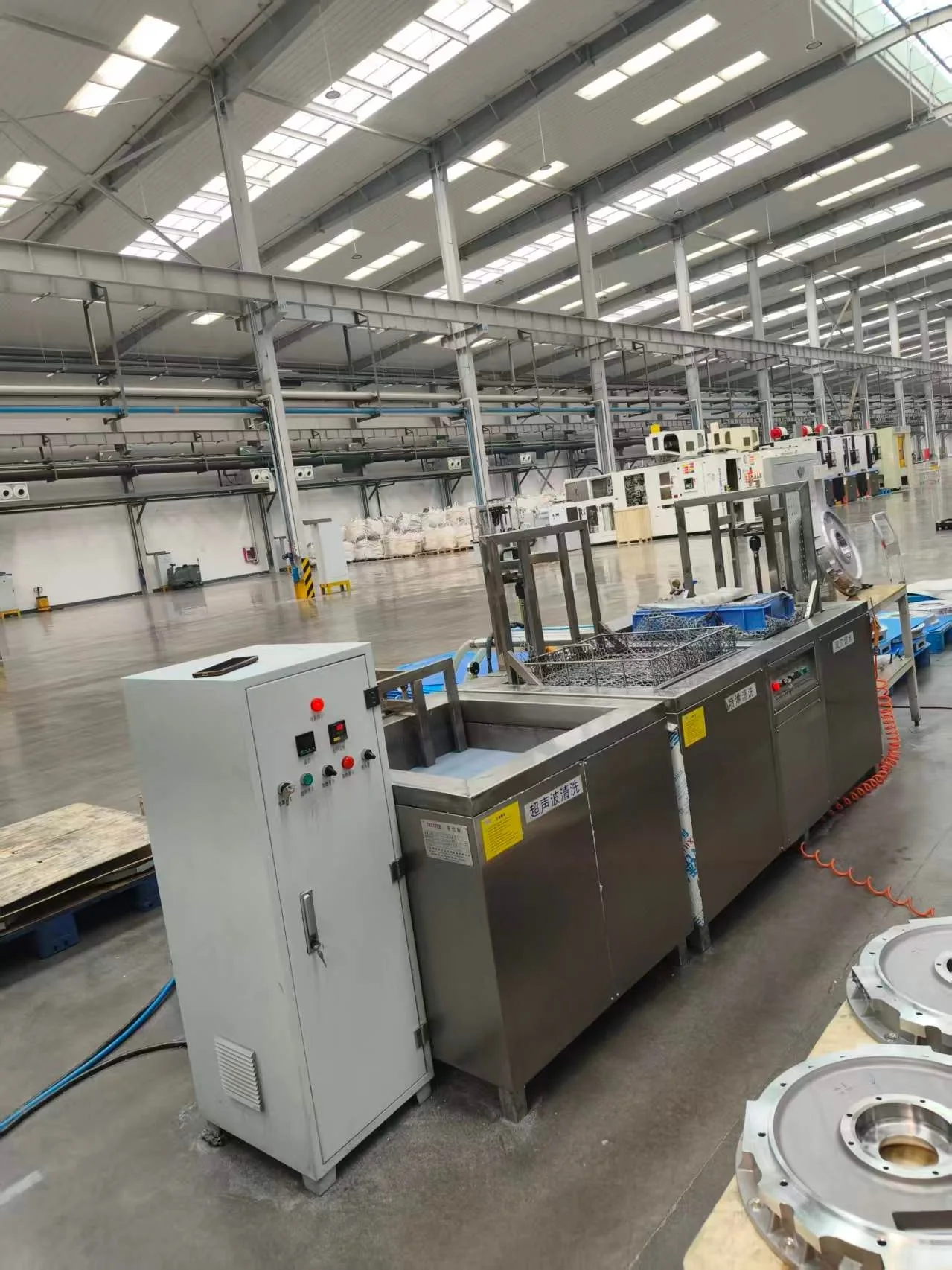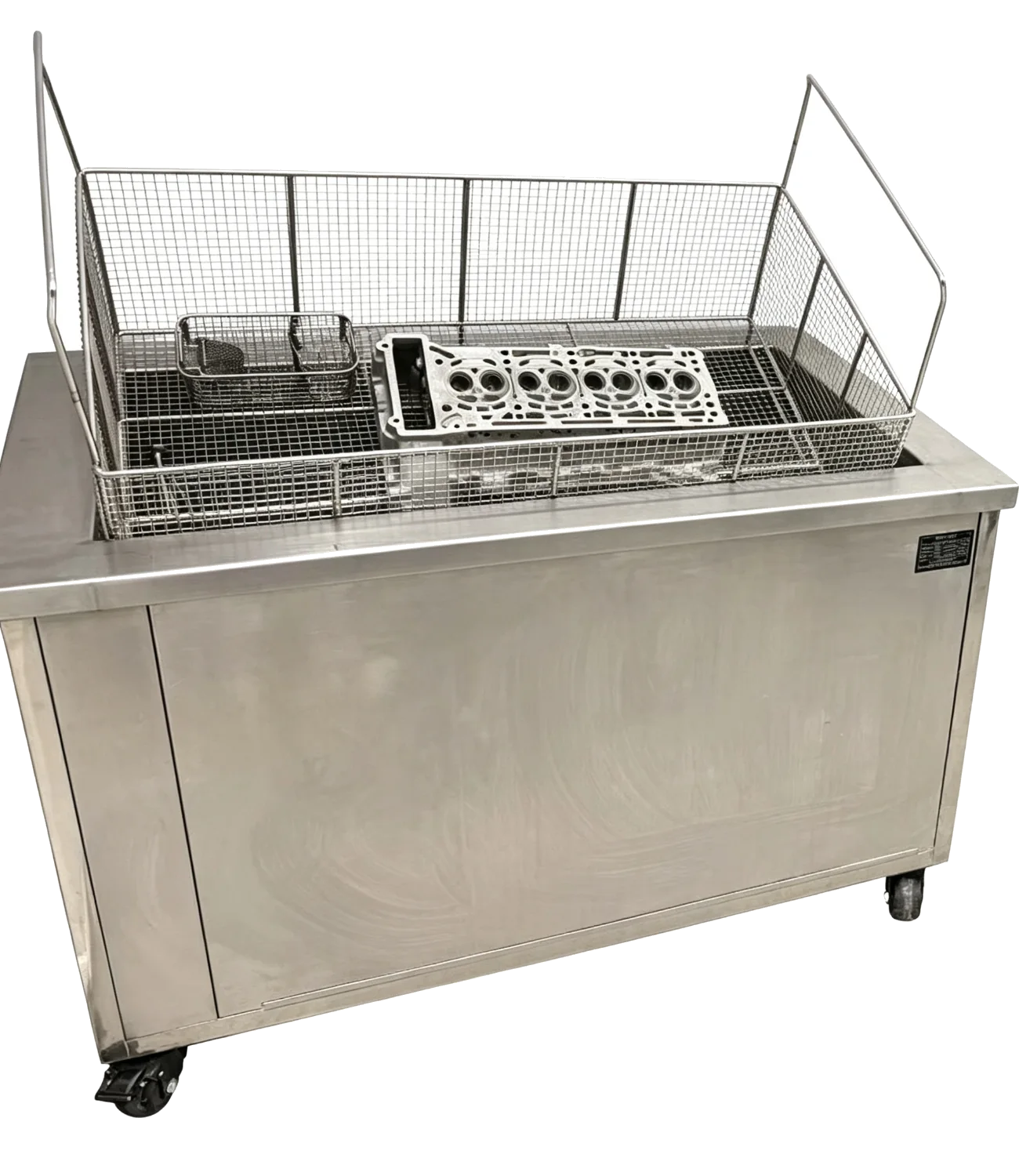
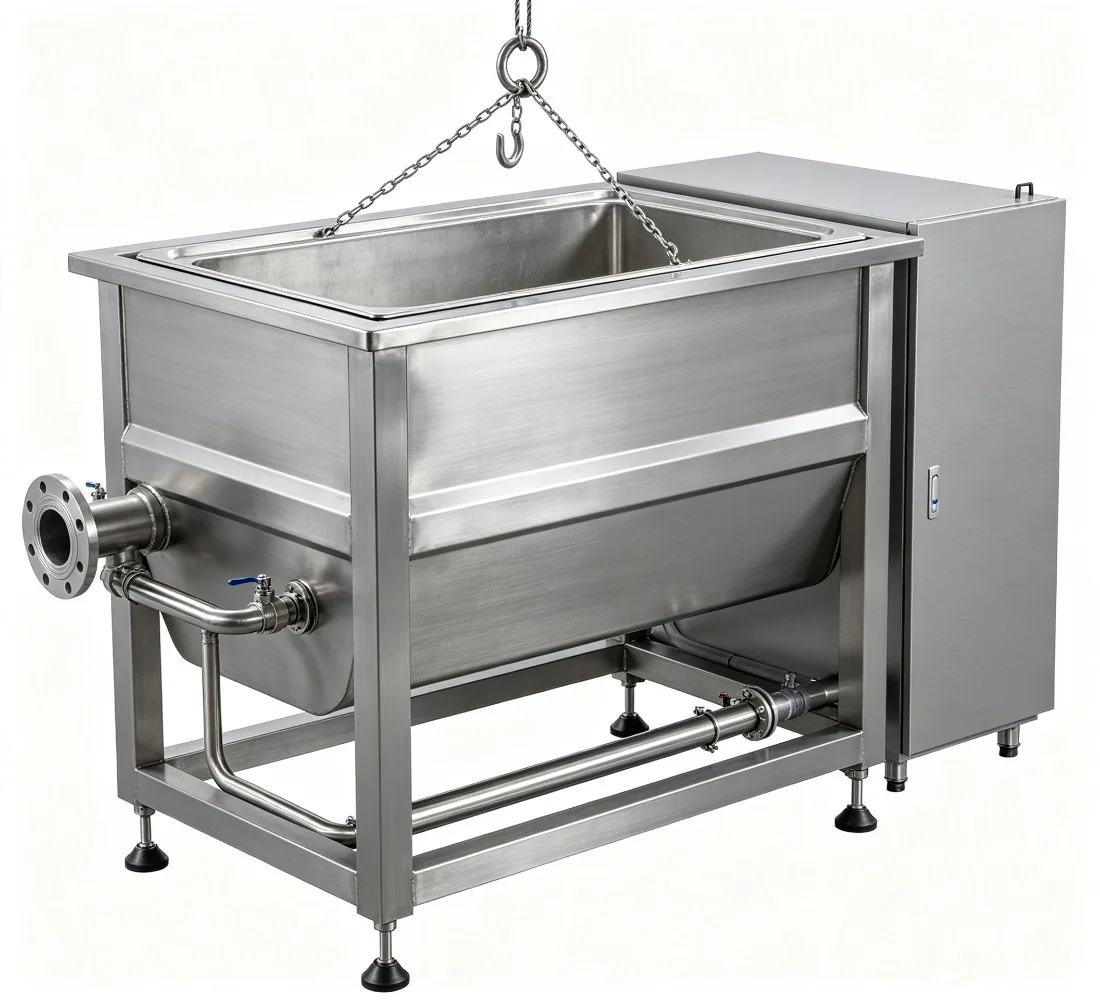
The price of an industrial ultrasonic cleaner follows the tank, power, stages and automation, which is why a single number is misleading.
What drives the price
The main drivers are tank size and material, ultrasonic power and transducer count, heating, the number of stages and the level of automation. A small benchtop machine and a multi-stage automatic line are different products.
Options such as filtration, oil skimming, lifting, drying and safety controls add cost but reduce labour and rework.
- Tank size and material
- Power and transducers
- Stages and automation
- Filtration and drying
Benchtop to automatic lines
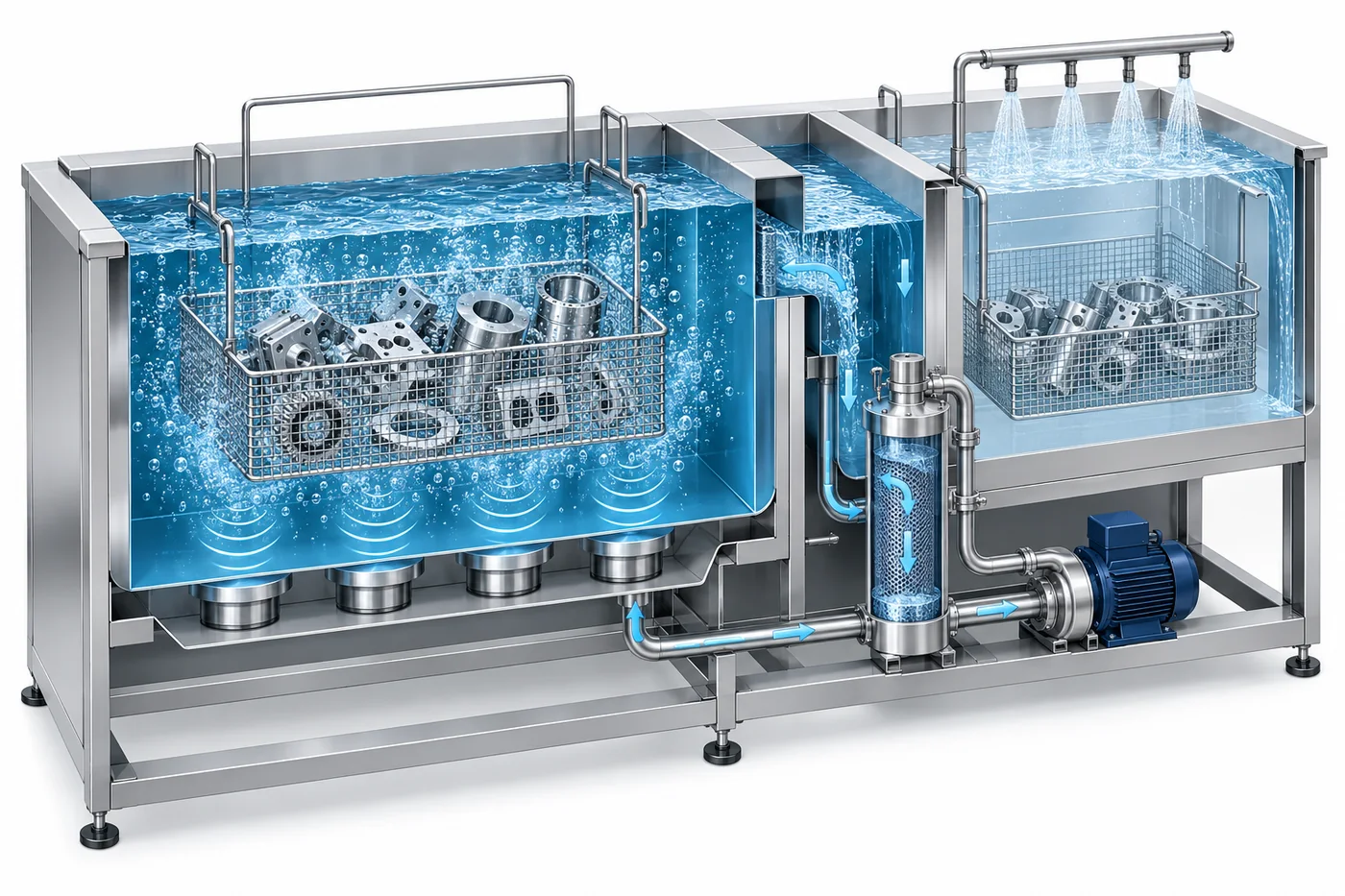
Compact benchtop machines are the entry point for small parts and counters. Floor-standing single tanks suit general industry, while multi-stage and automatic lines address continuous high-volume production.
The jump between these tiers is driven by throughput and the number of process stages, not just by brand.
Operating cost beyond purchase
Water, chemistry, energy, filtration and waste handling are ongoing, along with occasional spare parts. Filtration and counterflow rinsing can reduce these running costs.
A slightly higher purchase price that extends bath life or removes a manual stage is often recovered in production.
How to get a useful quotation
Provide the part, material, contamination, required throughput and the acceptance method. A quotation built around those inputs is far more useful than a generic list price.
Trial cleaning confirms the configuration before the order is placed.
Quick Answers
Frequently asked questions
Tank, power, stages and automation vary widely, so the cost is defined by the configuration. LENJEX quotes against the actual process.
They add stages and transfer, but they replace manual handling and support continuous production, which changes the total cost rather than only the price.
Water, chemistry, energy, filtration, waste handling and occasional spare parts, with filtration and counterflow rinsing reducing some of these.