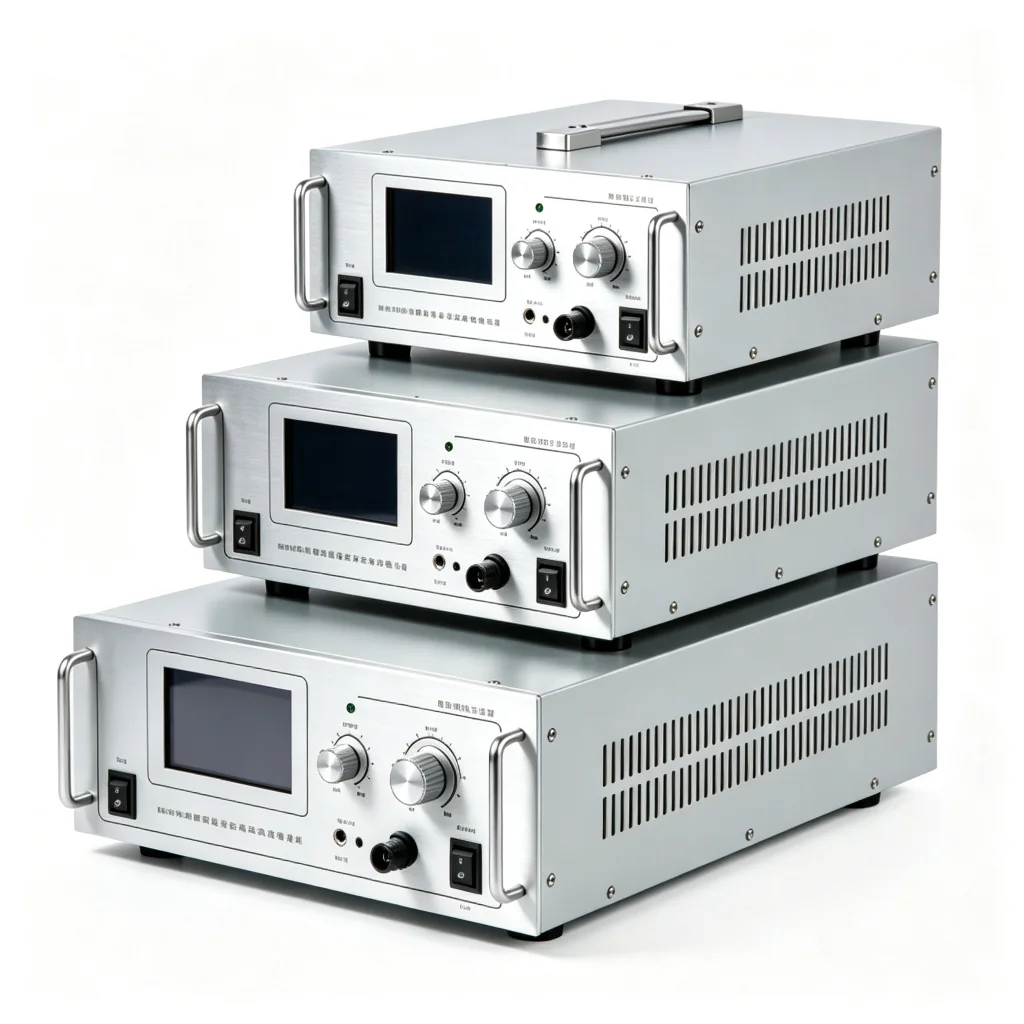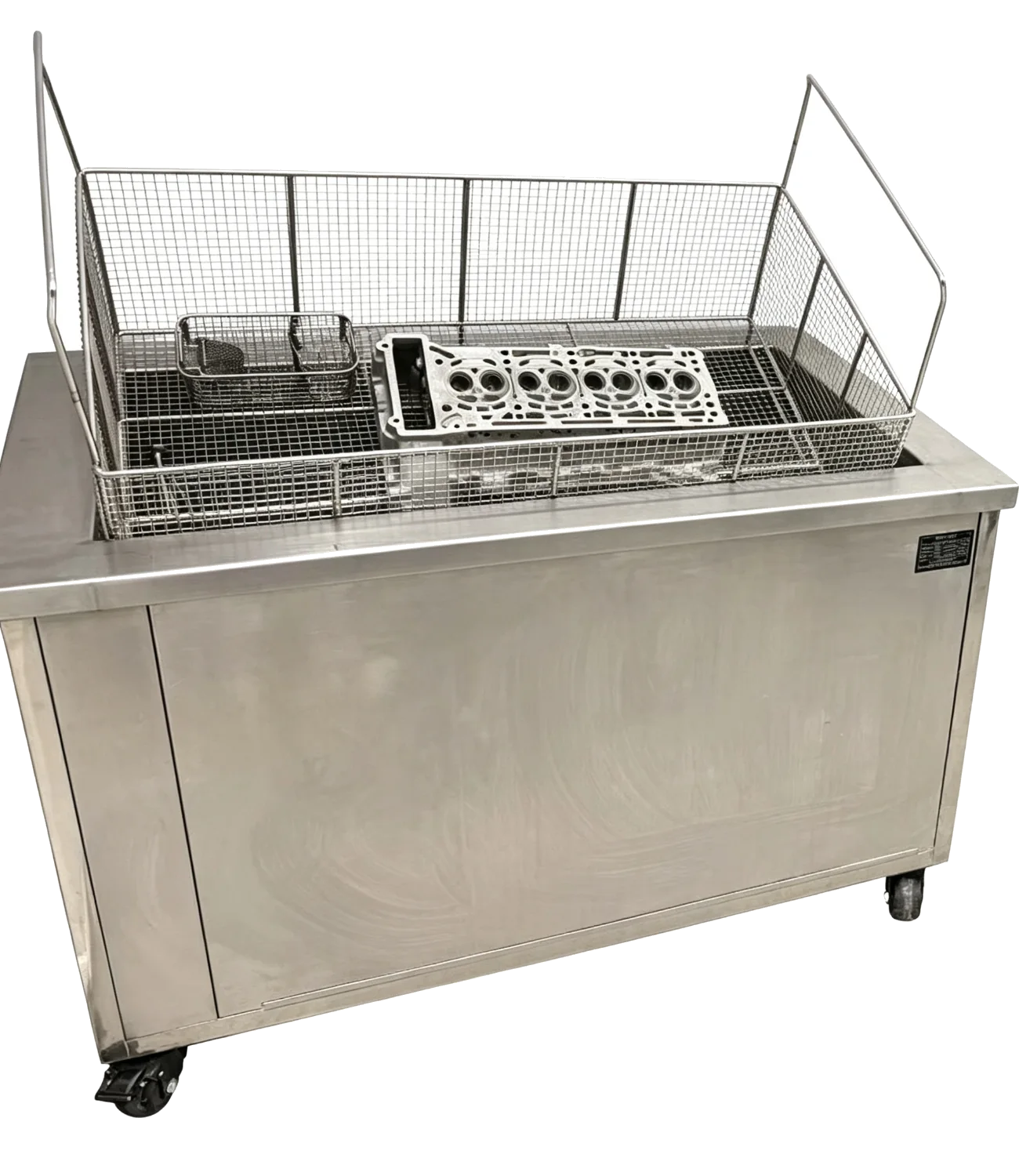
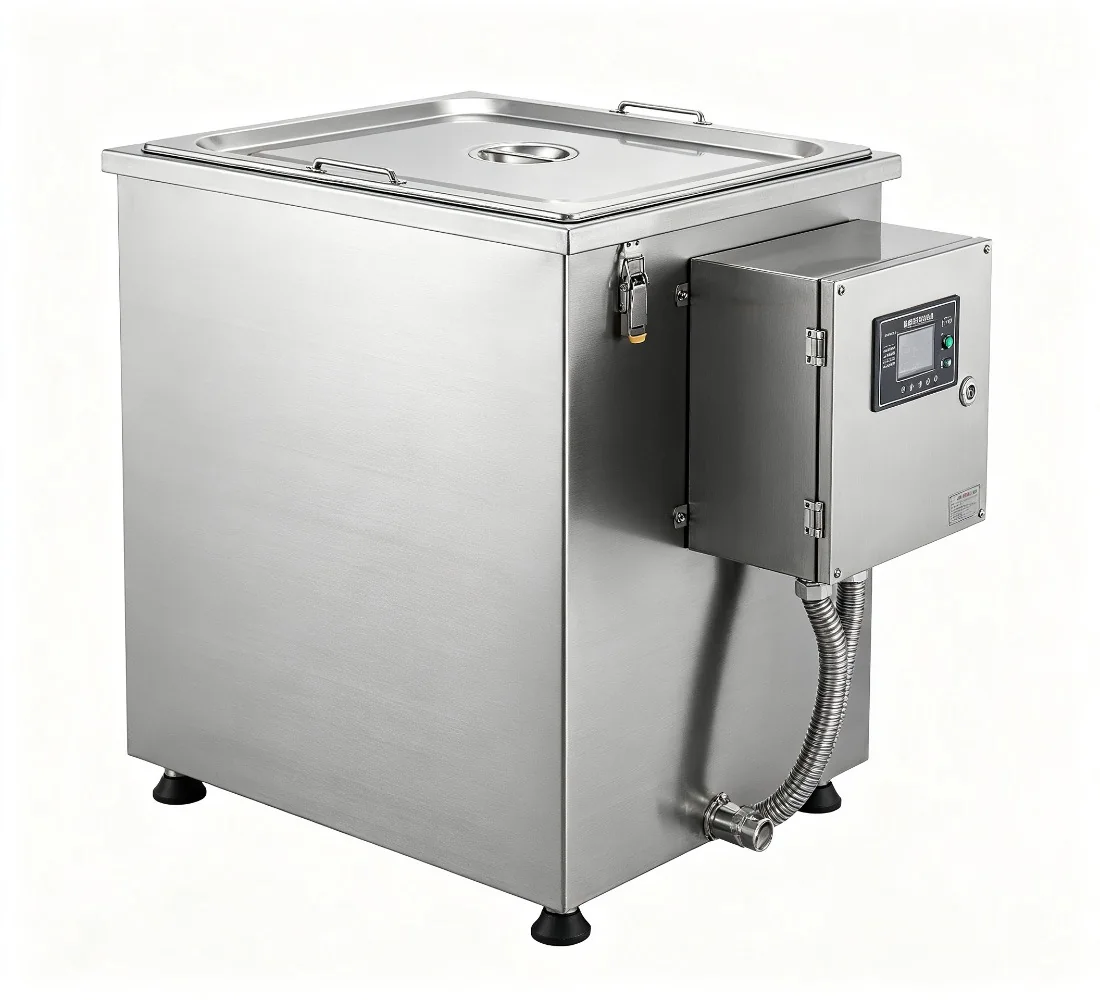
Cycle times range from a few minutes to longer depending on the soil, geometry, power and stages.
What sets the time
Light dust and oil can clean in minutes, while heavy carbon, grease and complex cavities take longer. Power density, temperature and chemistry all influence the result.
Multi-stage lines add rinse and drying time.
- Contamination type
- Part geometry and loading
- Power and temperature
- Number of stages
Light, moderate and heavy
Light, open parts clean quickly; general production parts take a moderate cycle; heavy carbon and grease may use a pre-soak plus a longer wash.
Dense baskets slow cleaning because liquid exchange is reduced.
Cycle time and throughput
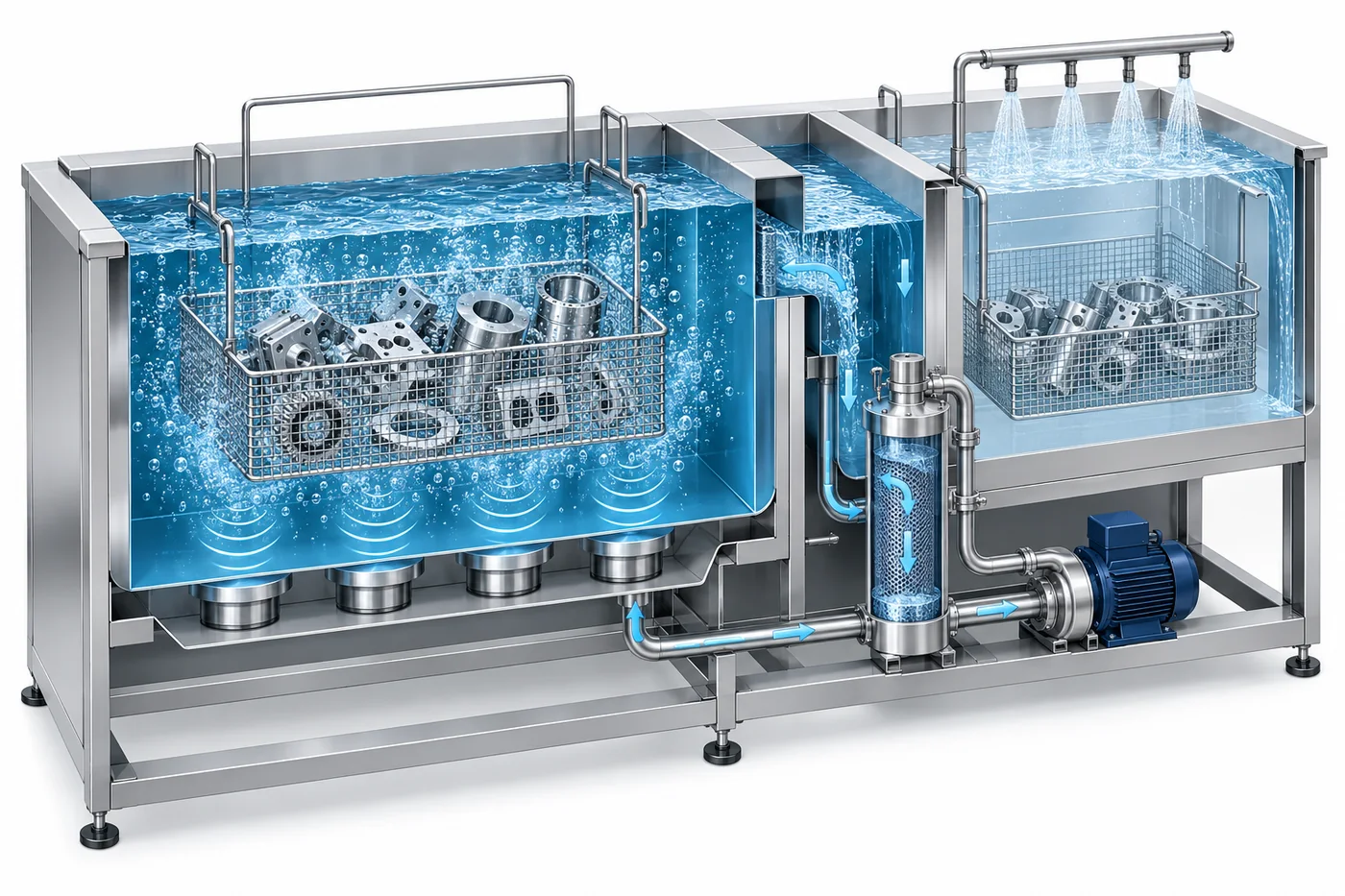
For production, the cycle time is multiplied by the batch size and the stages to estimate throughput, including handling and drying.
Higher power can shorten the wash and change the line size.
Setting the time by trial
Inspect representative parts at increasing times to find the point where the result is clean, then add a small margin for production.
Avoid setting a fixed time that is not based on the real part.
Quick Answers
Frequently asked questions
There is no fixed number; light work takes minutes and heavy carbon takes longer, with the time set by a trial on the real part.
Yes. Dense loads reduce liquid exchange, so arranging and possibly agitating the parts changes the time.
It adds rinse and drying stages, but it removes manual handling and supports continuous production.