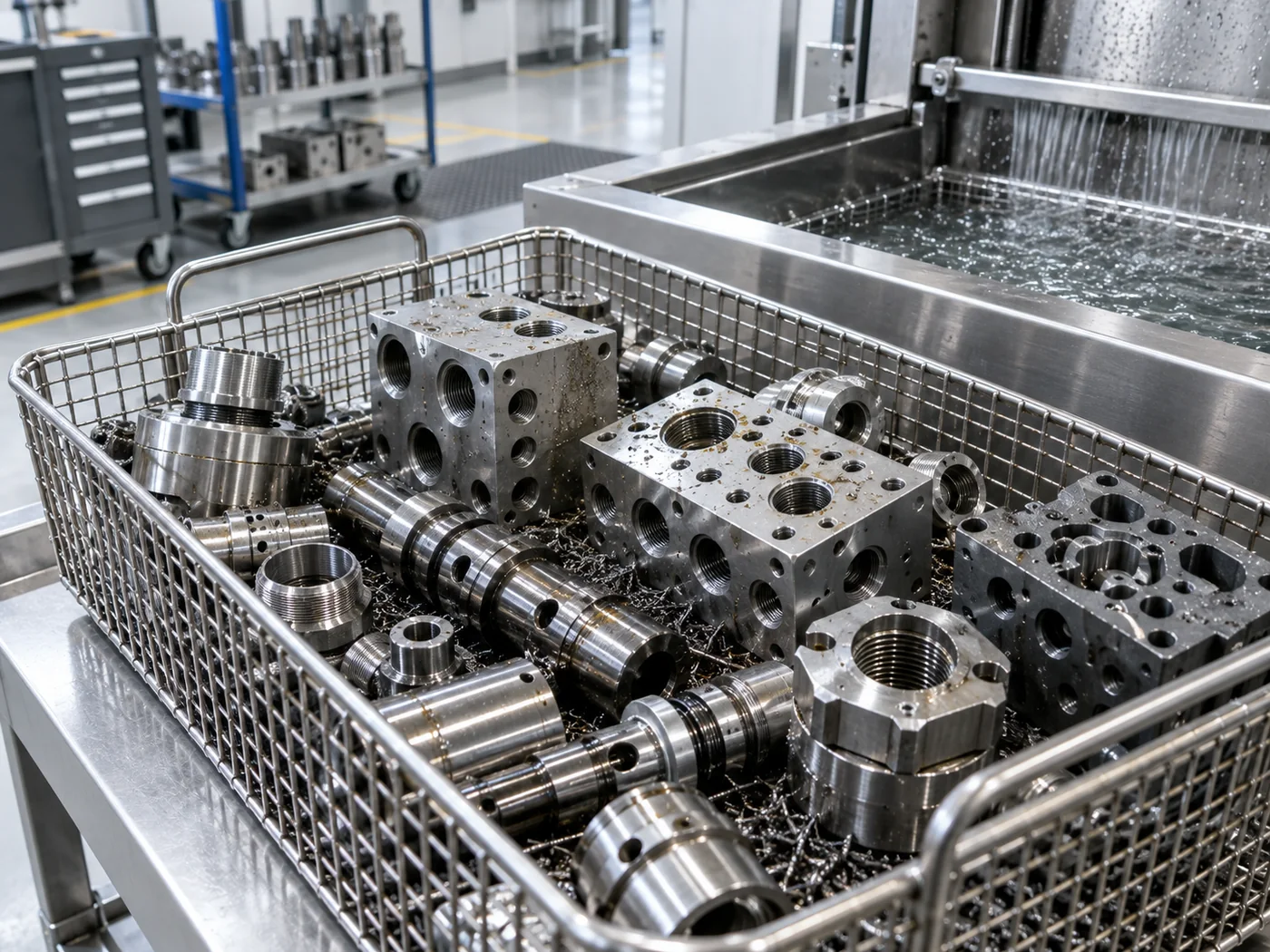
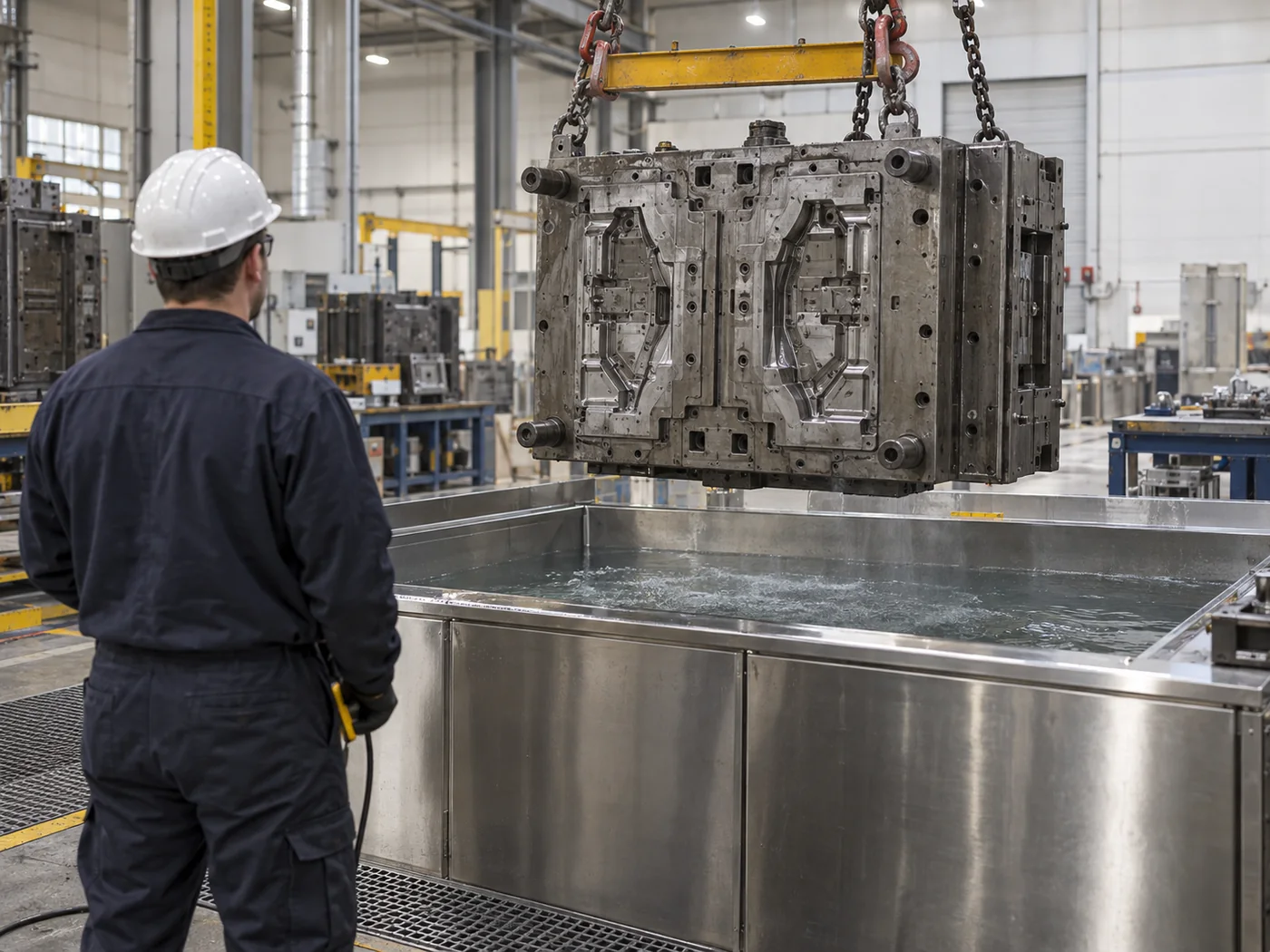
Ultrasonic cleaning removes release agent, carbon and oil from molds and inserts without scraping.
Contamination on molds
Molds and dies accumulate release agent, carbon, oil and residues in cavities, vents and fine details. These affect part quality and mold life if left.
Cavitation reaches the details without manual scraping.
- Release agent
- Carbon and oil
- Residues in vents and detail
Handling heavy molds
Heavy molds and inserts are loaded with a lifting platform rather than by hand, and gentle agitation can move liquid through the cavities.
Temperature and chemistry are controlled for the mold material.
Protecting finished surfaces
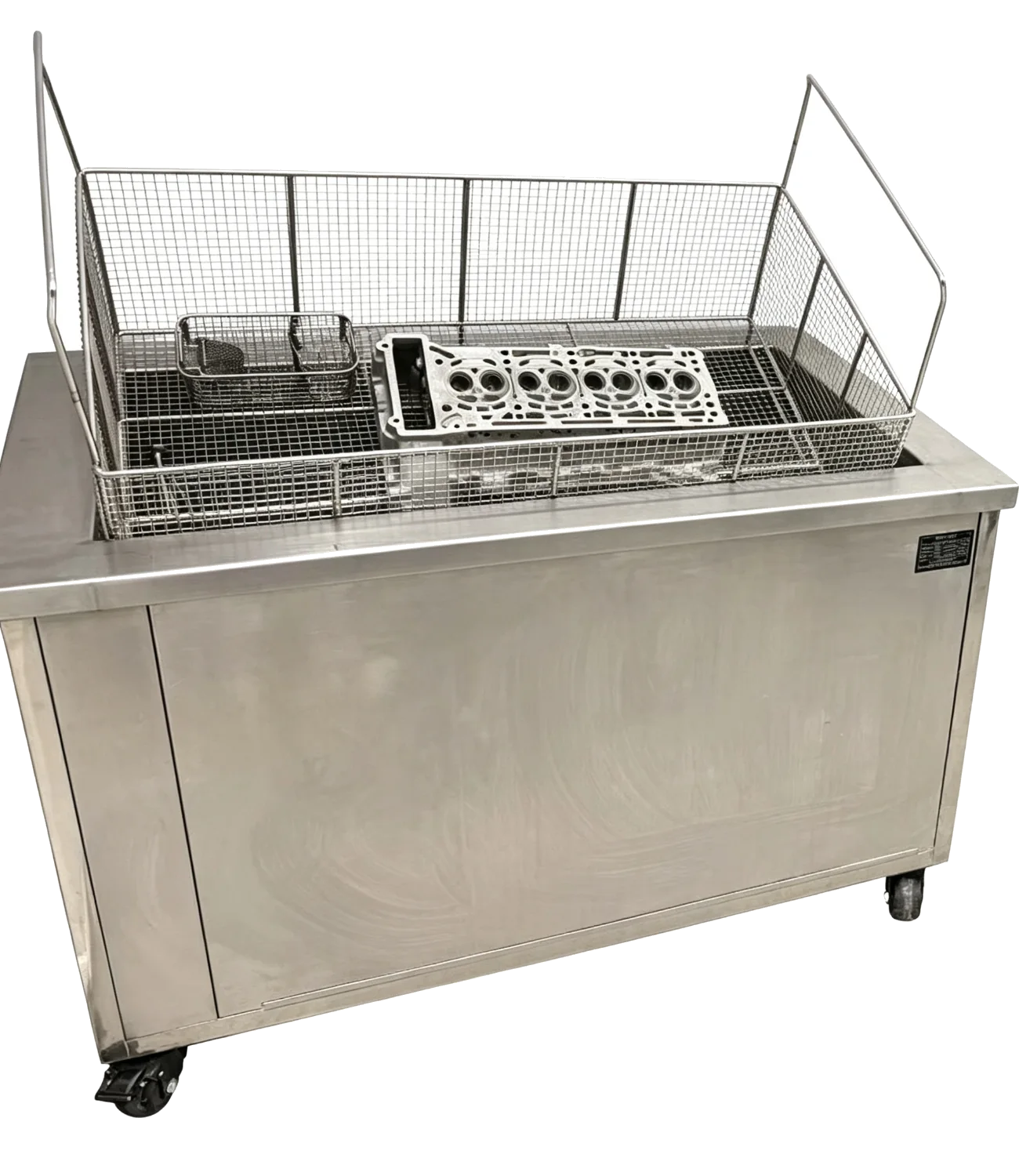
Scraping can damage a finished cavity, while cavitation is non-contact. The process is validated with a representative insert before being adopted.
Inserts and small parts can be separated in baskets.
Rinsing and drying
Rinsing removes chemistry and loosened carbon, followed by drying and the mold's normal maintenance before storage.
Repeatable cycles reduce mold turn-around time.
Quick Answers
Frequently asked questions
Cavitation is non-contact and, with controlled frequency, temperature and chemistry, removes residues without the scraping that damages polished surfaces.
A lifting-platform cleaner lowers and raises heavy loads and can agitate the bath for better cavity coverage.
Yes, with heated carbon-removal chemistry; very heavy carbon may need a pre-soak.