Controlled ultrasonic cleaning reaches aerospace passages and meets particle limits with documented cycles.
Tight tolerances and passages
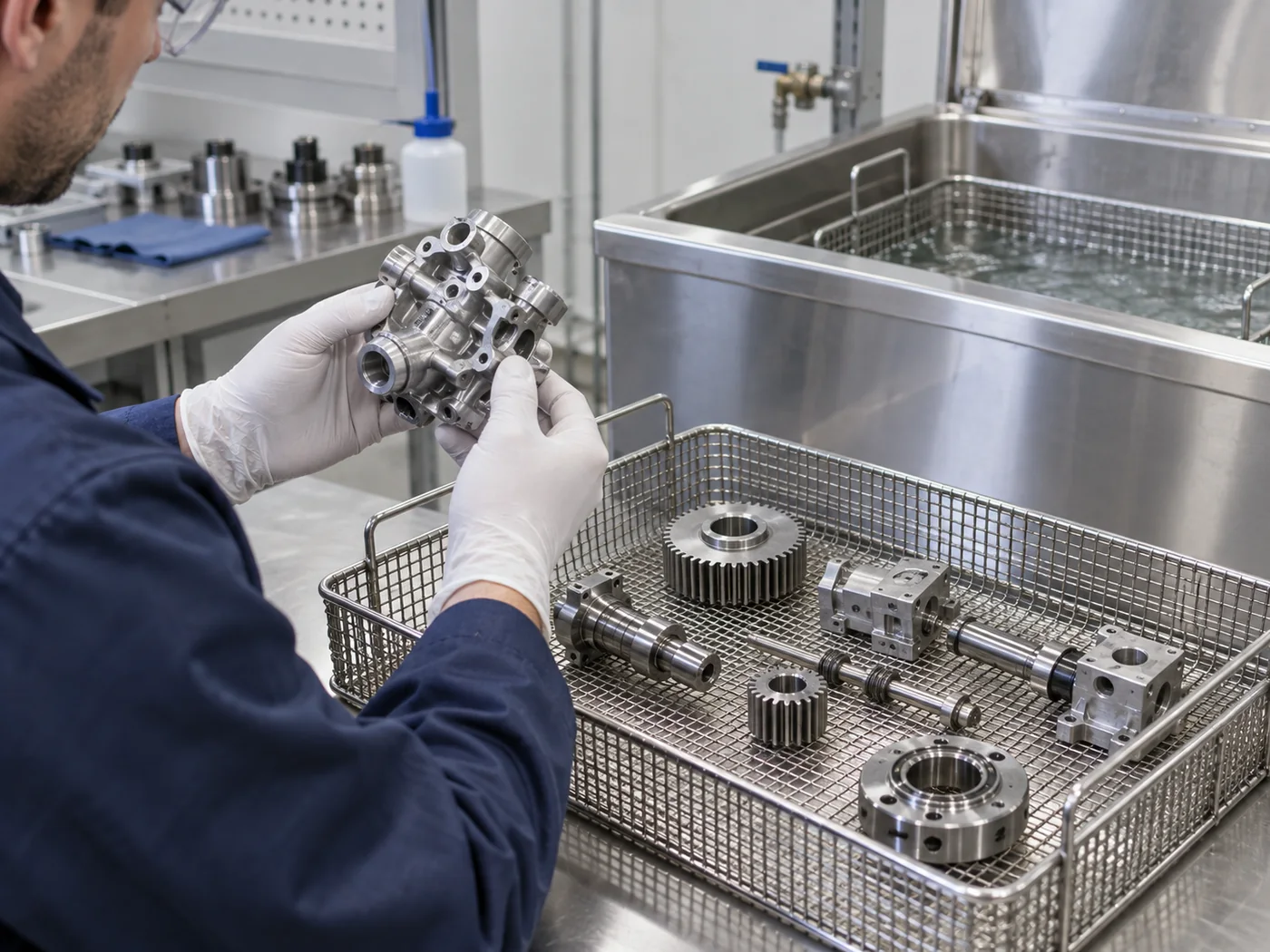
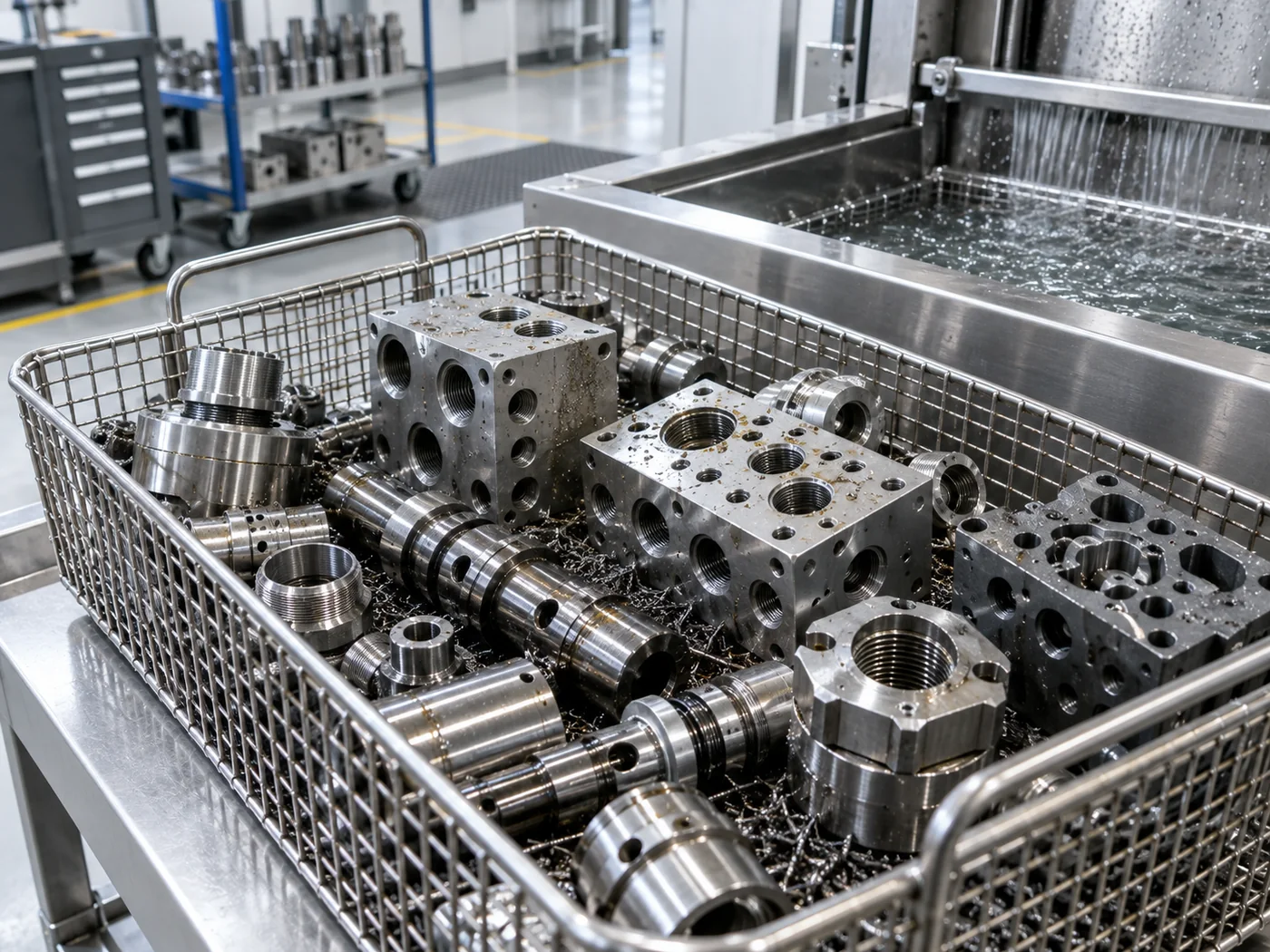
Aerospace parts combine precision surfaces, internal passages and high-performance alloys. Cavitation reaches the passages and removes oil, particles and residues.
Processes are validated against the required particle limits.
- Fuel and valve parts
- Internal passages
- Structural fittings
Documented cleanliness
Cycles and parameters are recorded for traceability, and inspection uses the agreed particle or gravimetric method.
Chemistry and temperature are controlled for the alloy.
Vacuum wash and drying
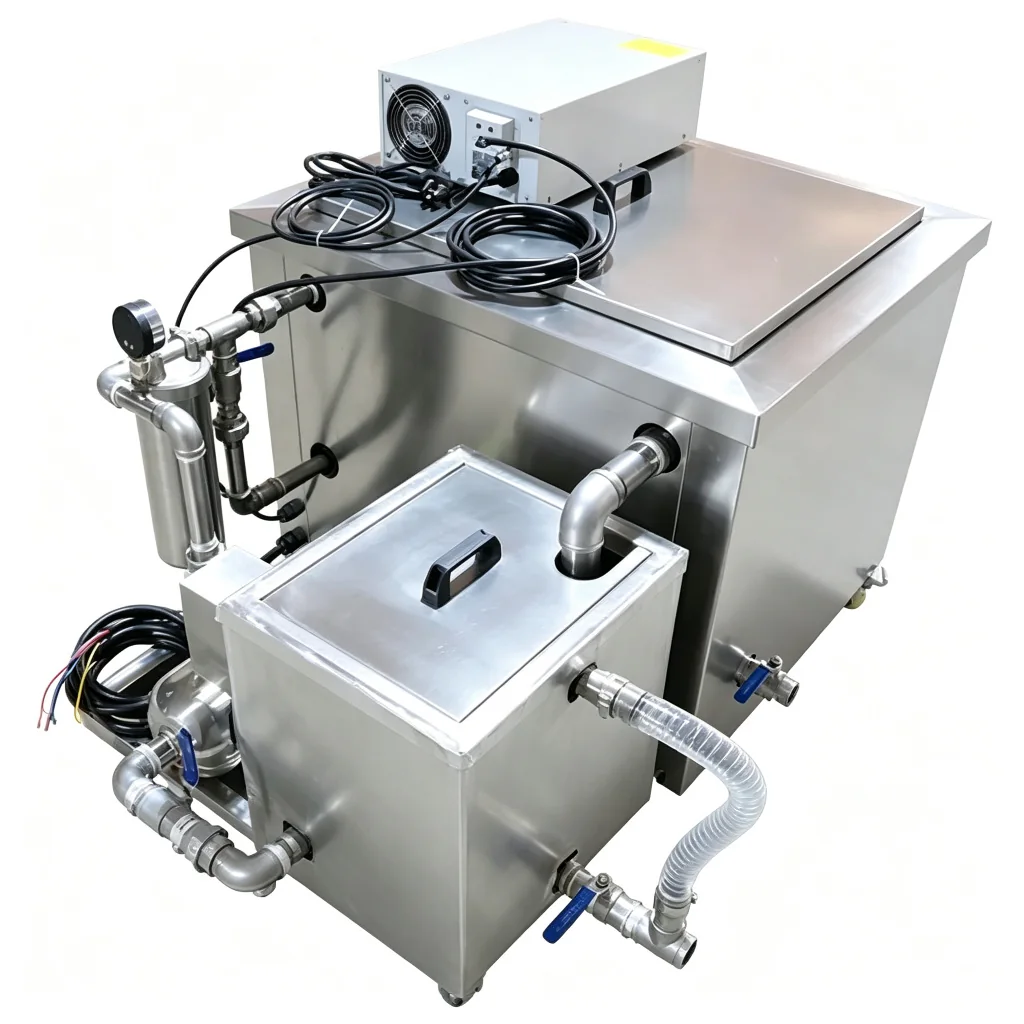
Blind-hole parts are often handled by sealed vacuum systems that penetrate and dry cavities, with solvent recovery by distillation.
Aqueous water-based lines are used for other components.
Material validation
High-performance alloys are validated with representative parts to confirm no surface change, before production parameters are fixed.
The same inspection method is used in trial and production.
Quick Answers
Frequently asked questions
Yes, with controlled chemistry, filtration, rinsing and drying, validated against the agreed particle inspection method.
Sealed vacuum systems wash and dry blind holes, whereas aqueous lines require careful drying and may not be suitable.
With validated chemistry and temperature, yes; representative parts are used to confirm the process.