
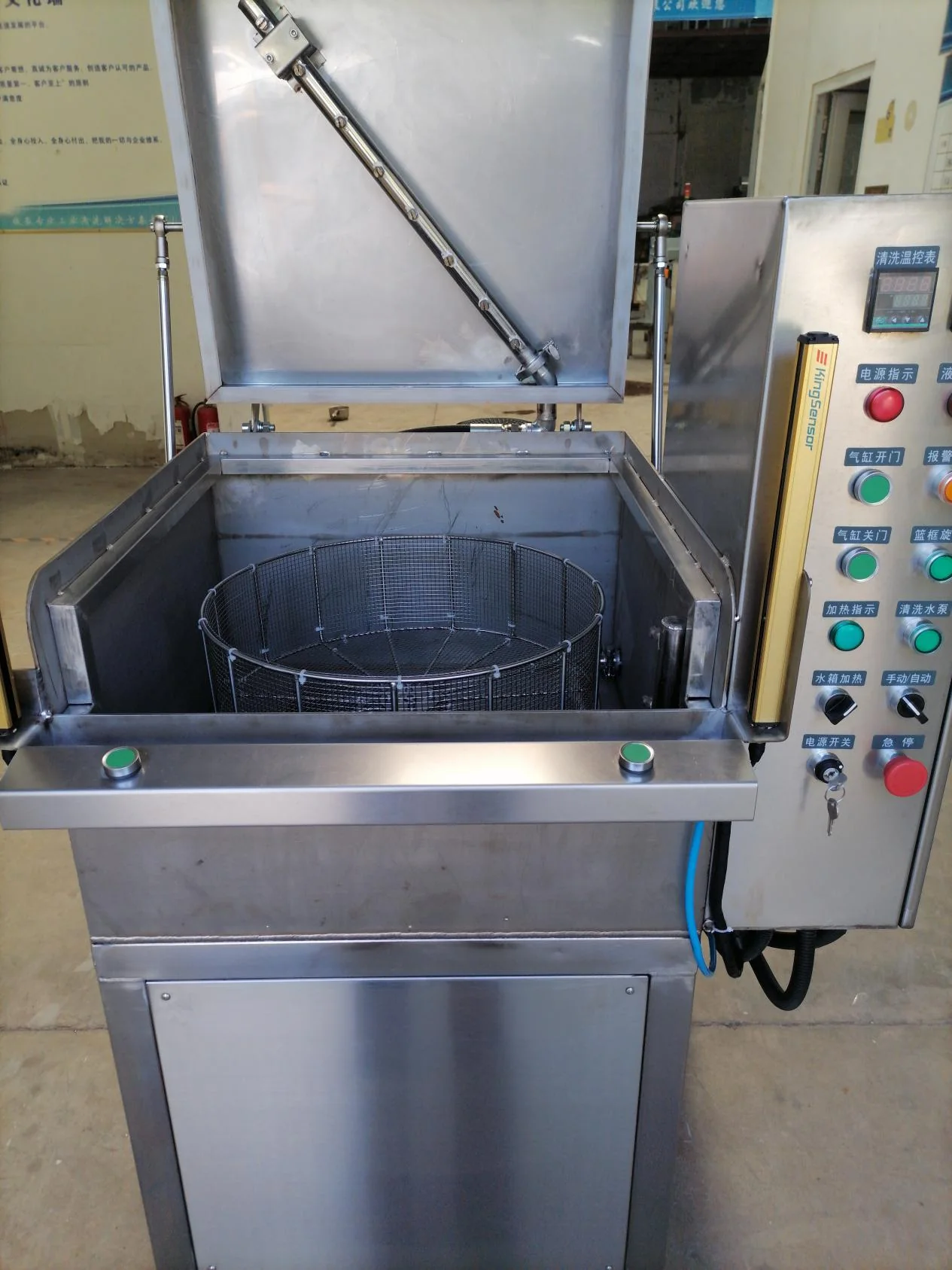
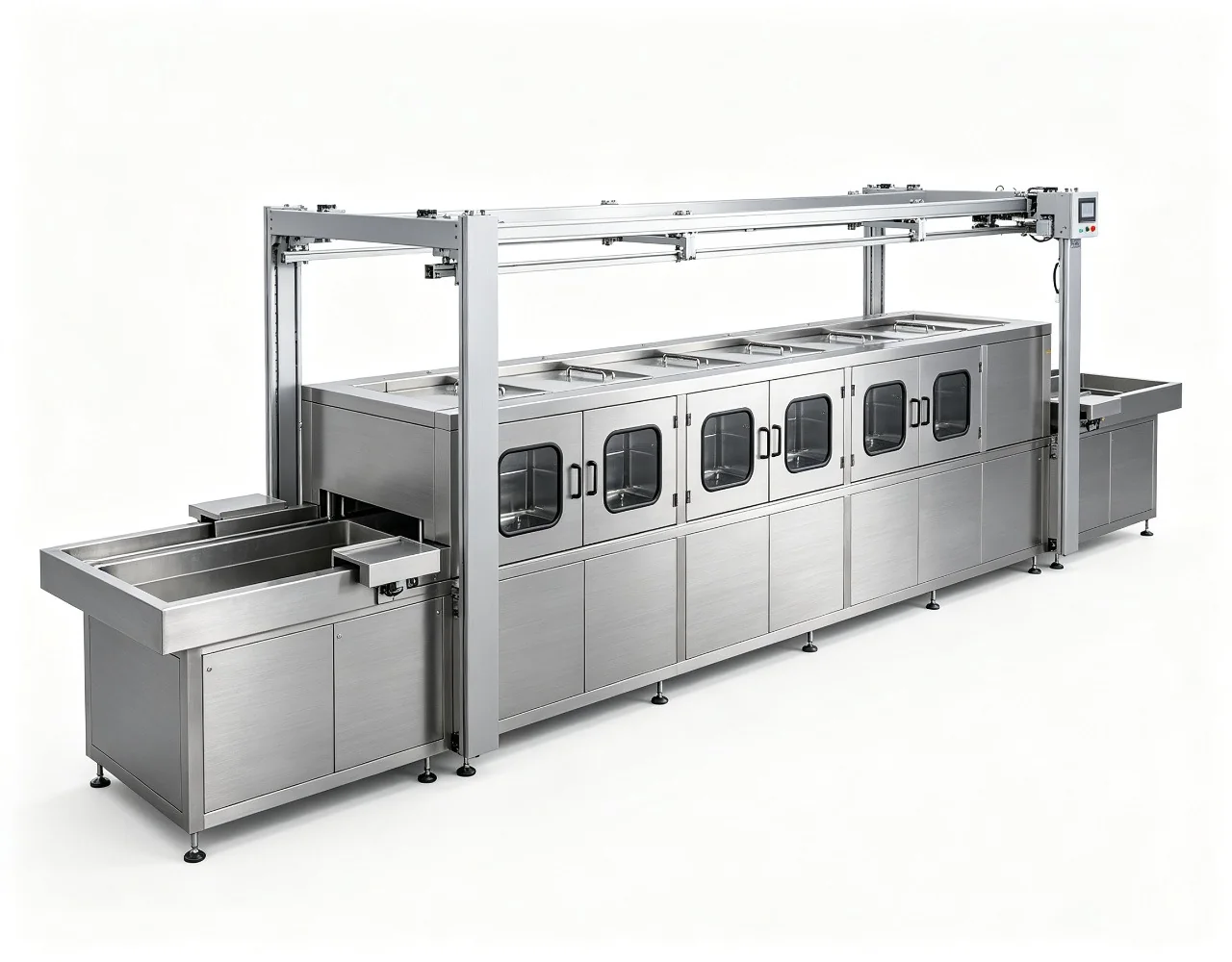
Modern engine and transmission components operate with tight tolerances, so metal chips, machining oil, coolant residue and dust can affect reliability. Ultrasonic cavitation reaches holes, internal passages and threaded features that line-of-sight spray cleaning may miss.
Cavitation reaches complex geometry
High-frequency pressure waves create microscopic bubbles that collapse against the workpiece. The resulting liquid micro-jets can reach blind holes, galleries, internal cavities and threads without depending on direct nozzle access.
Engine and transmission components
Cylinder blocks, heads, shafts, connecting rods, valve bodies, gear housings and hydraulic control parts can carry casting sand, grinding residue, chips and oil. The bath chemistry, temperature and ultrasonic frequency must suit both the soil and the component material.
Production economics
Automated multi-stage lines can reduce manual transfer while filtration and oil skimming extend bath life. Water-based processes can also simplify solvent handling, but rinse quality, corrosion protection and drying must be included in the process design.
Design for changing automotive products
Electric-motor housings, battery trays, power-electronics enclosures and charging components introduce different materials and cleanliness risks. A flexible process starts with representative parts and a defined inspection method.
Integrate the line around production
Basket loading, takt time, recipes, transfer method and factory interfaces determine whether a single tank, multi-tank line, gantry, robot or conveyor system is the right architecture.